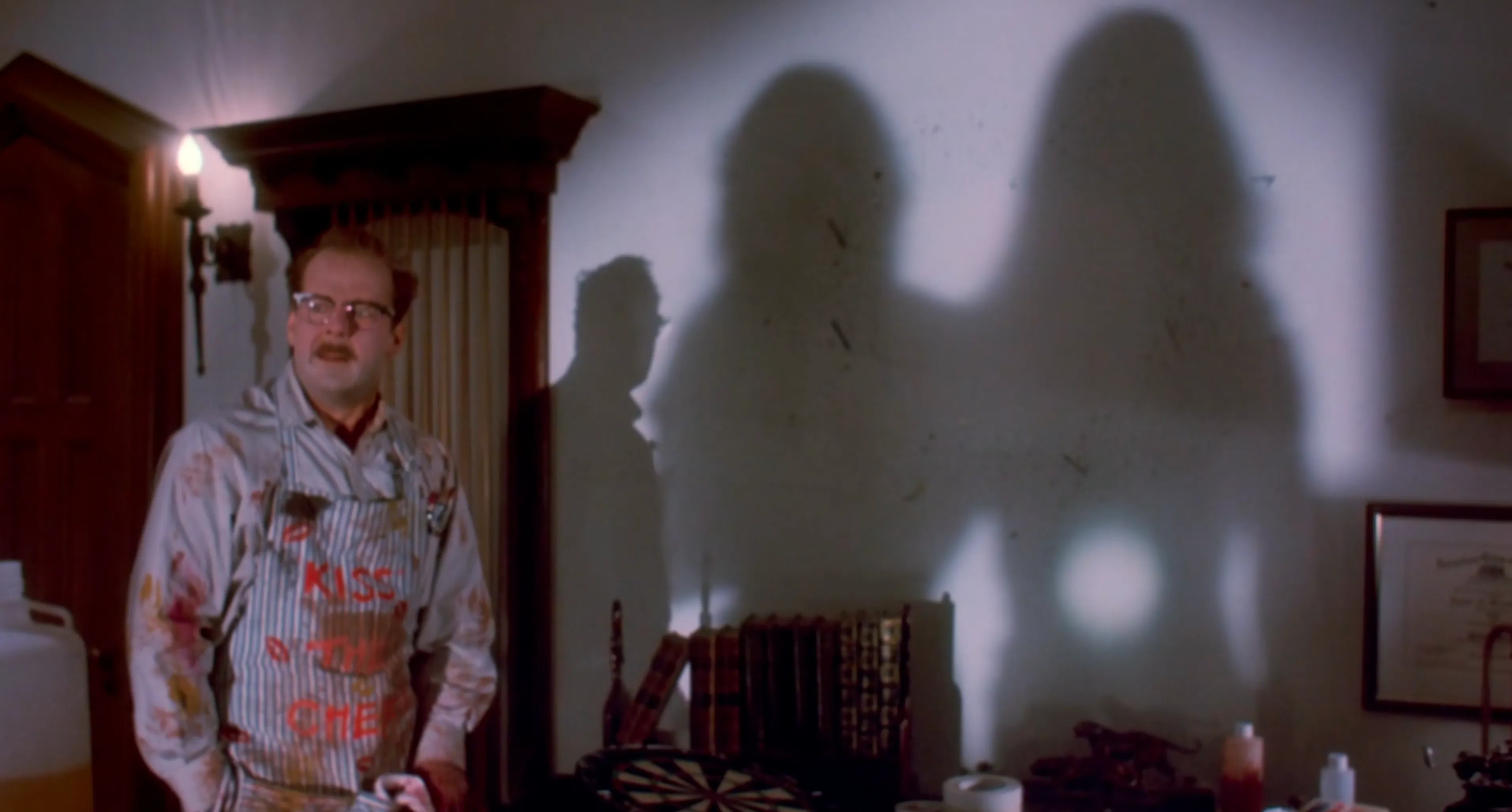
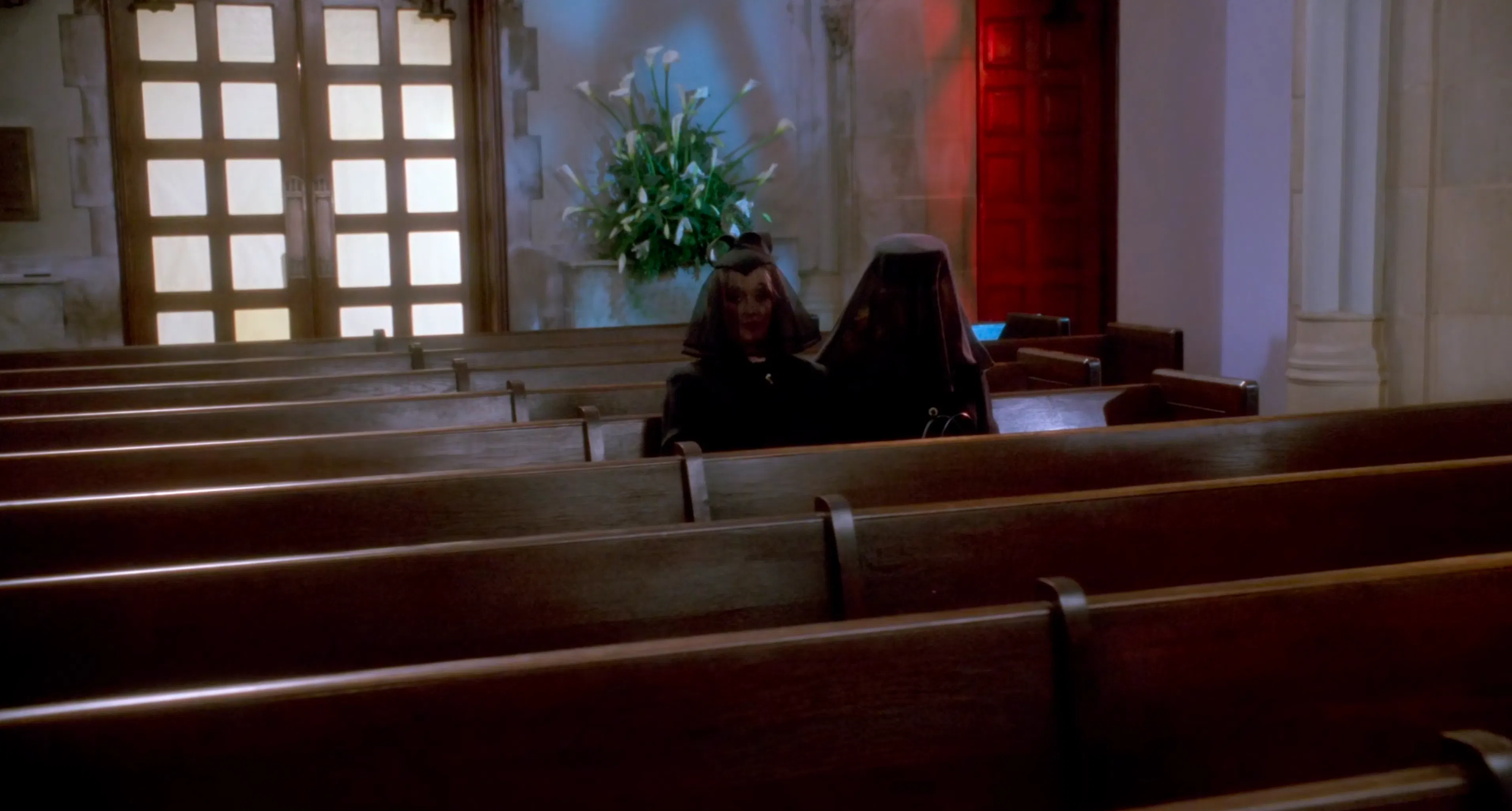
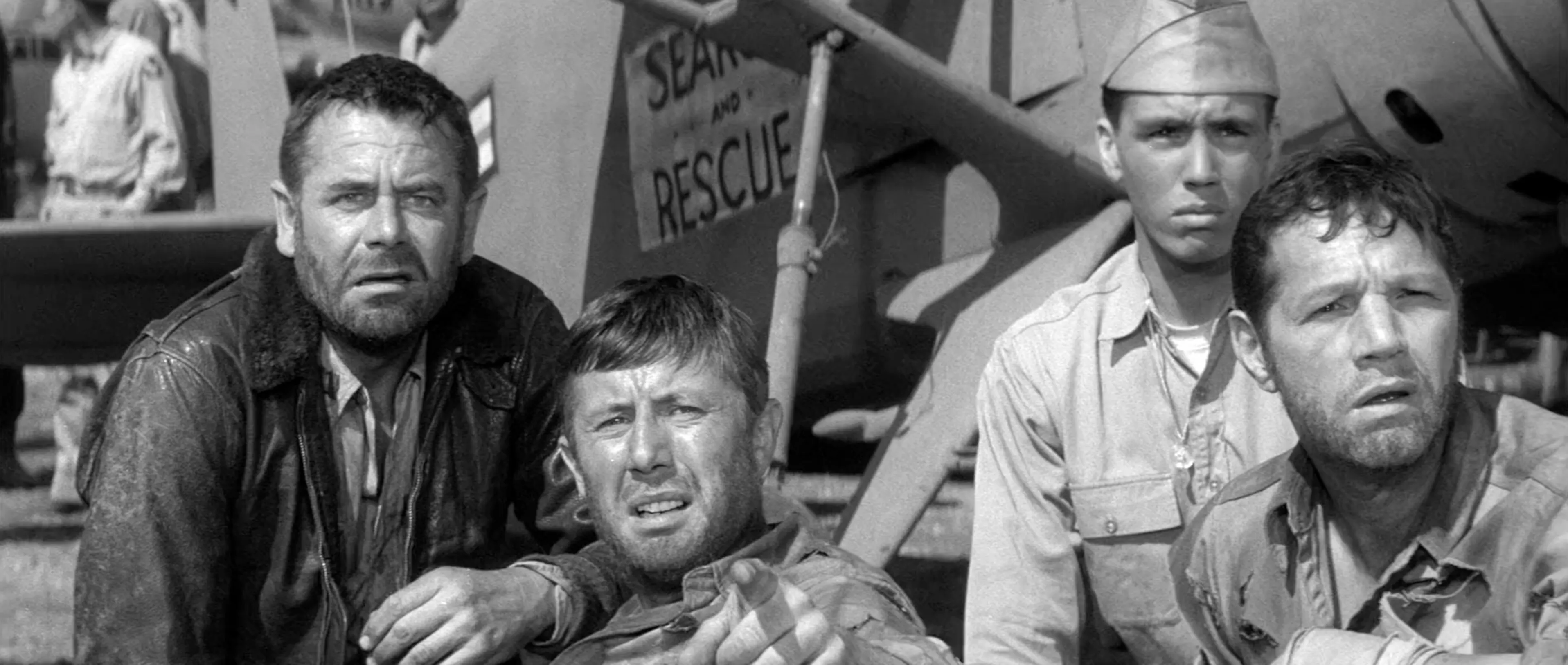
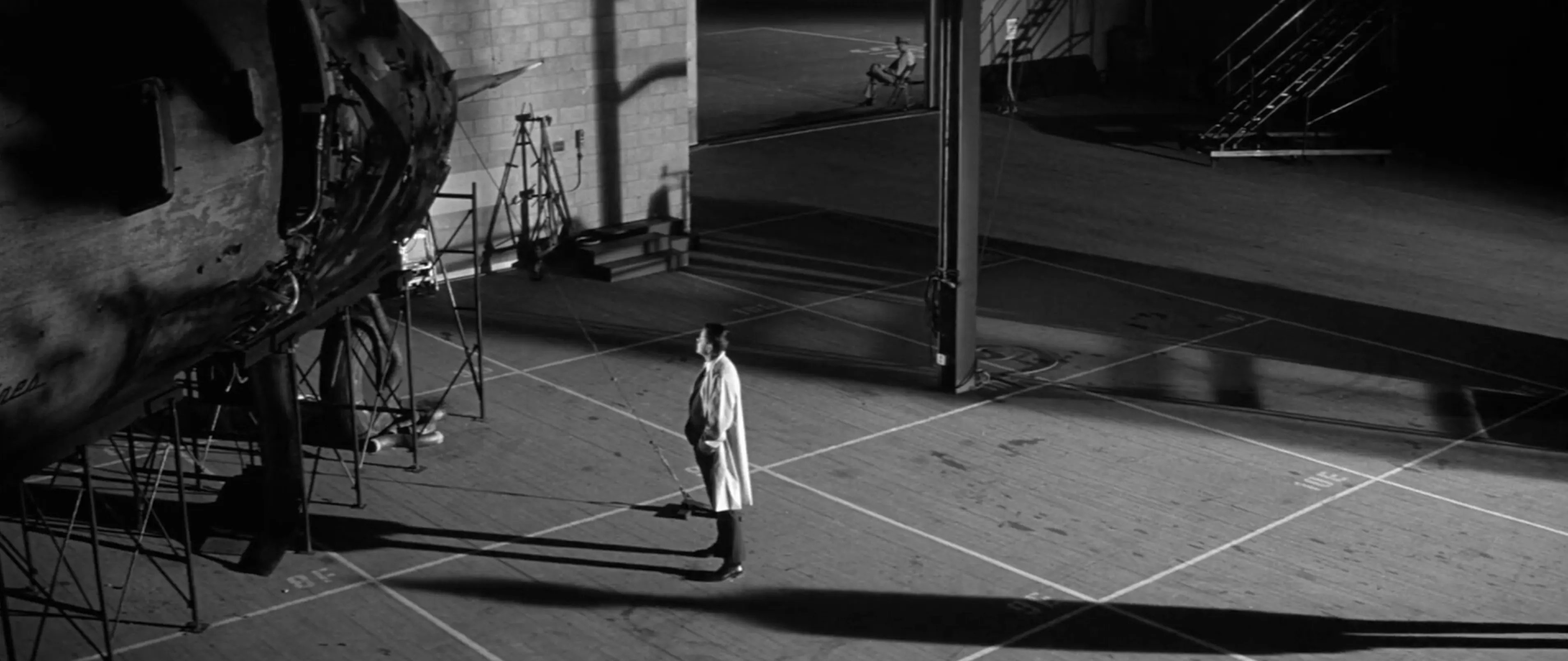
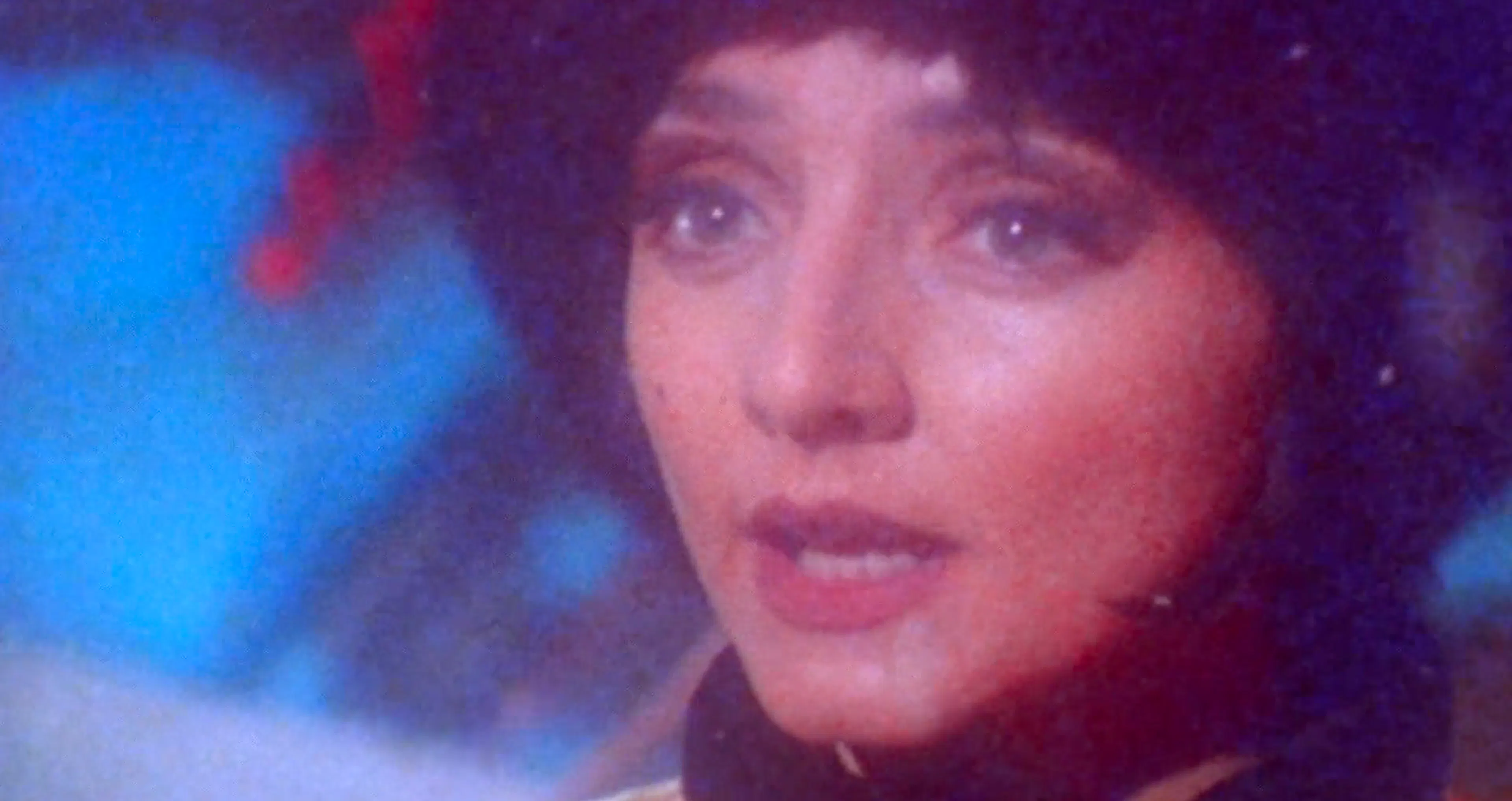
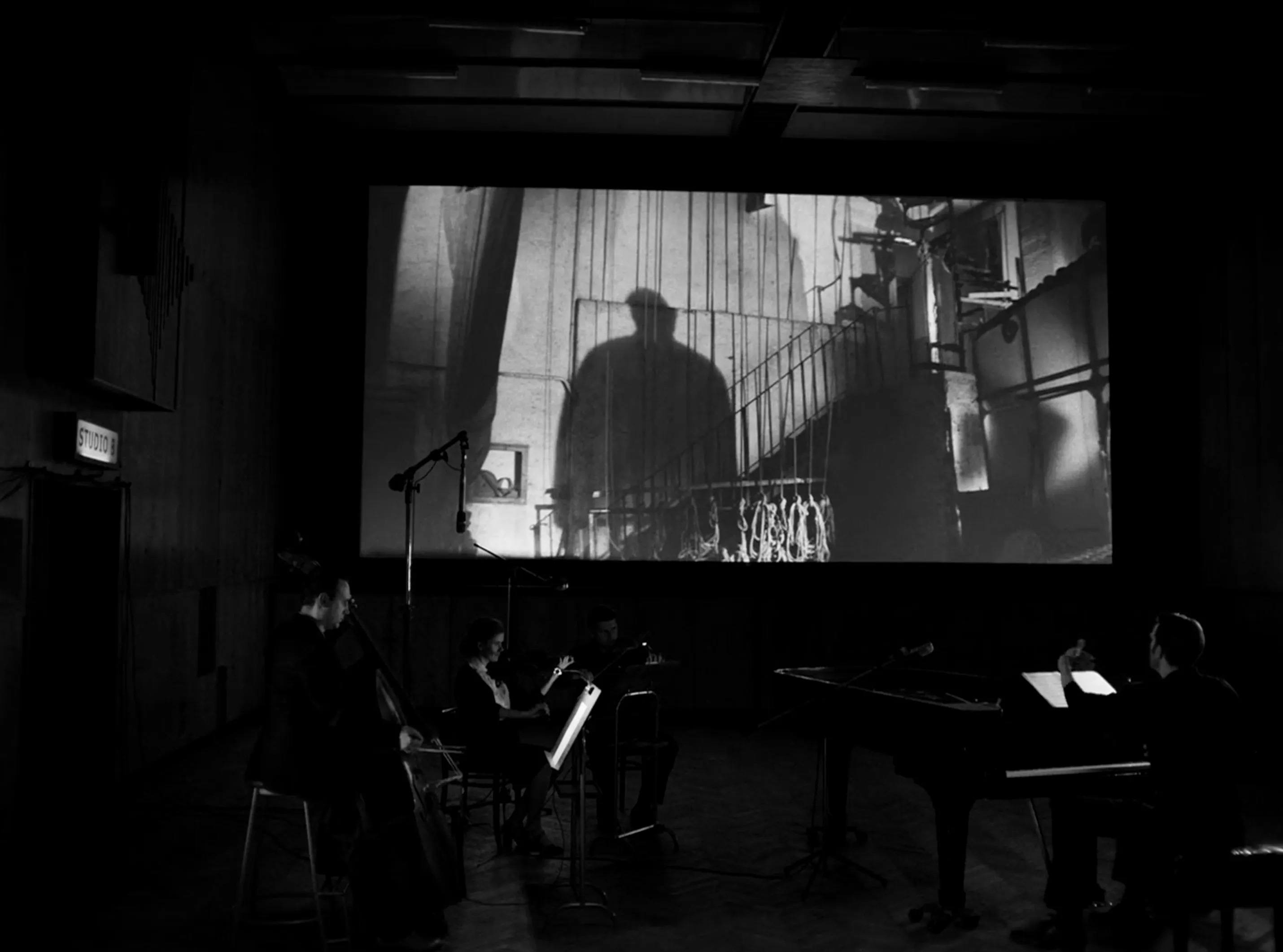
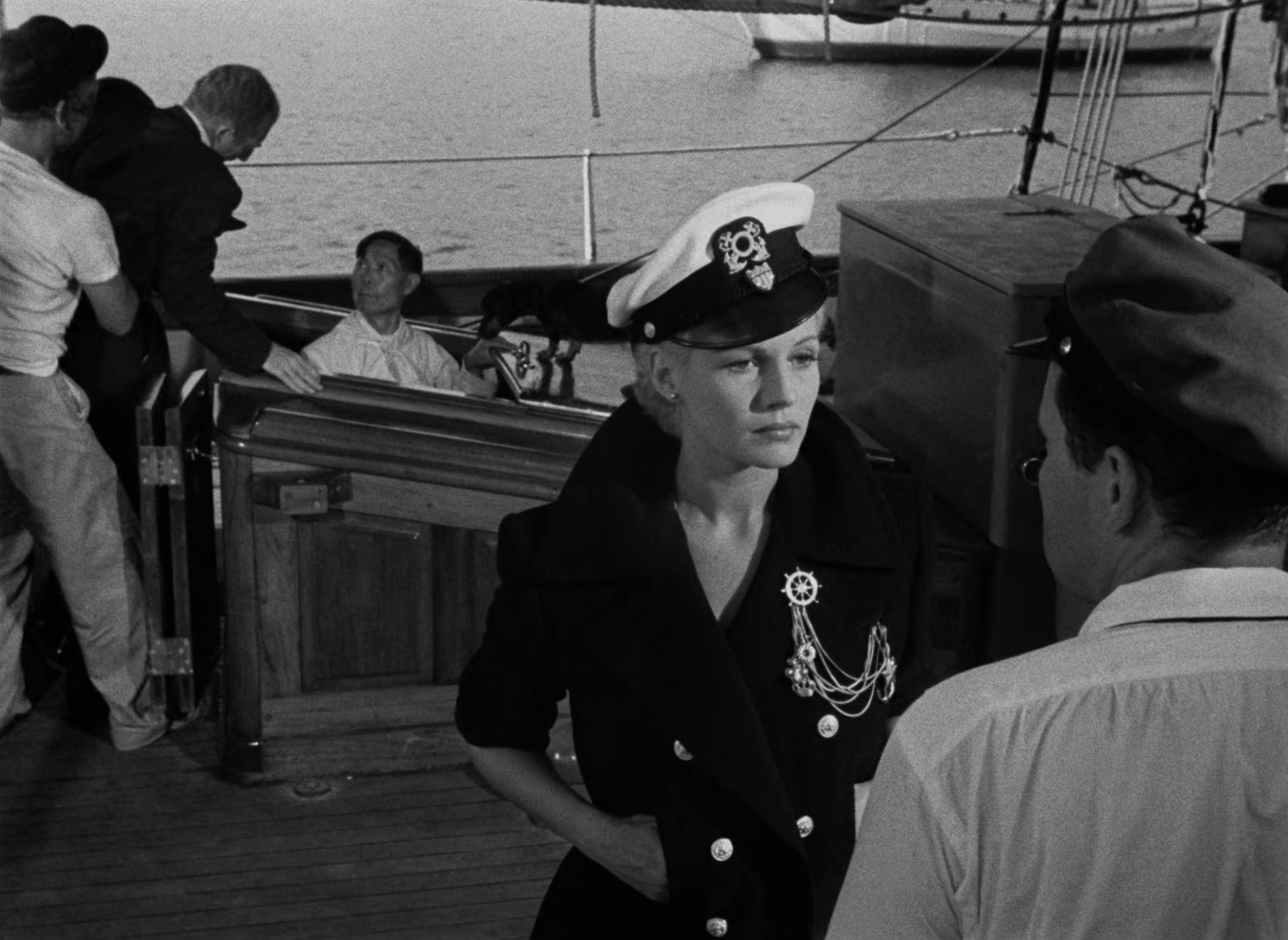
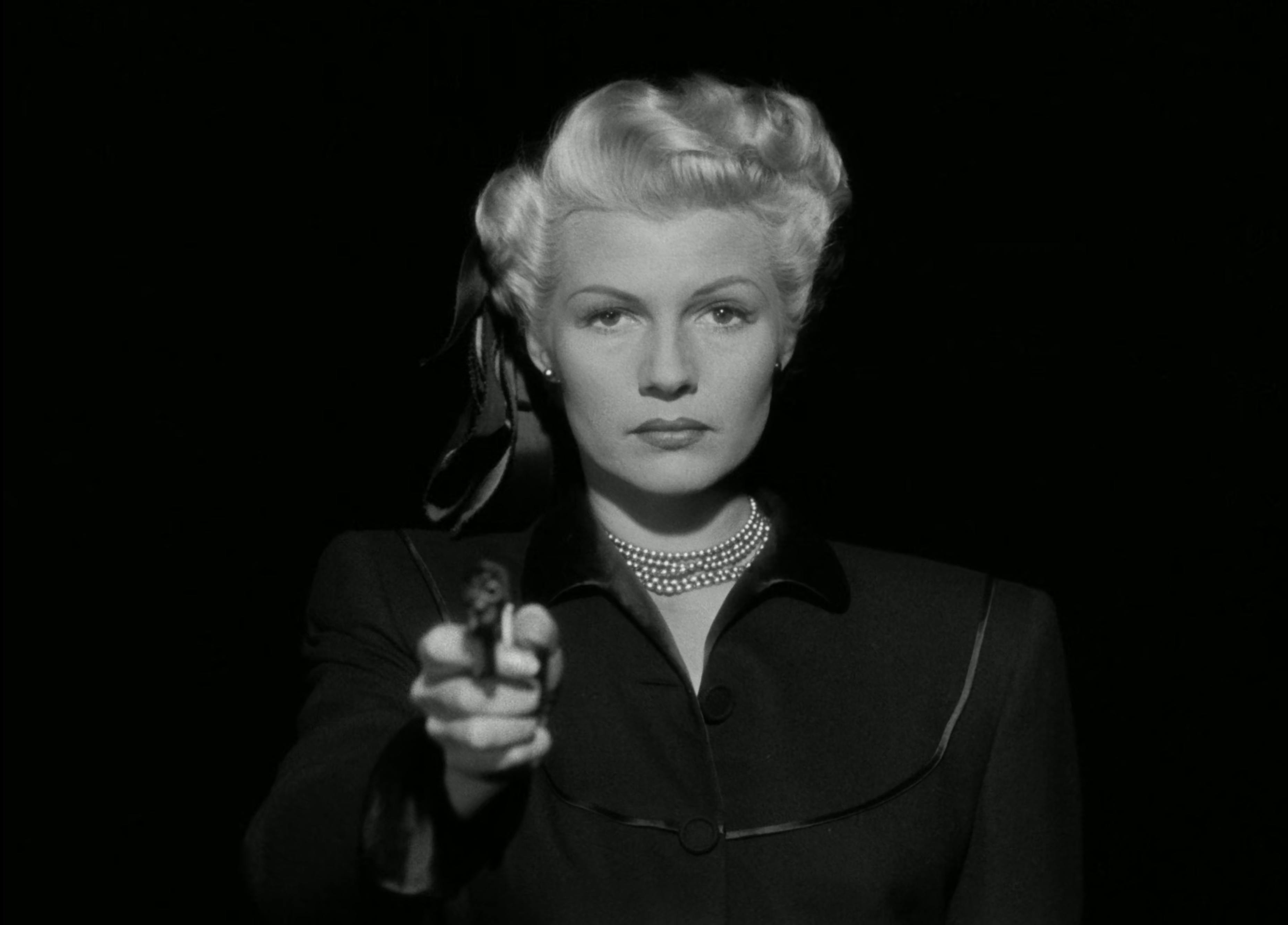
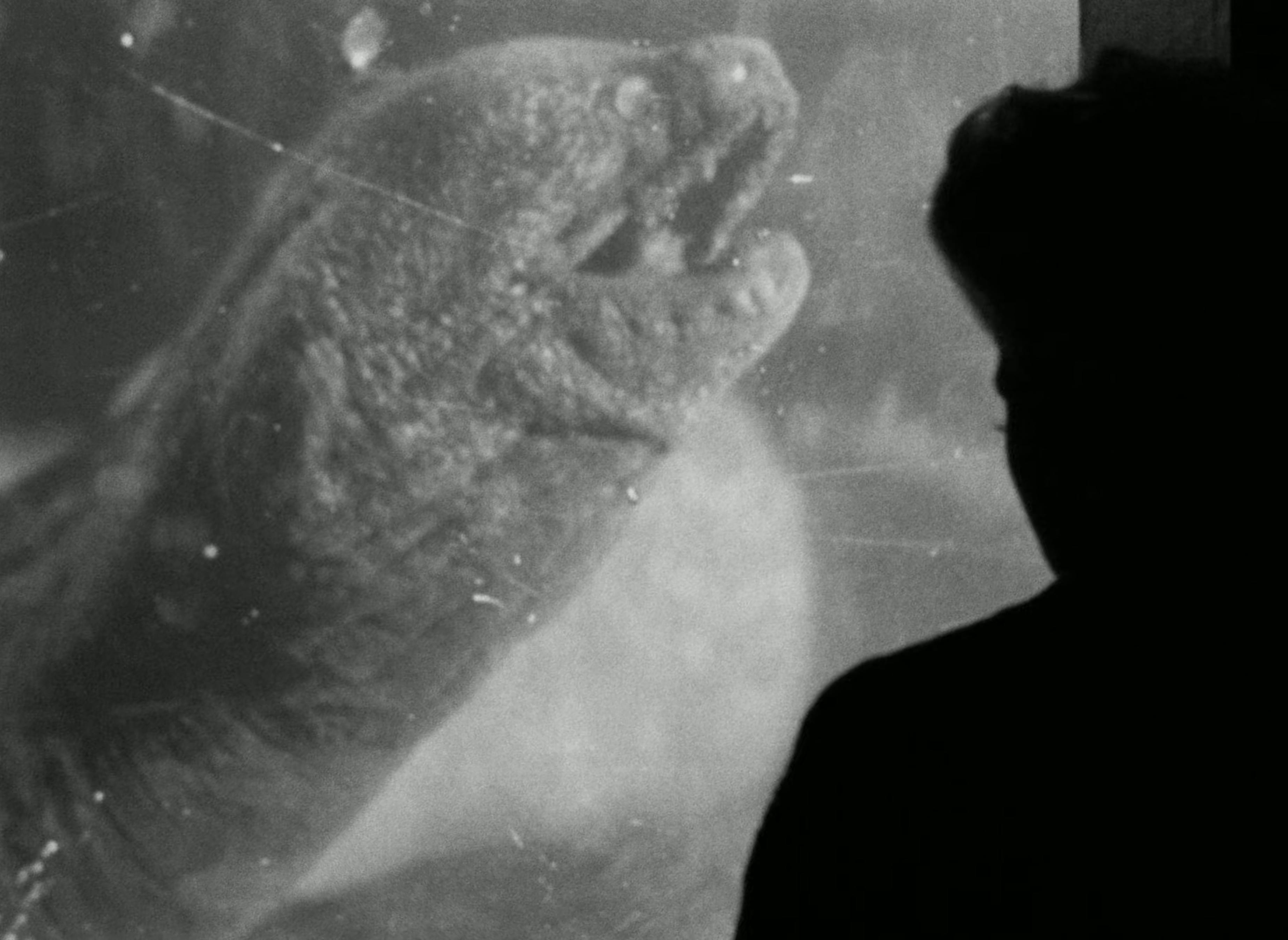
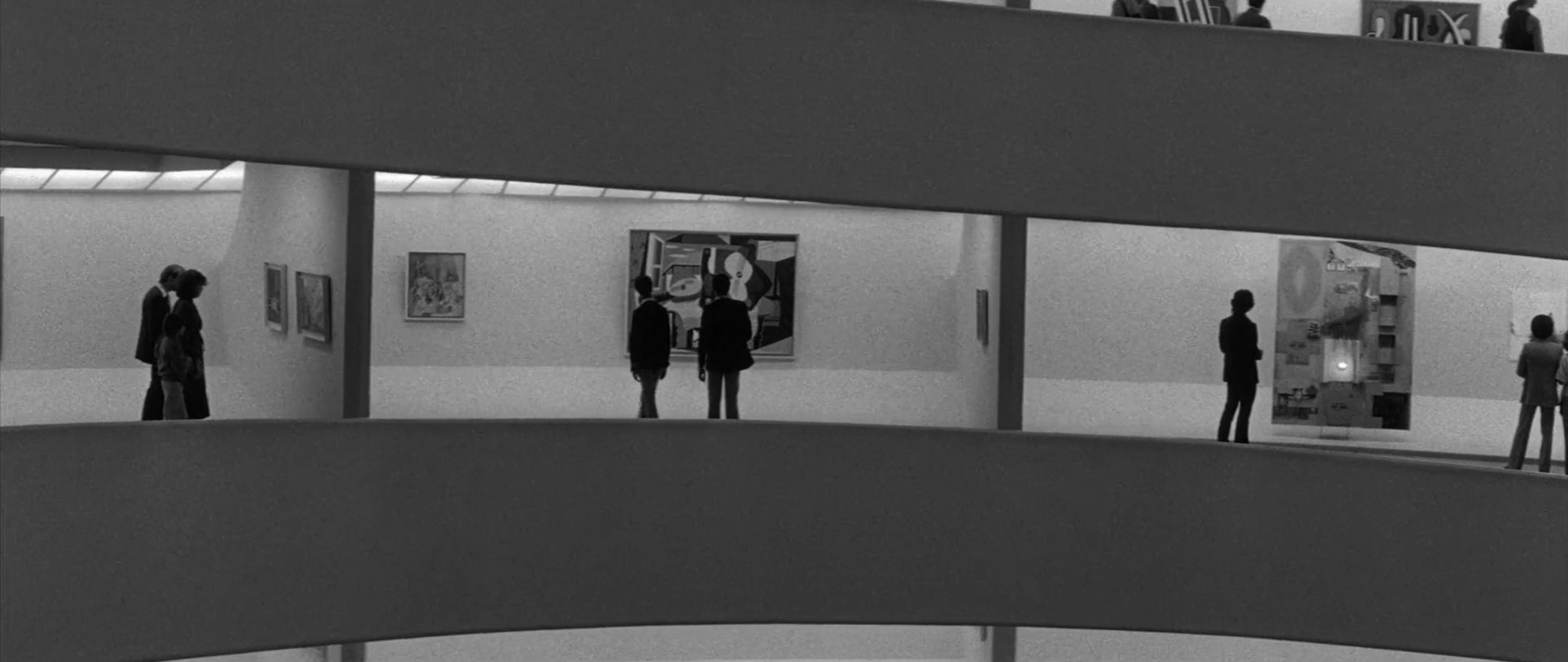
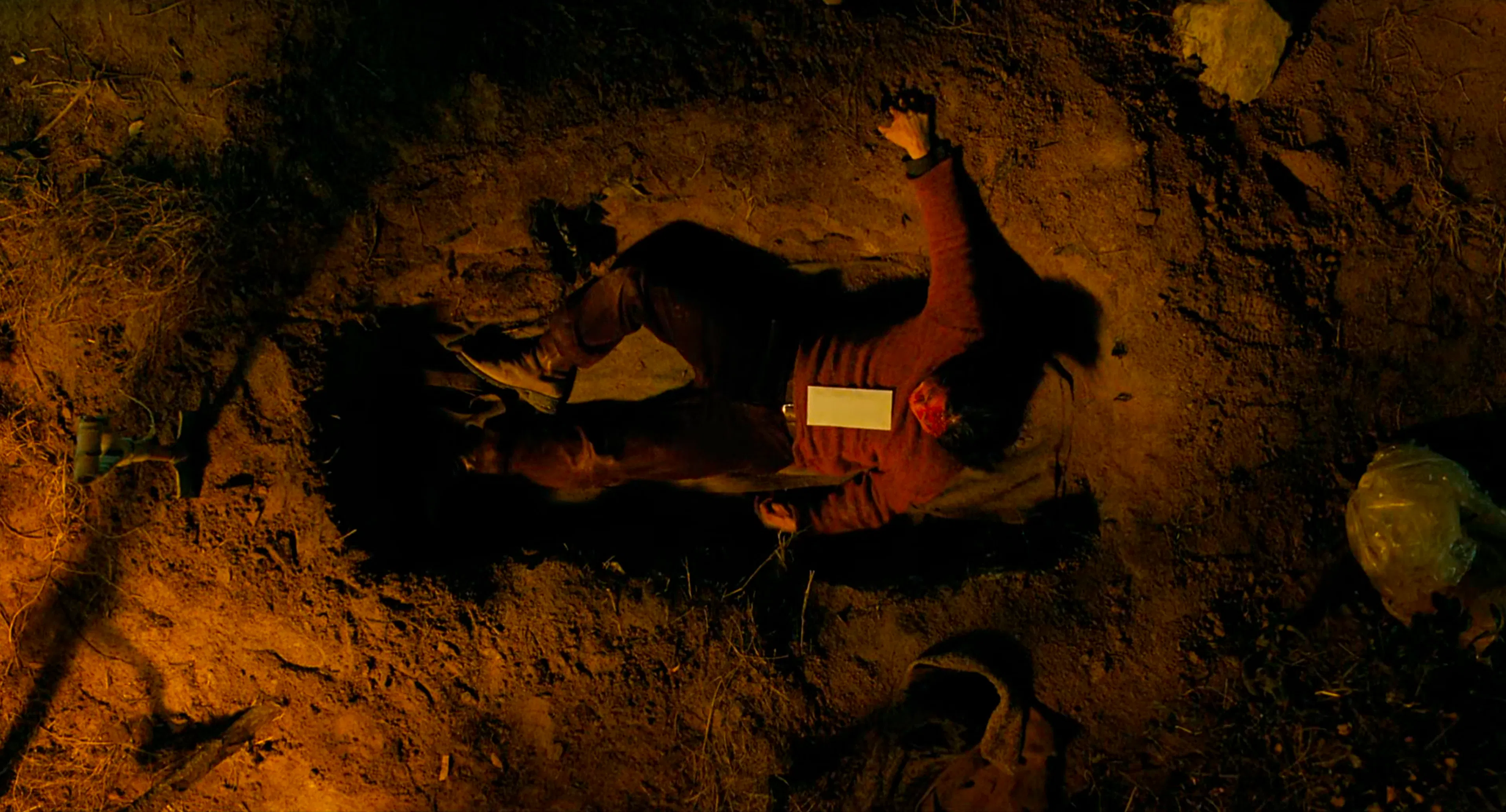
Orson Welles did better work earlier in his career. Several things about The Lady from Shanghai grated on me: Welles’ Irish accent, the stilted dialogue, the endless shots of Rita Hayworth gazing into the distance, the absurd courtroom scene. And then there’s the aquarium scene, complete with a wildly out-of-proportion turtle and eel. It's still.
It’s not all bad. Rita Hayworth owns her sailing outfit. We need to bring that look to city streets around the world immediately.
Rita also knows how to handle a gun. Marilyn might have pulled off the nautical chic, but only Rita could point the revolver.
Still, look at the size of that eel. What were they thinking?
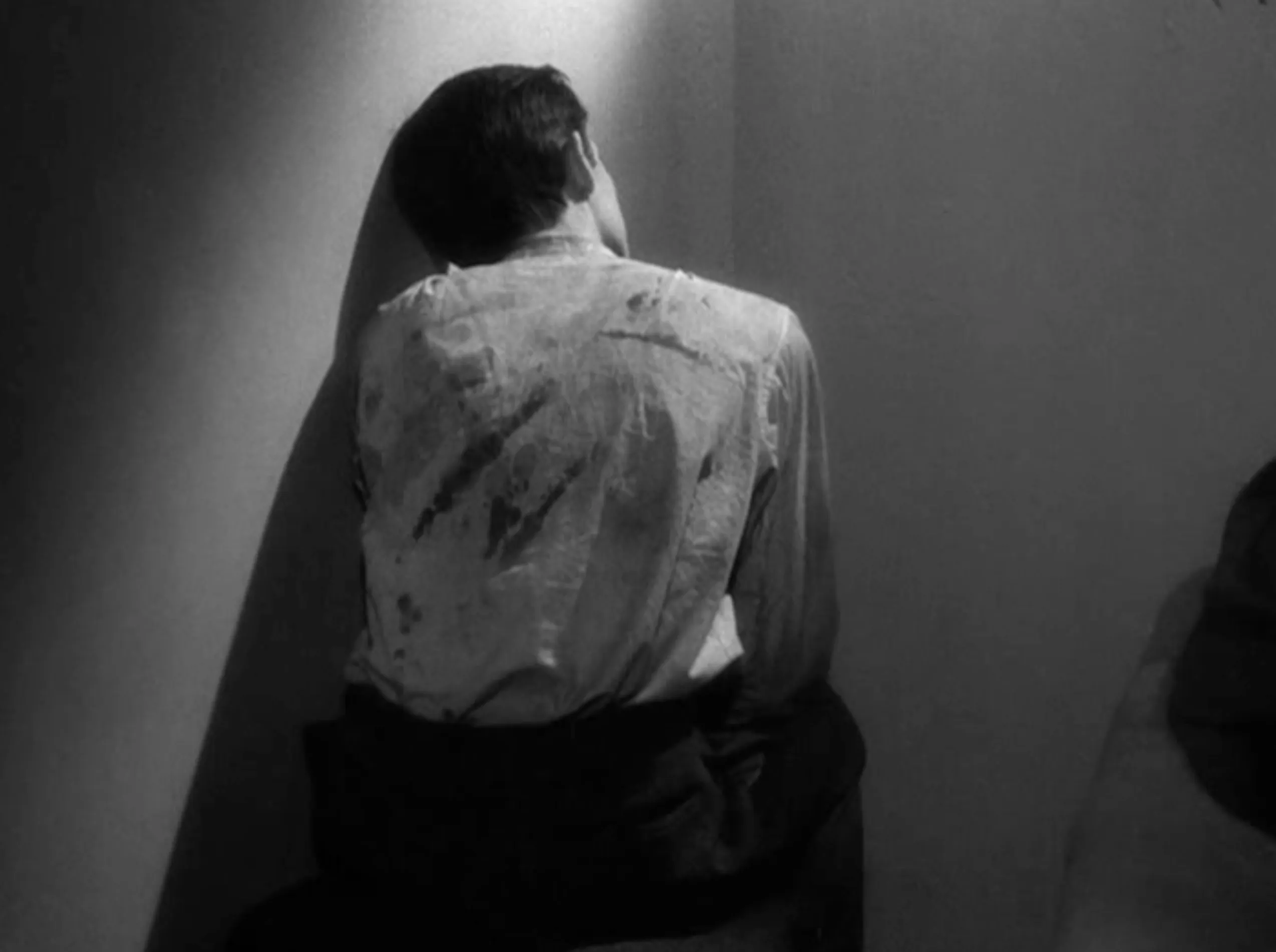
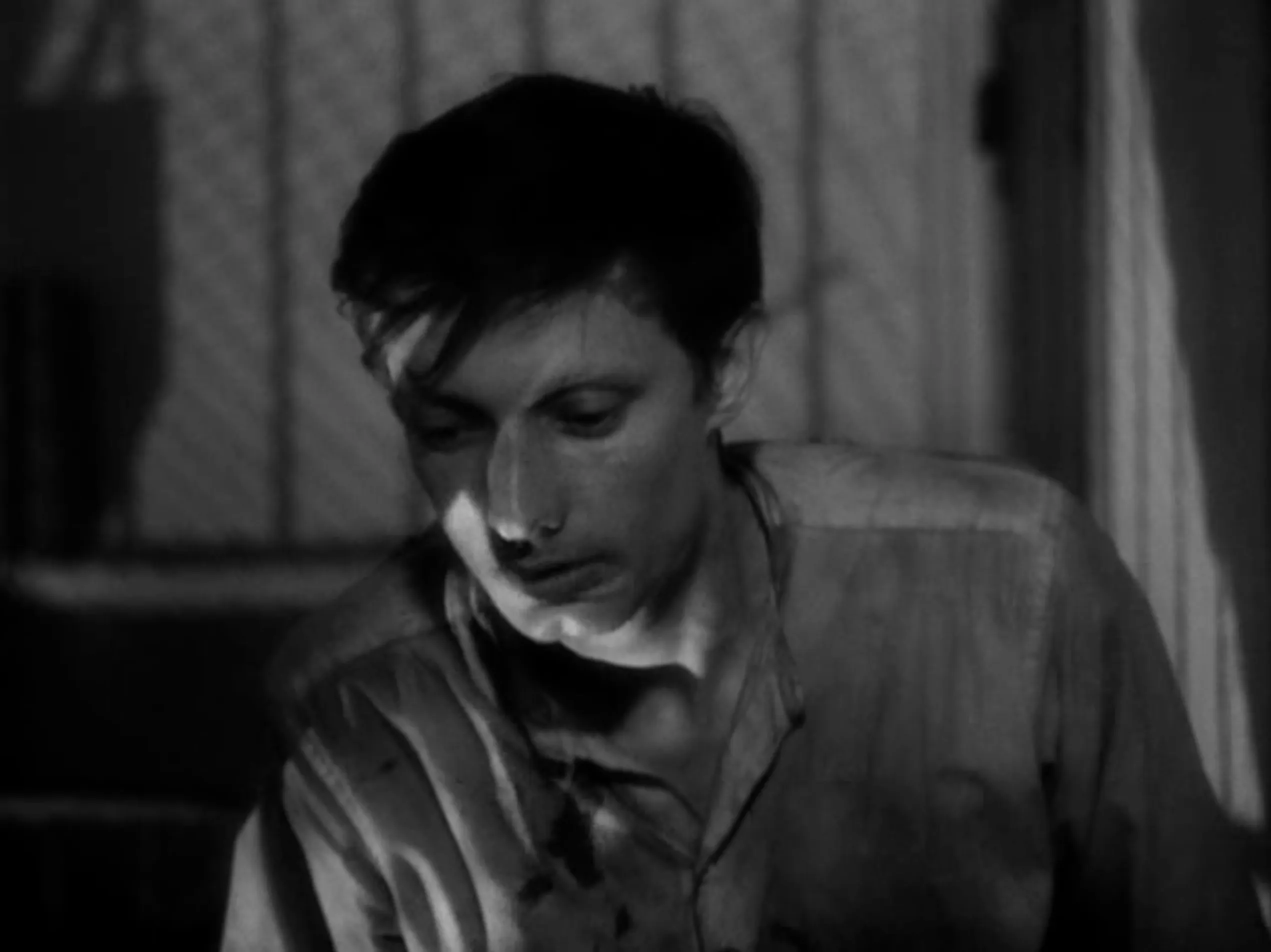
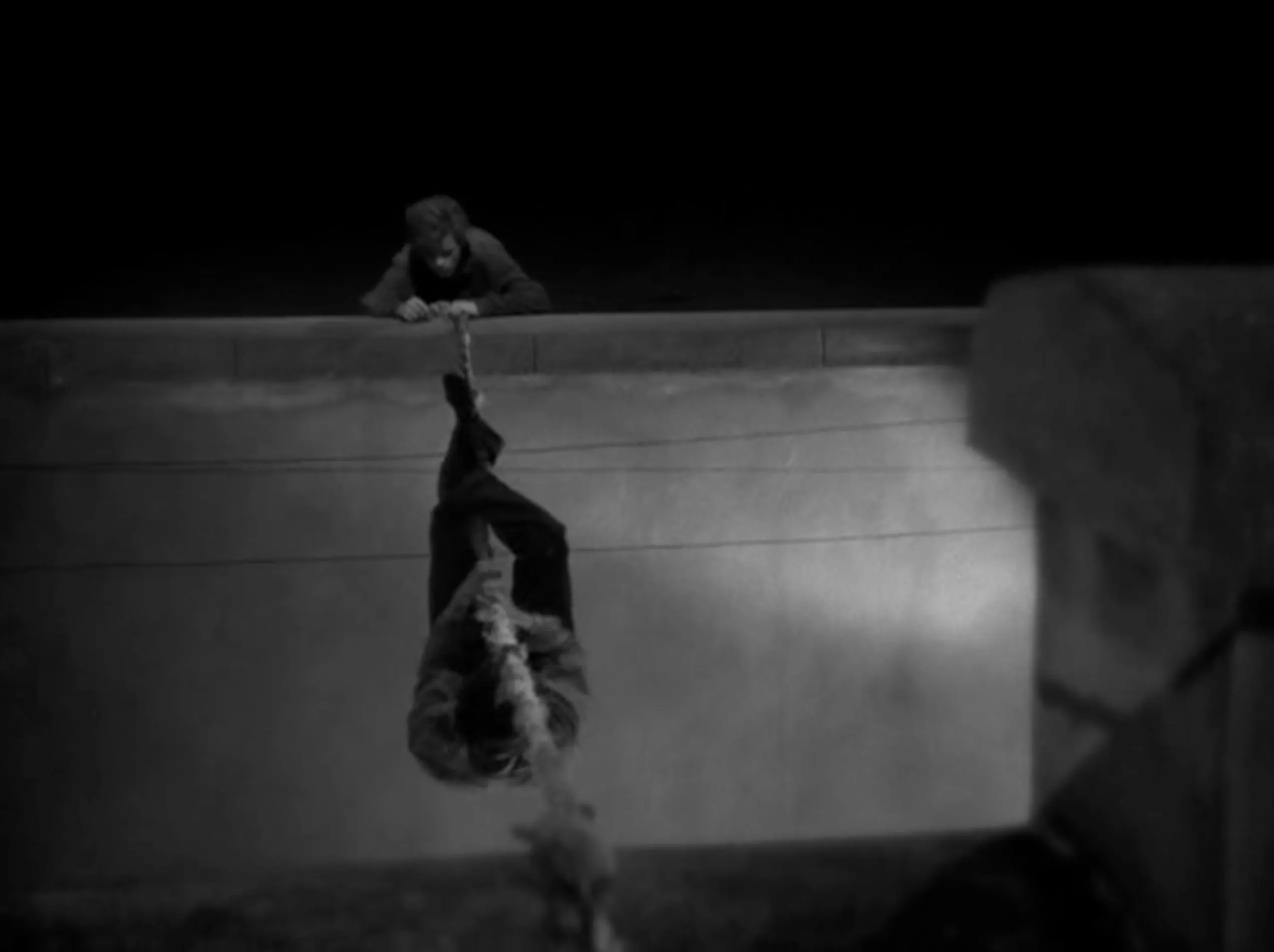
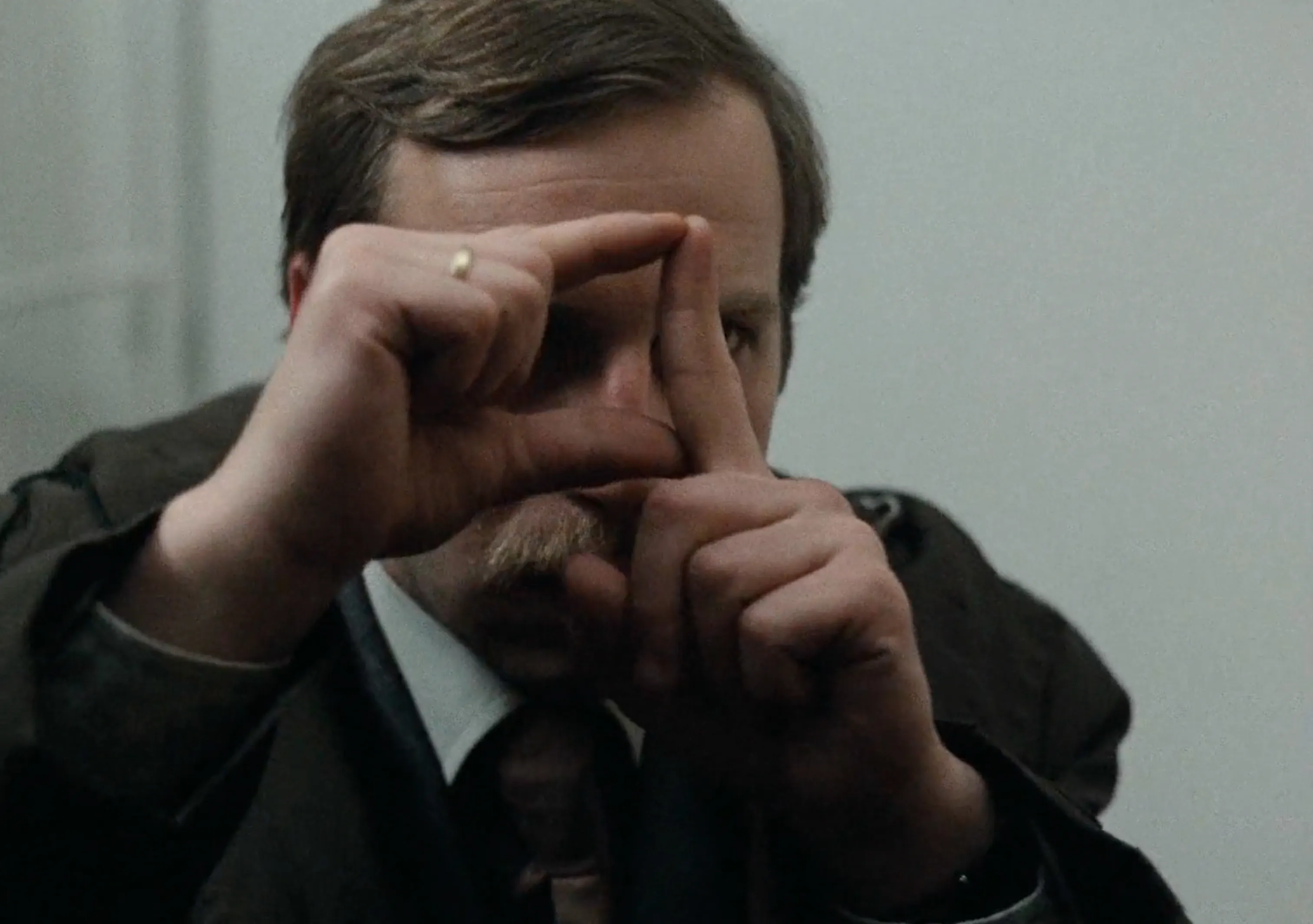
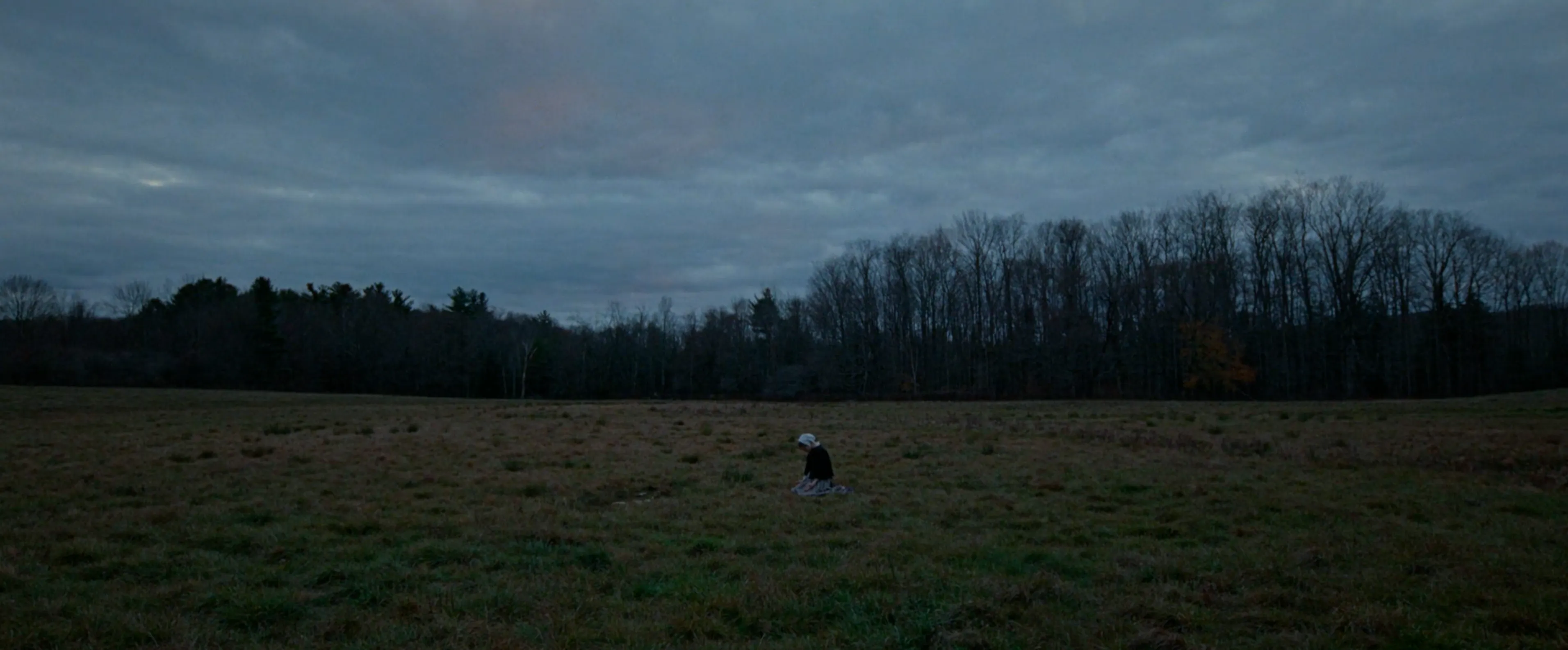
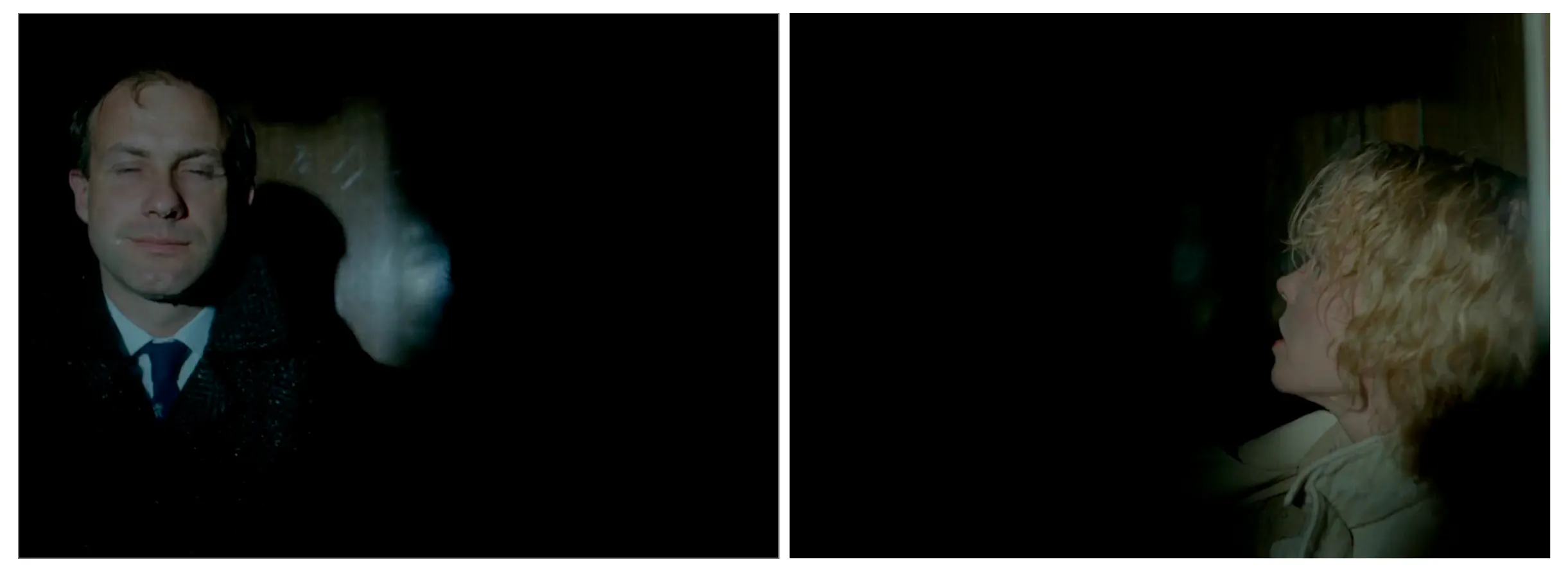
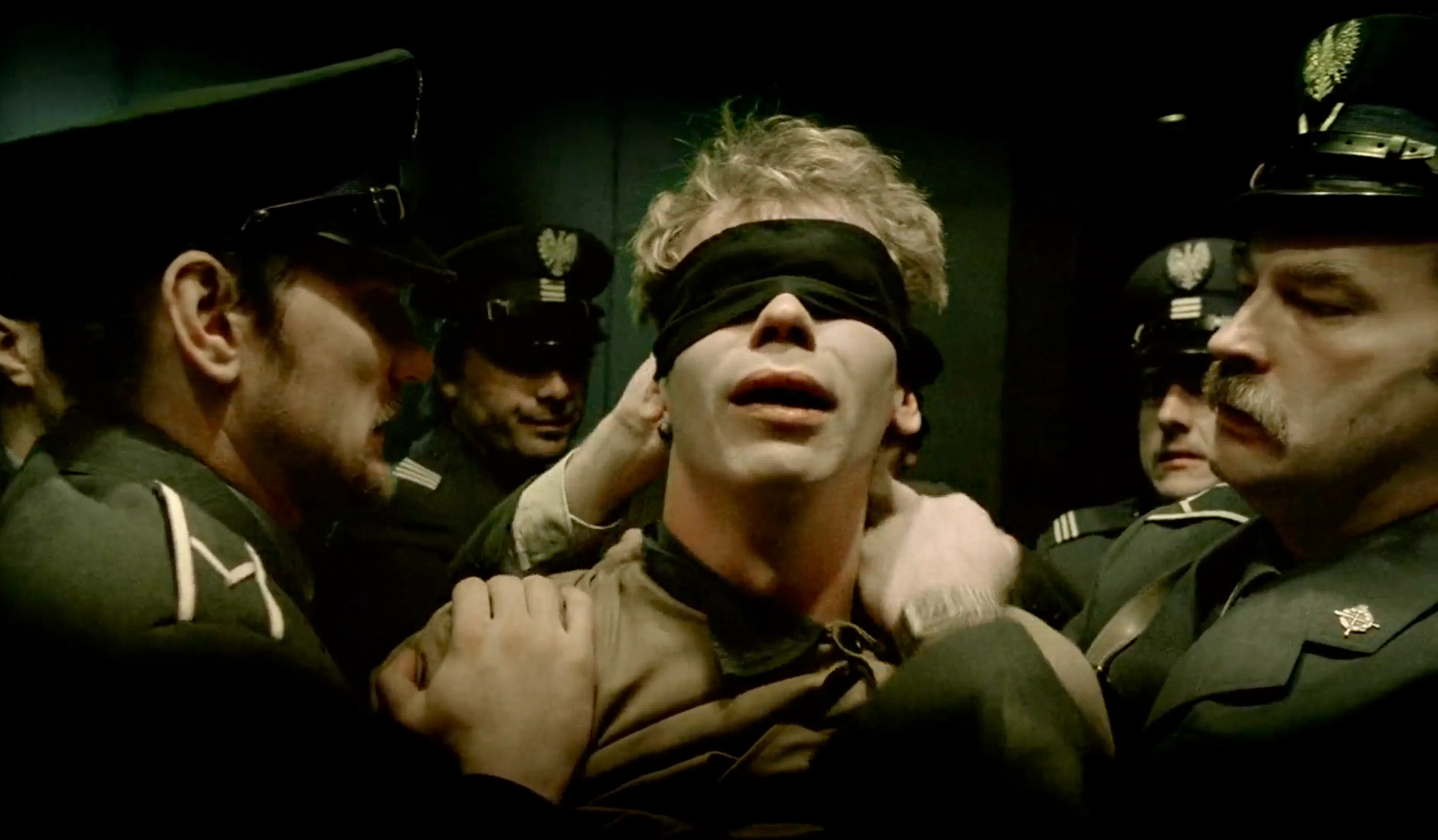
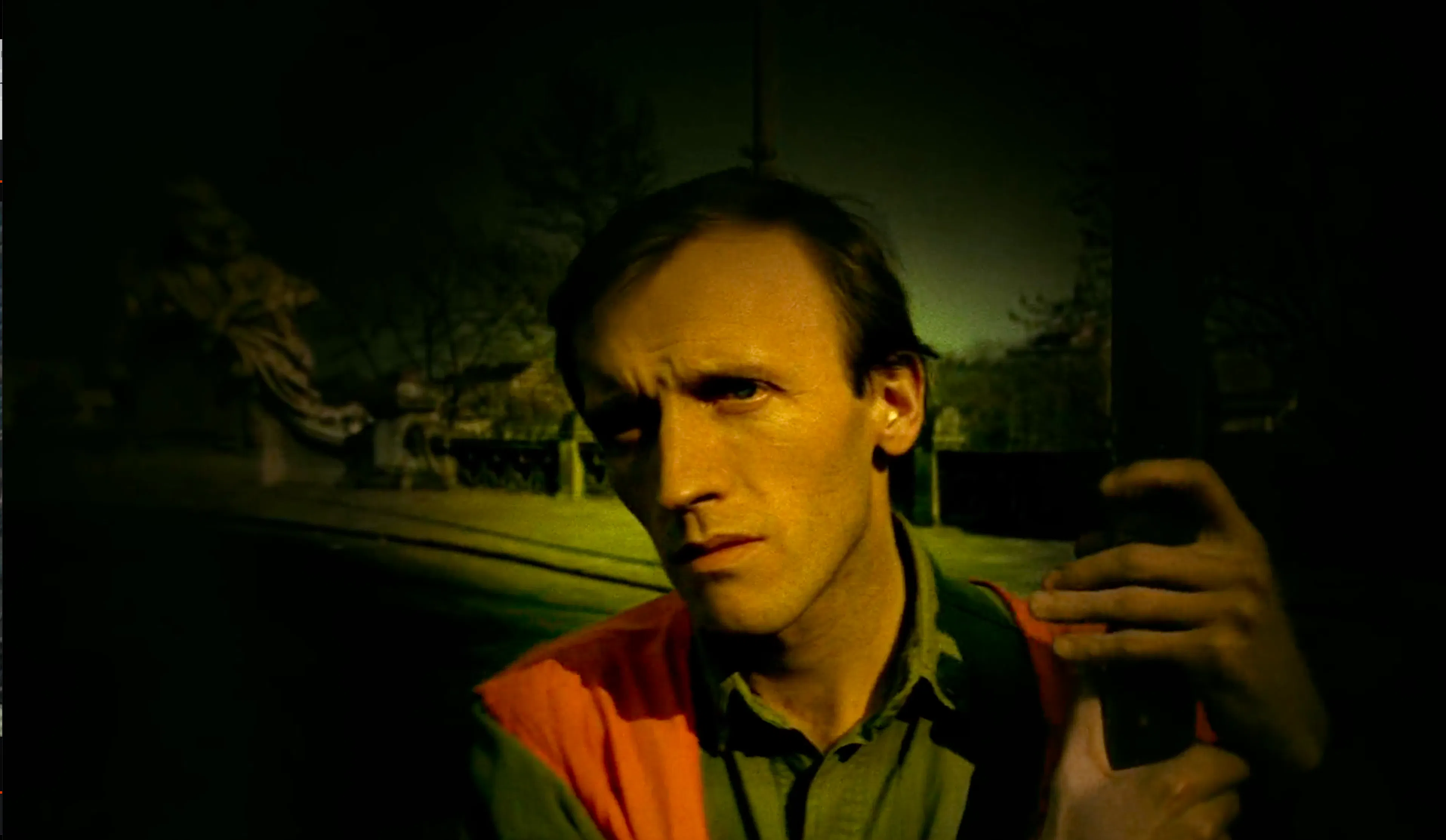
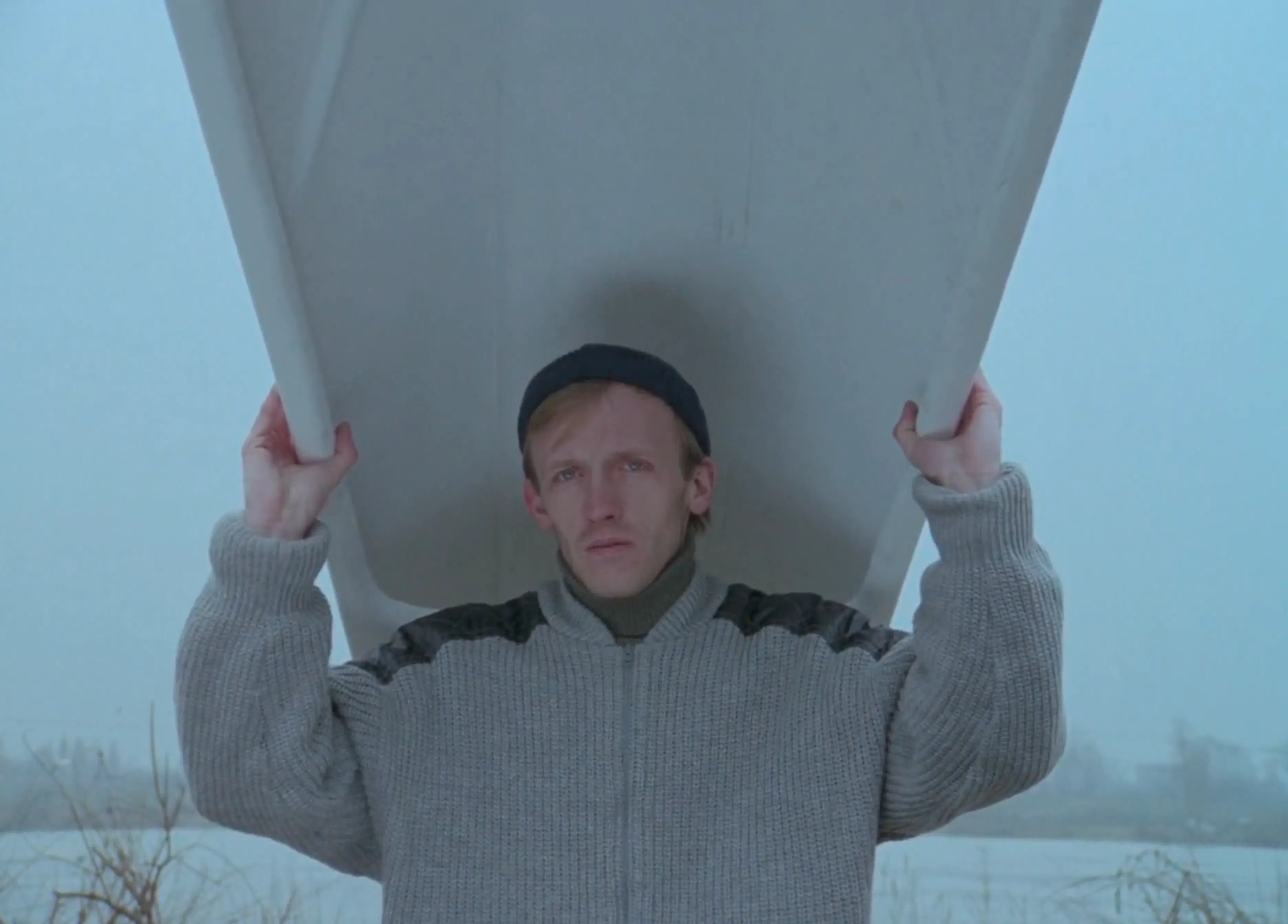
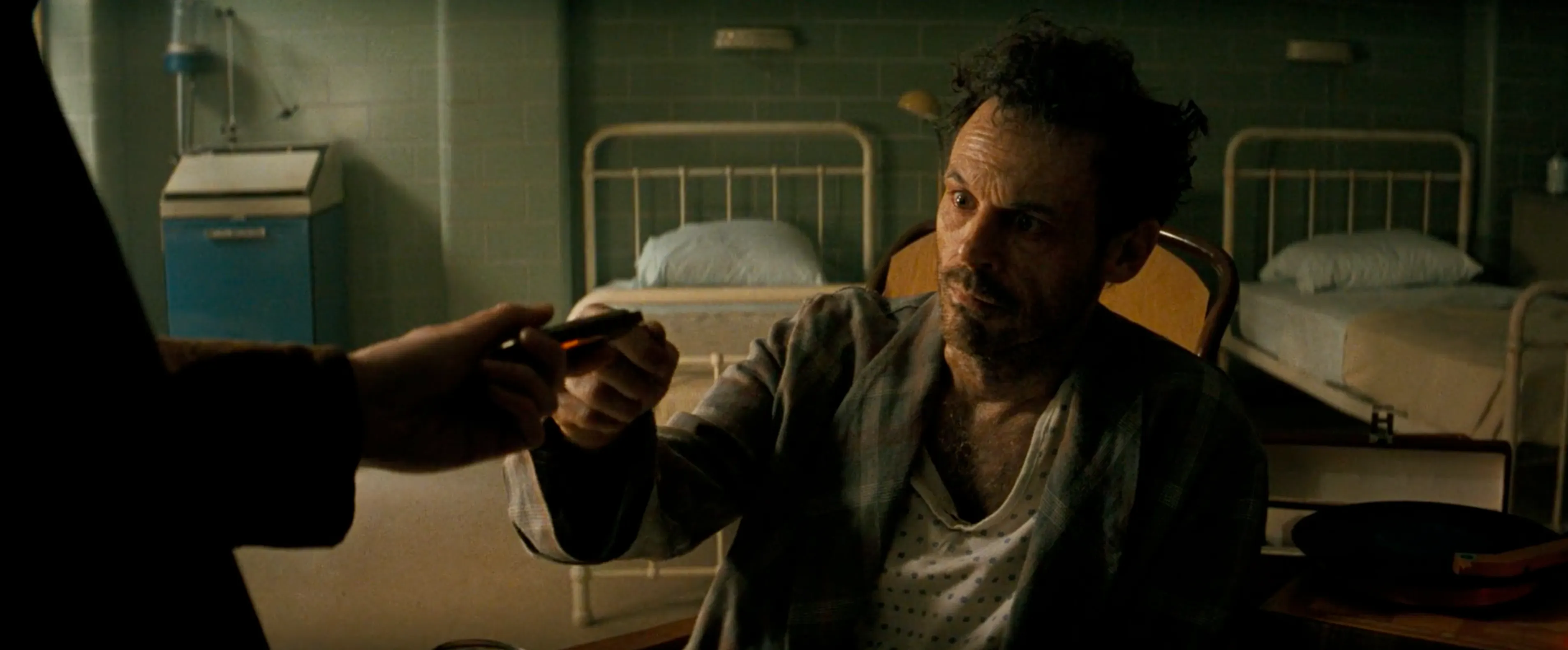
Dekalog III tackles the least dramatic of the commandments: Remember the Sabbath day, to keep it holy. Yet Kieślowski still manages to turn it into something devastating.
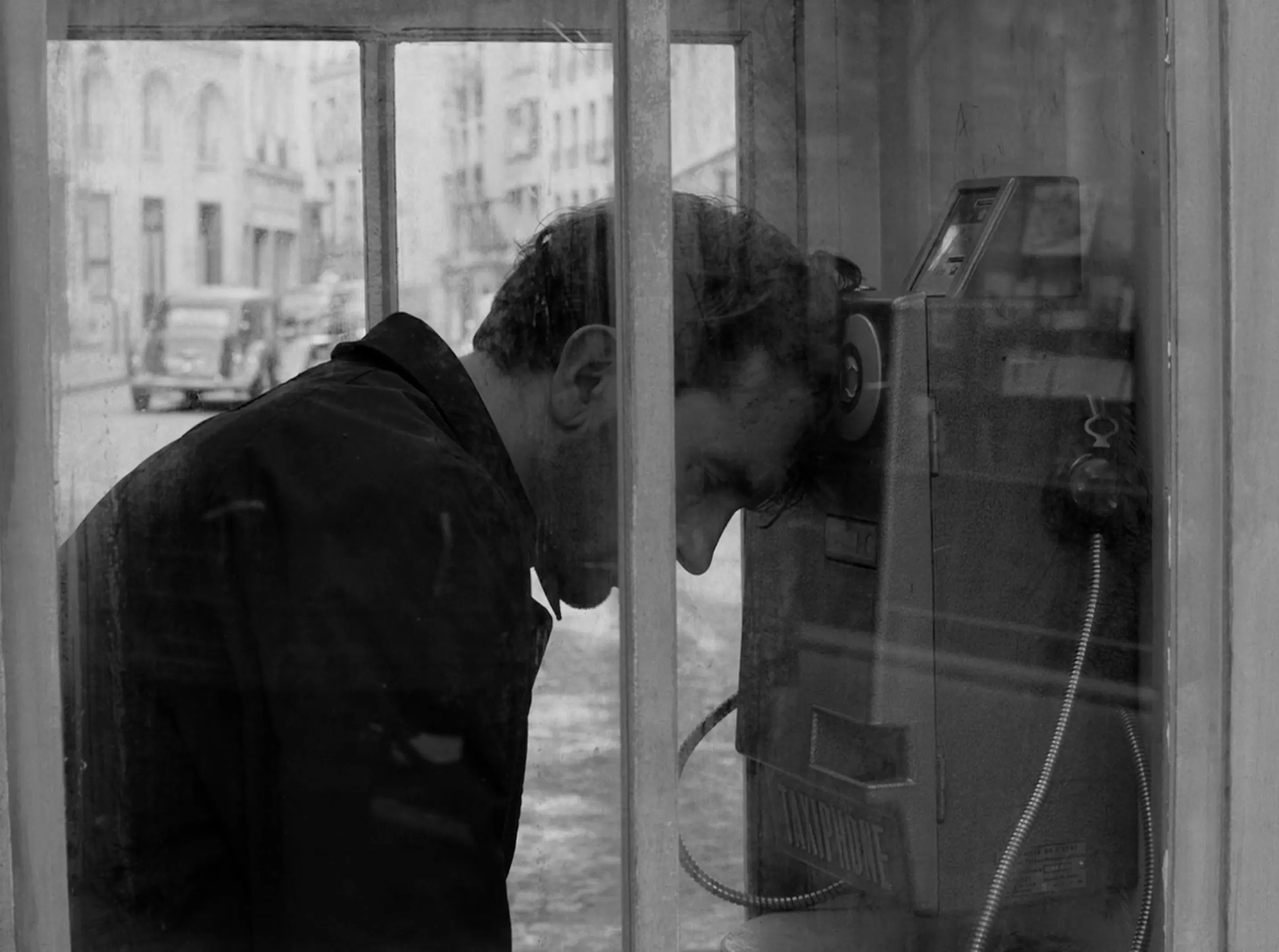
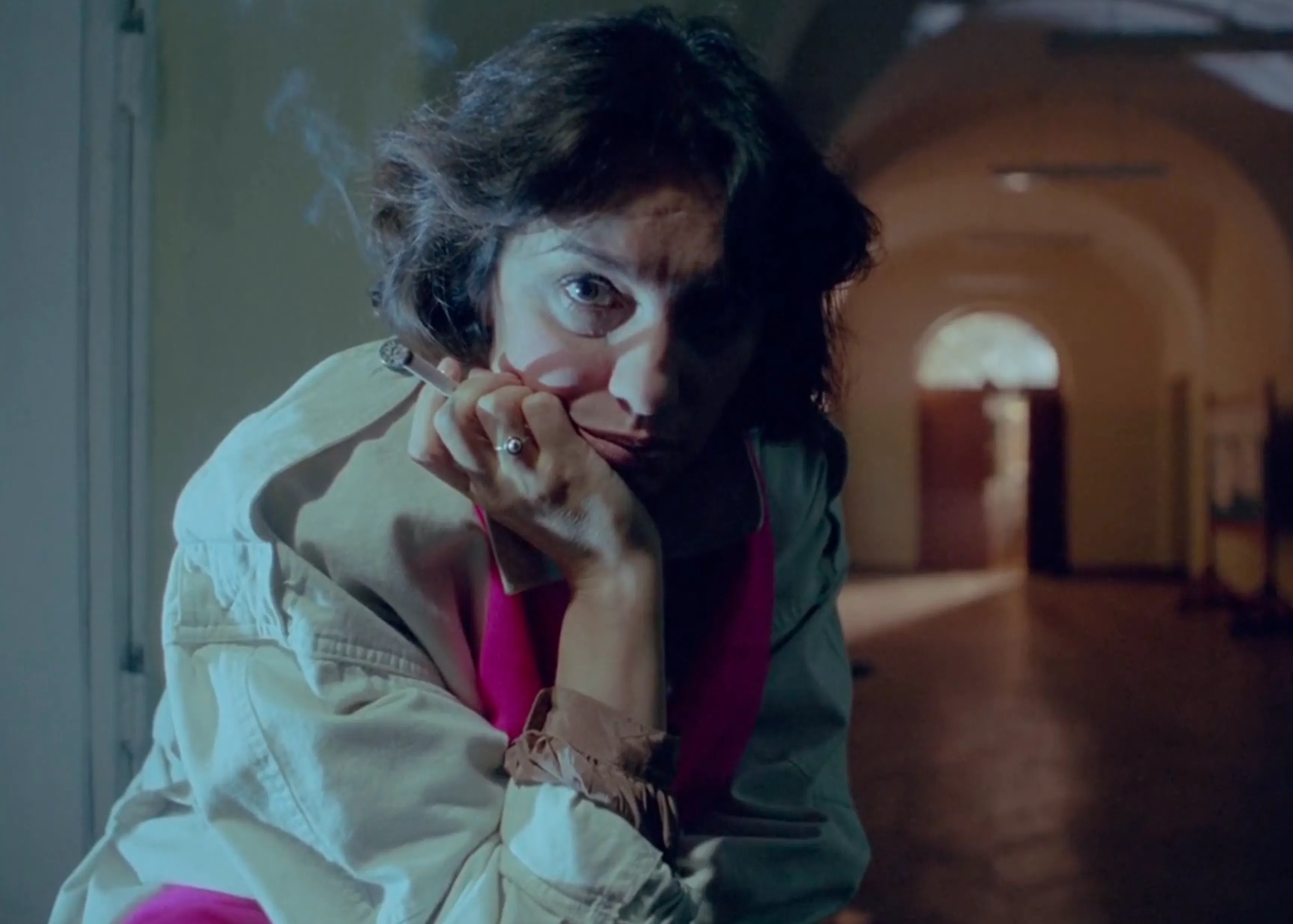
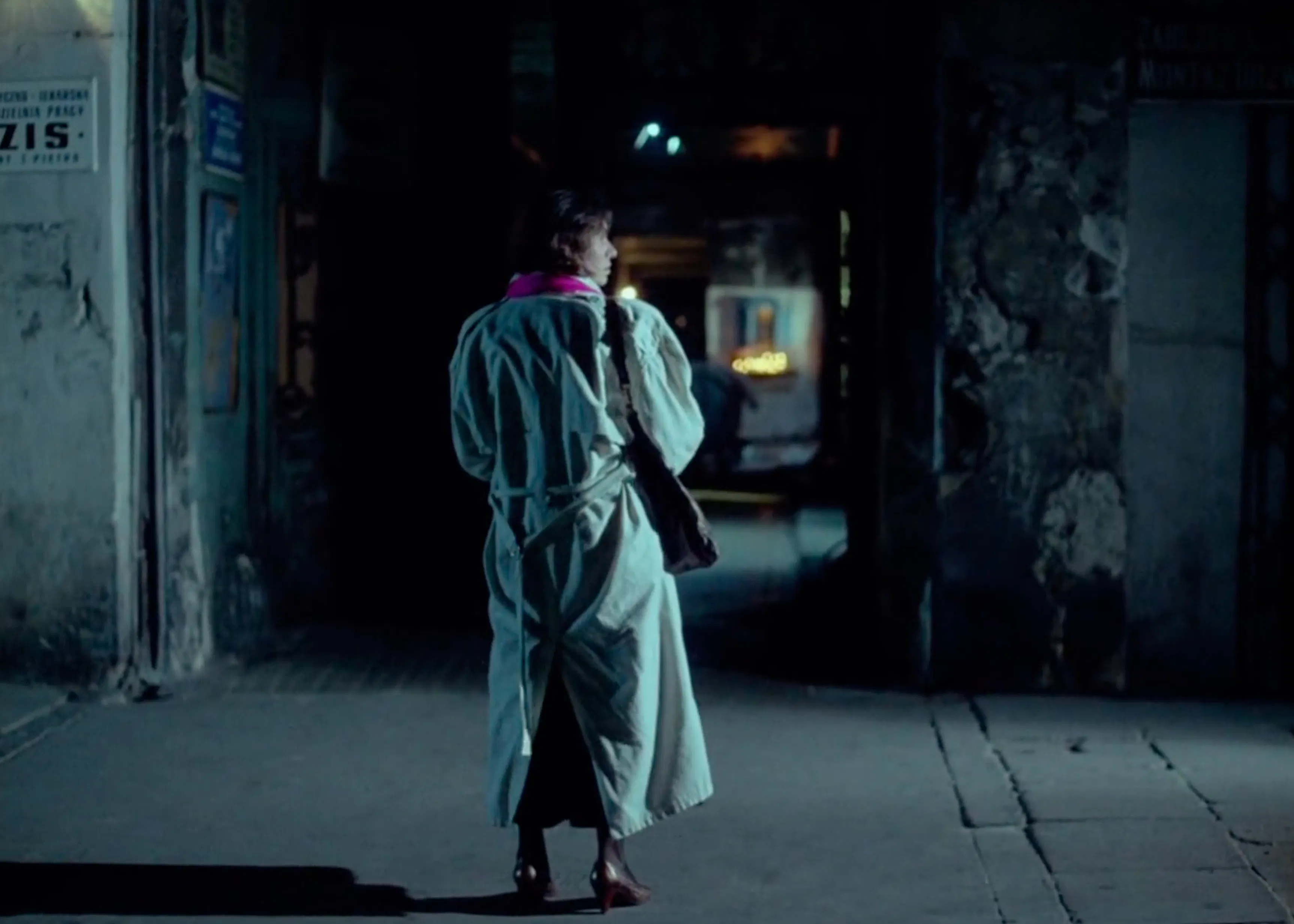
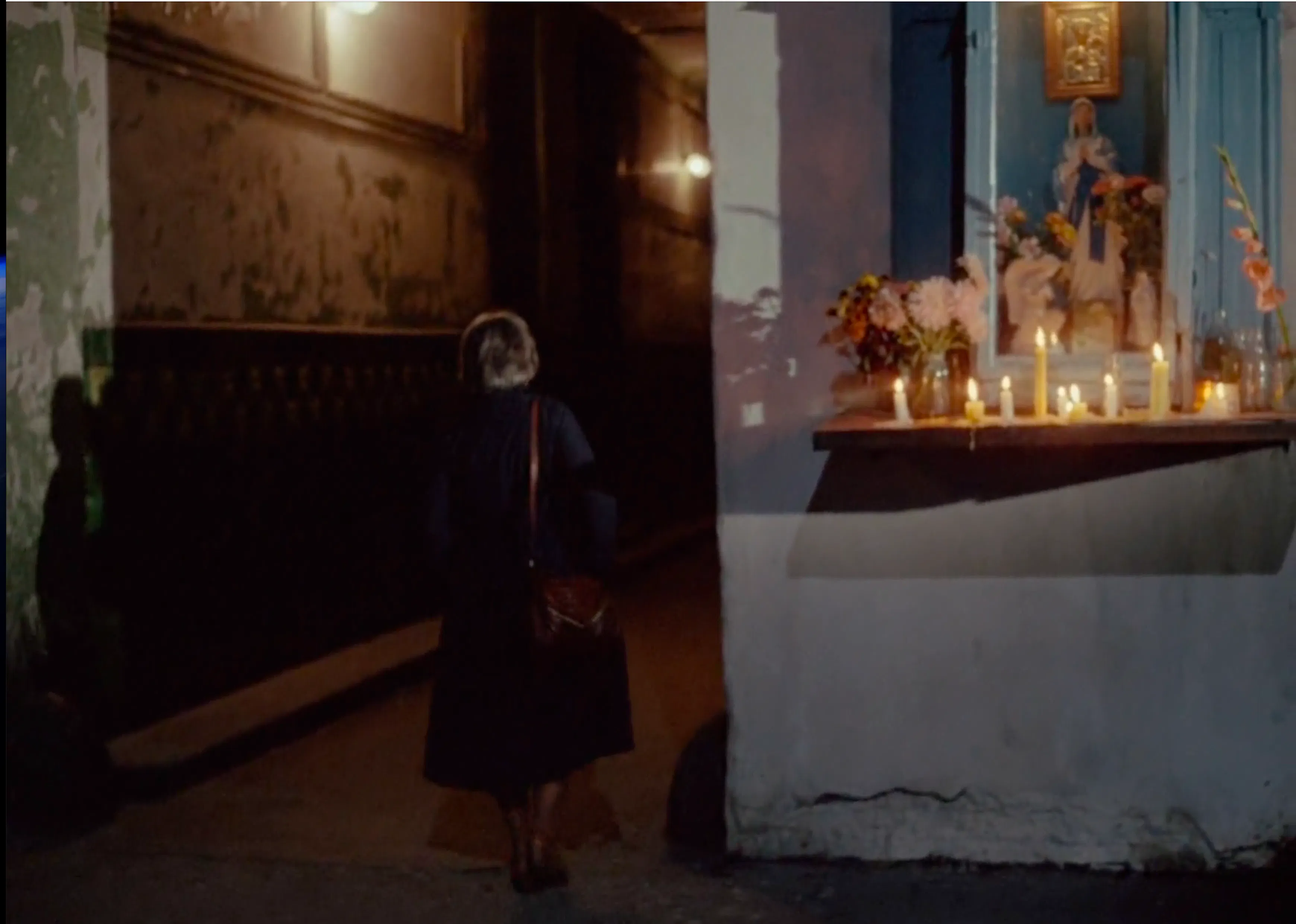
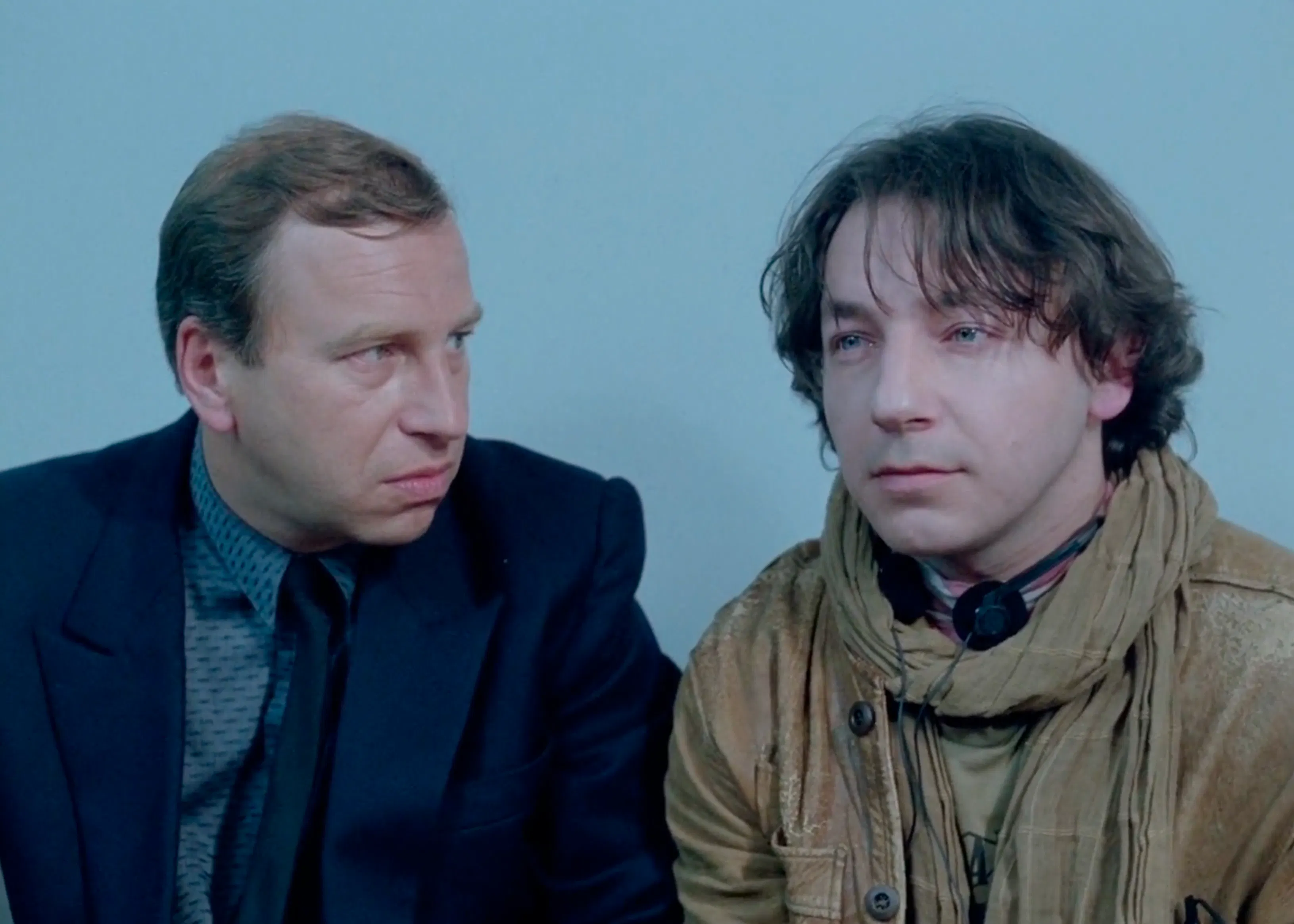
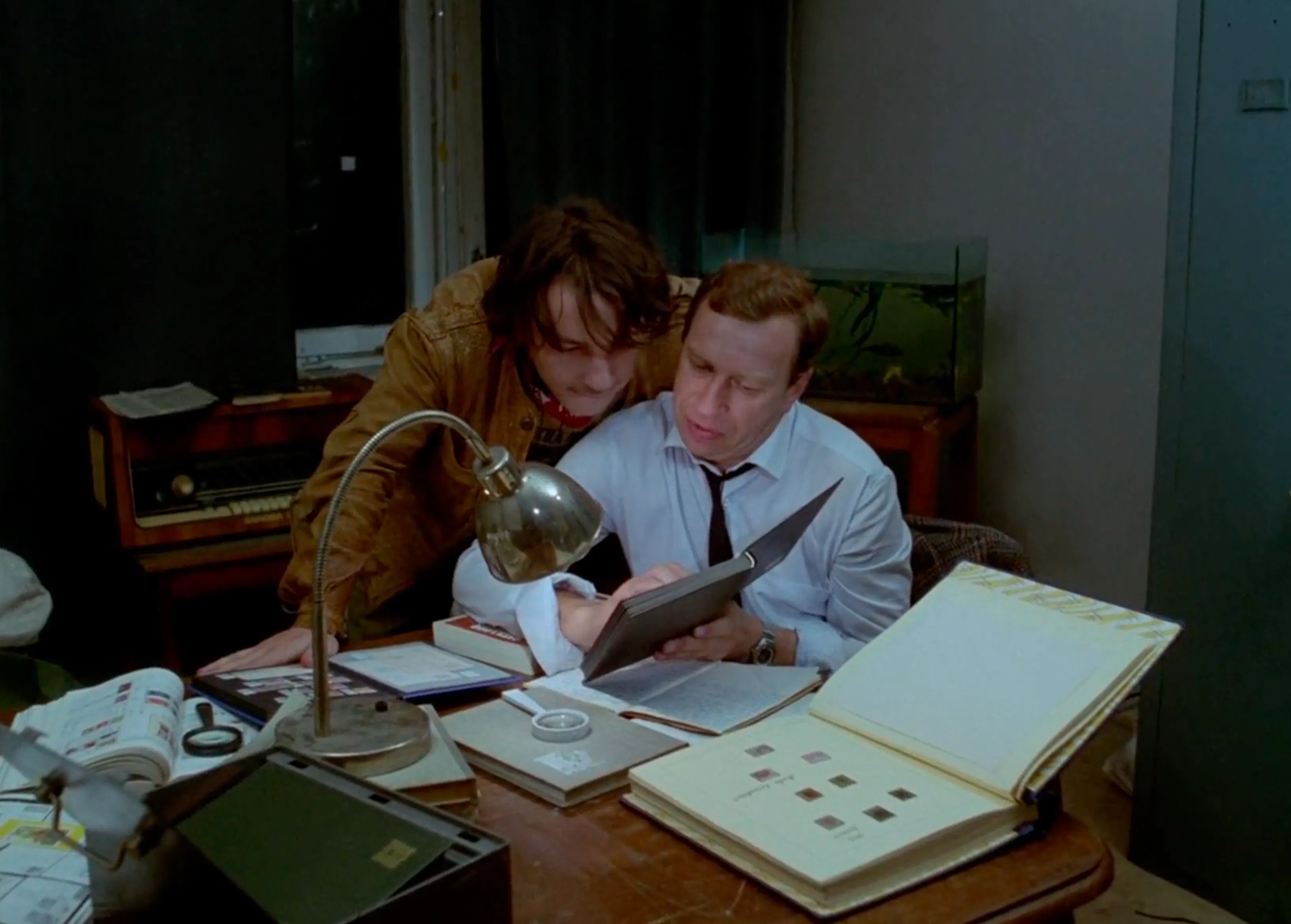
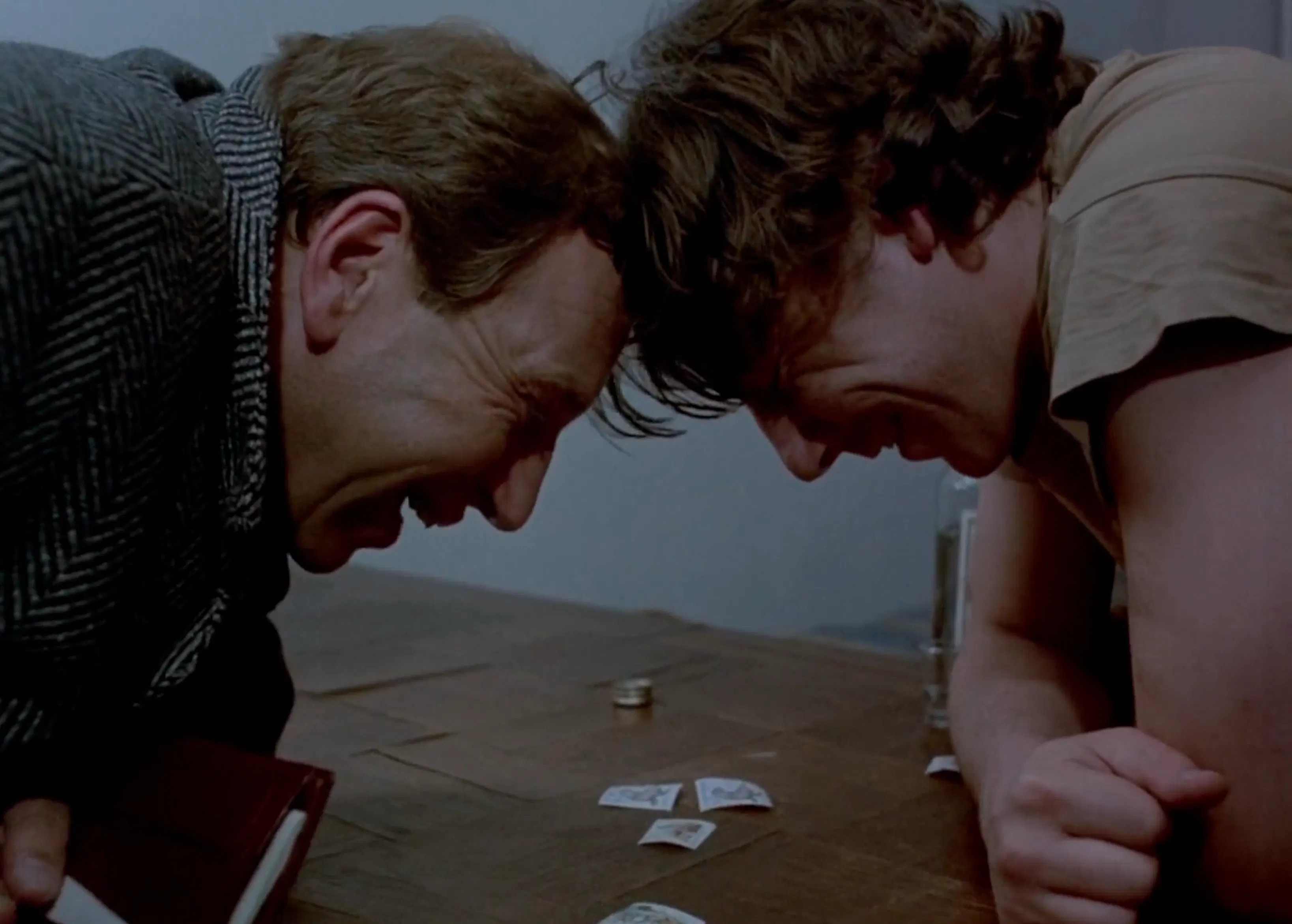
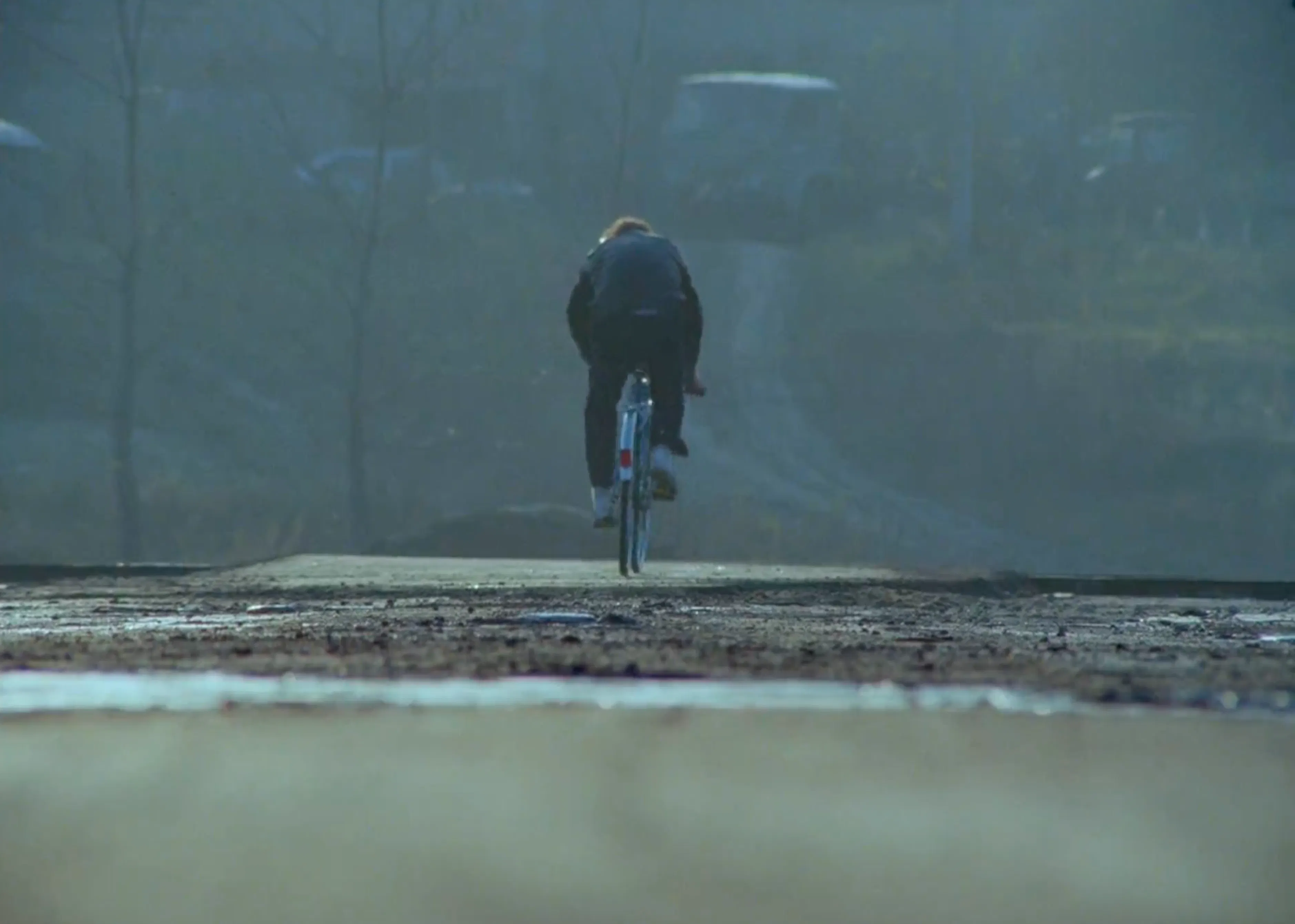
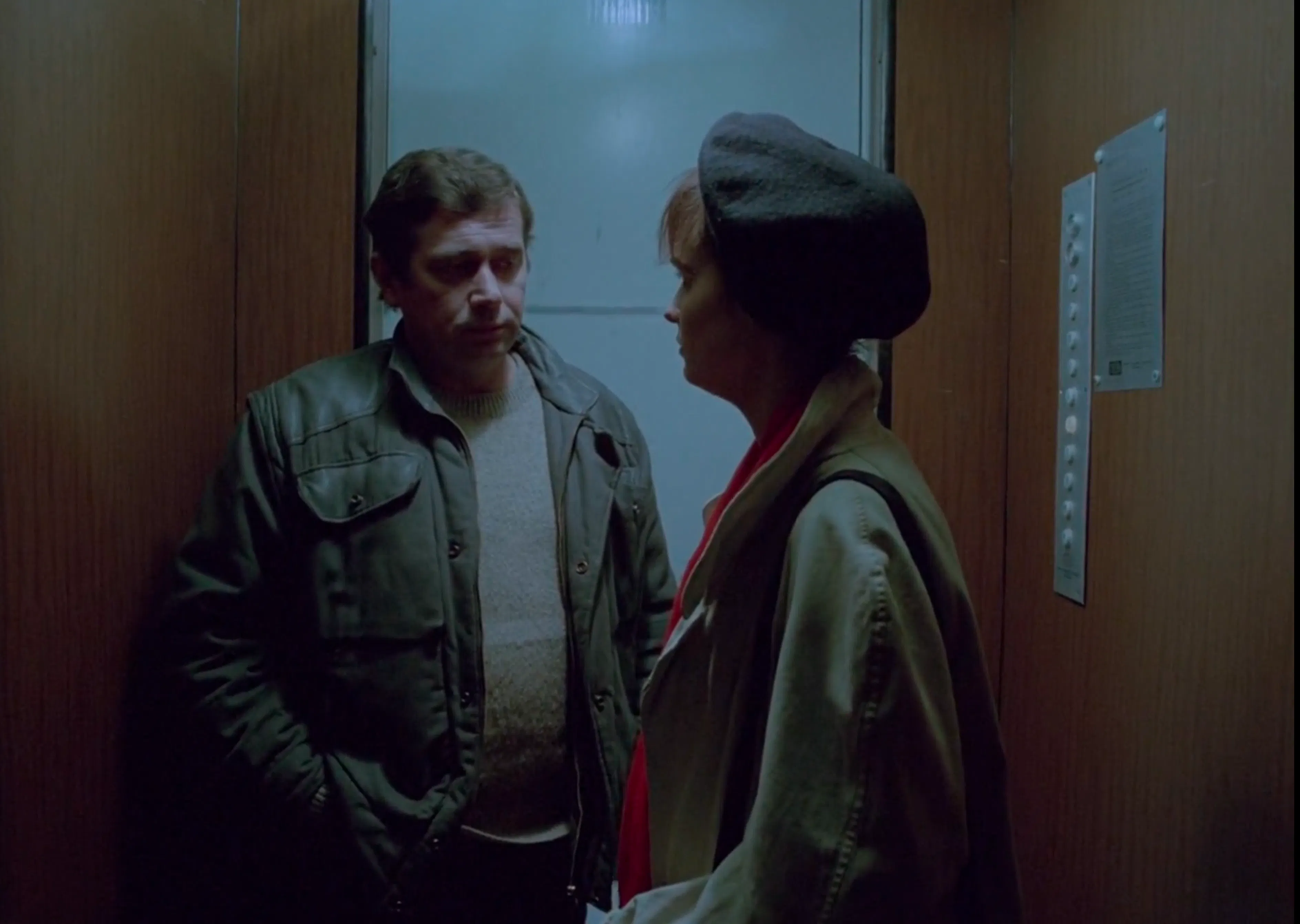
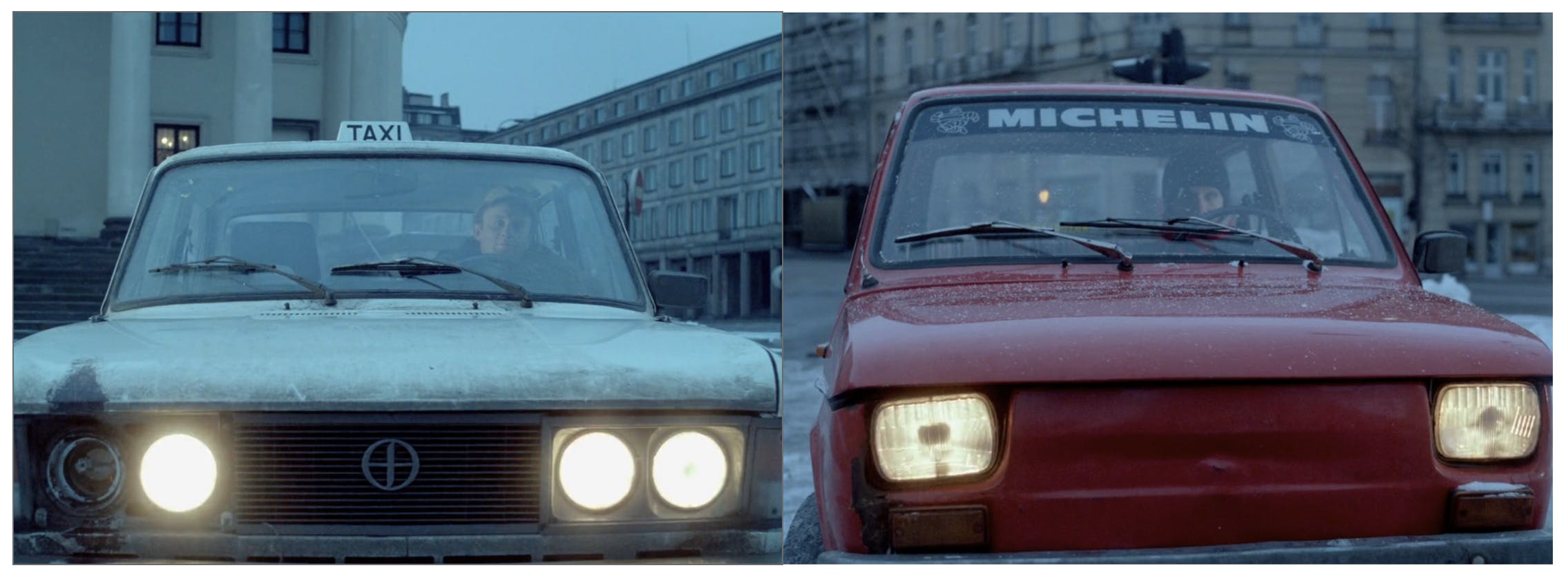
The story unfolds on Christmas Eve. After attending midnight mass and playing Santa Claus for his children, a taxi driver named Janusz answers the door to find his former lover, Ewa. She claims her husband has gone missing and asks Janusz to help search for him. Janusz tells his wife his taxi has been stolen and heads out into the night with Ewa.
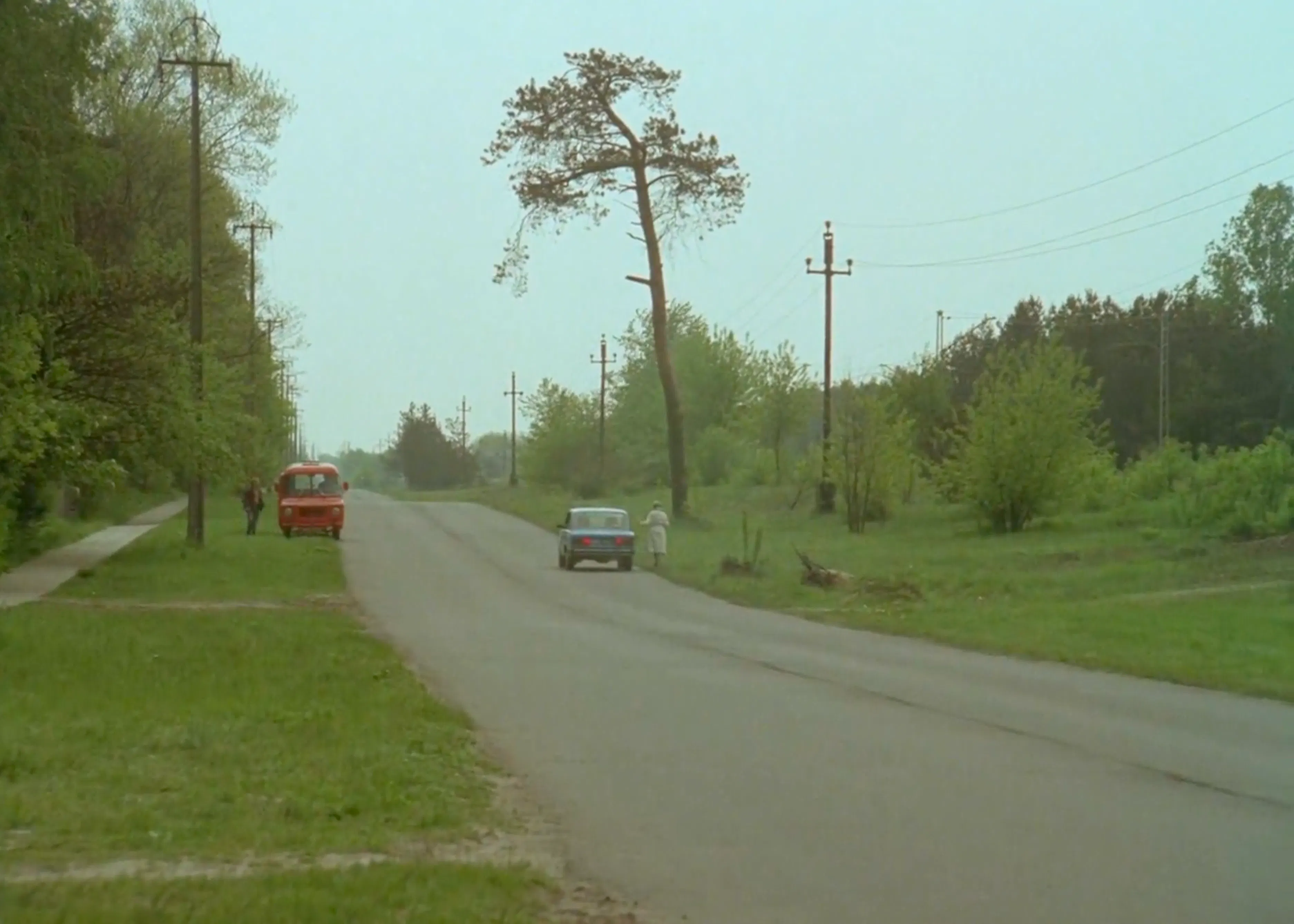
They wander through Warsaw chasing fragments of a story that never adds up. Janusz grows increasingly eager to return home, but Ewa keeps him close by planting small clues and prolonging the search. Eventually, Janusz understands that something is wrong but says nothing.
At seven the next morning, Ewa confesses. She is no longer married. Her husband left after her affair with Janusz and has built a new life. The search was a fabrication. She had devised a private ritual: If she could keep Janusz away from his family until seven, something might be restored. If she failed, she planned to kill herself.
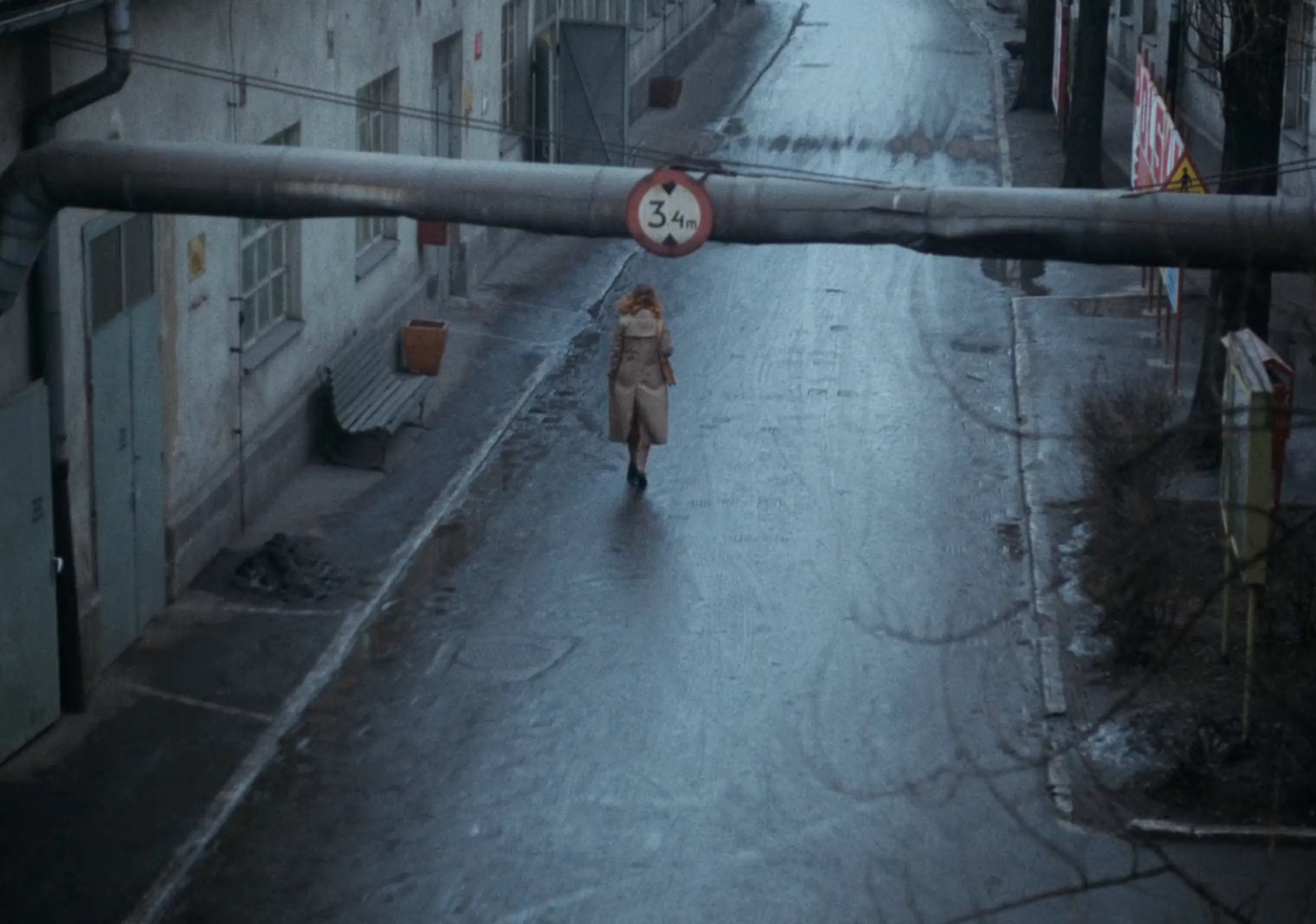
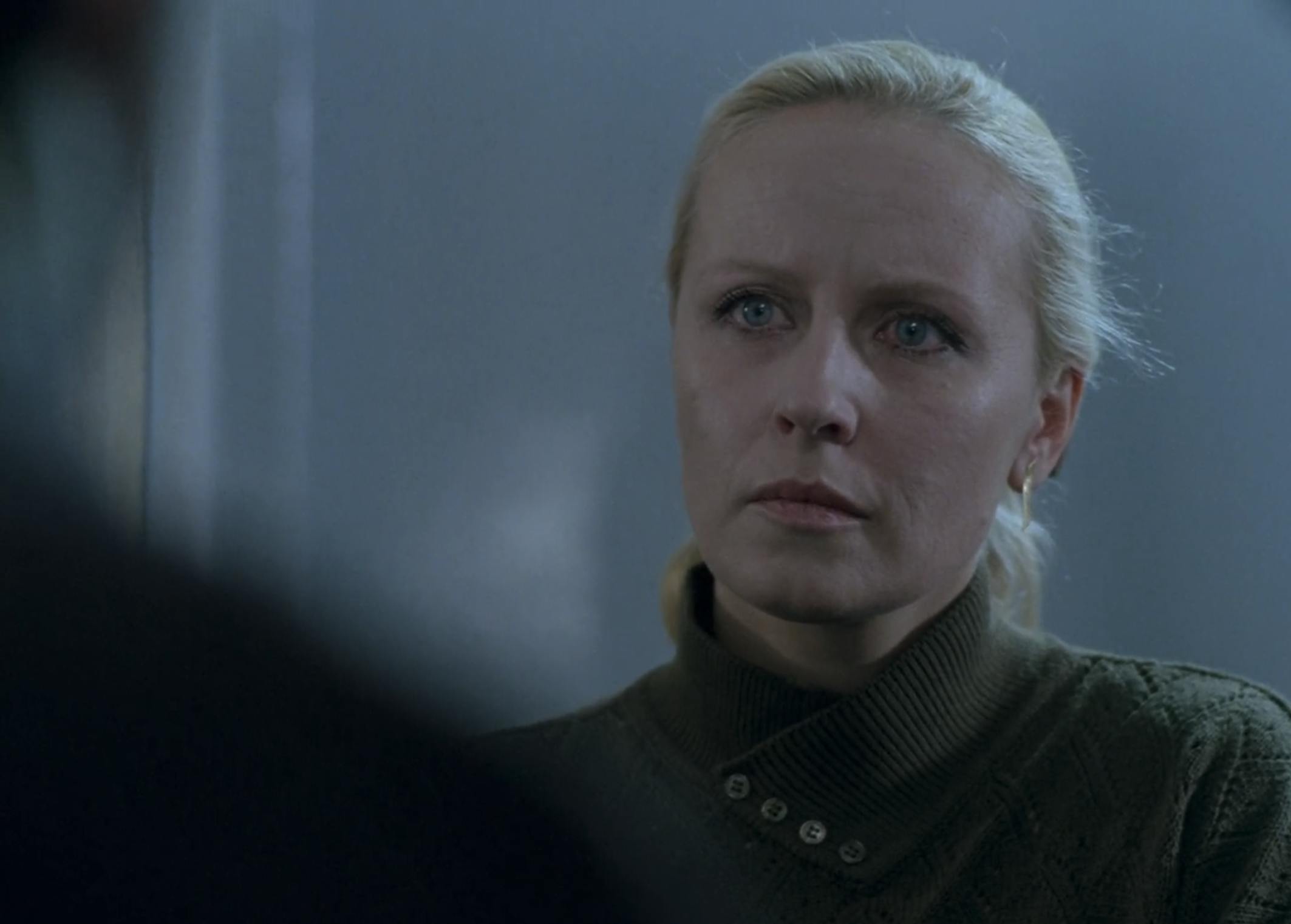
Intellectually, this episode feels thinner than the first two. Emotionally, it cuts deep because of its portrait of loneliness. Ewa reaches out to Janusz because she cannot bear being alone. Early on, when her senile aunt asks after her husband, the emptiness is visible in her eyes. In her apartment, the razor and other belongings left behind by her husband years earlier underscore her loneliness. The deserted Warsaw streets amplify the isolation.
Janusz is lonely in his own way. He notices the cracks in Ewa’s story yet stays with her. He claims to want his family, but spends the sacred hours of the night elsewhere. Perhaps temptation offers a brief escape from routine.
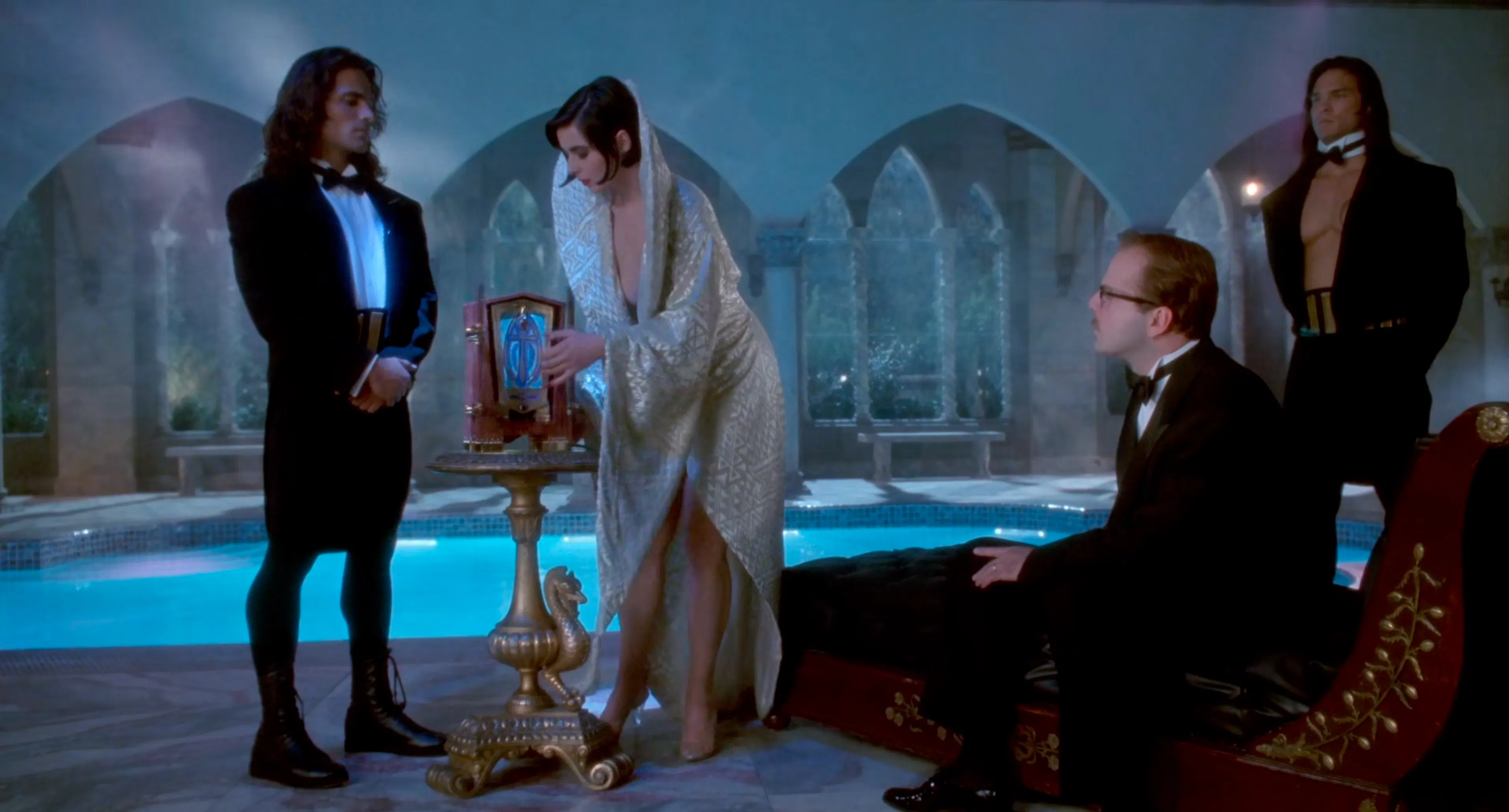
Even Janusz’s wife carries her own loneliness. We see her only briefly, but it’s enough. She does not believe the taxi has been stolen, yet she lets Janusz go. When he returns, she asks whether he will spend the rest of the night with Ewa again. There is loneliness in her knowledge of what happened before.
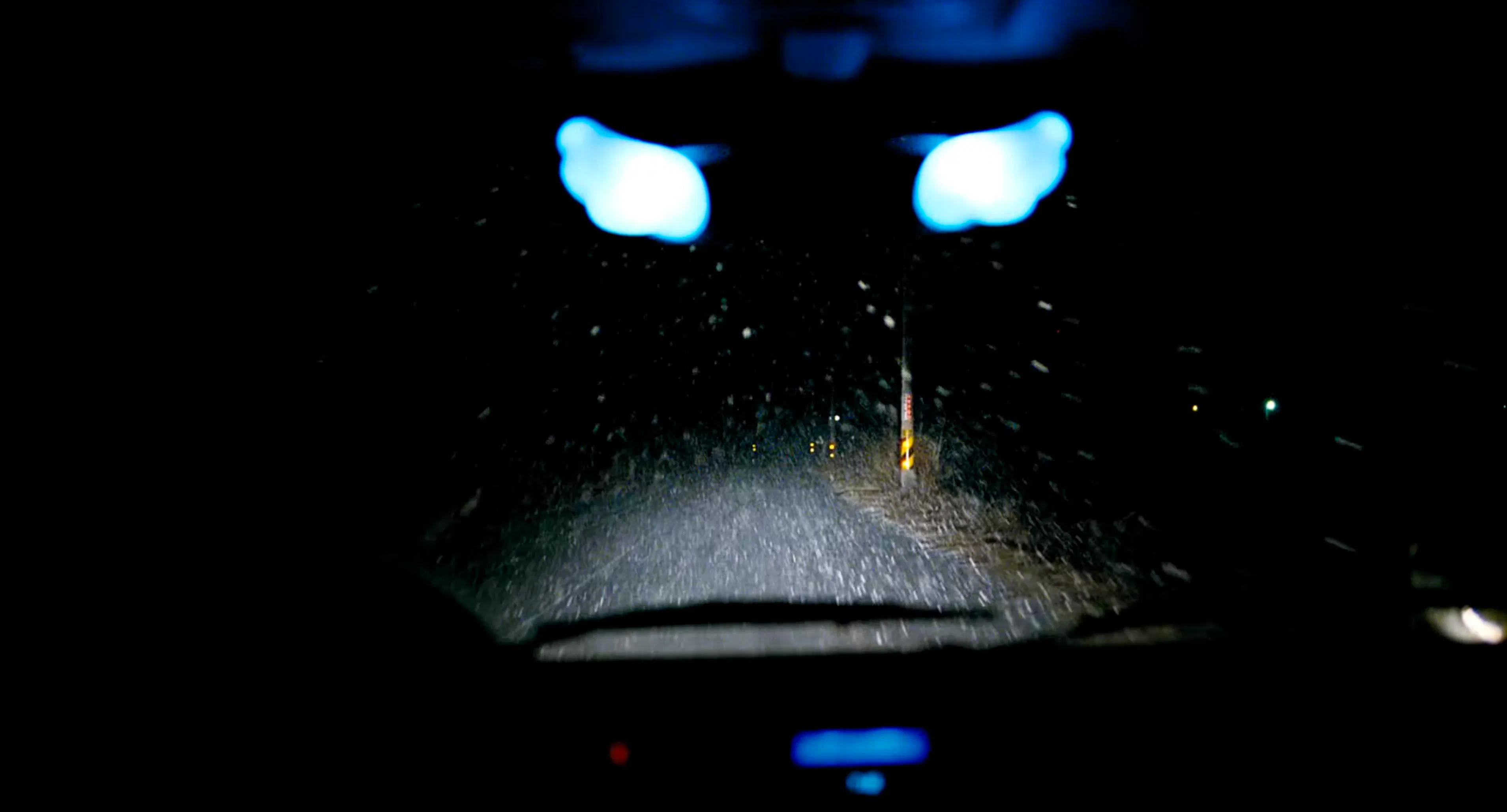
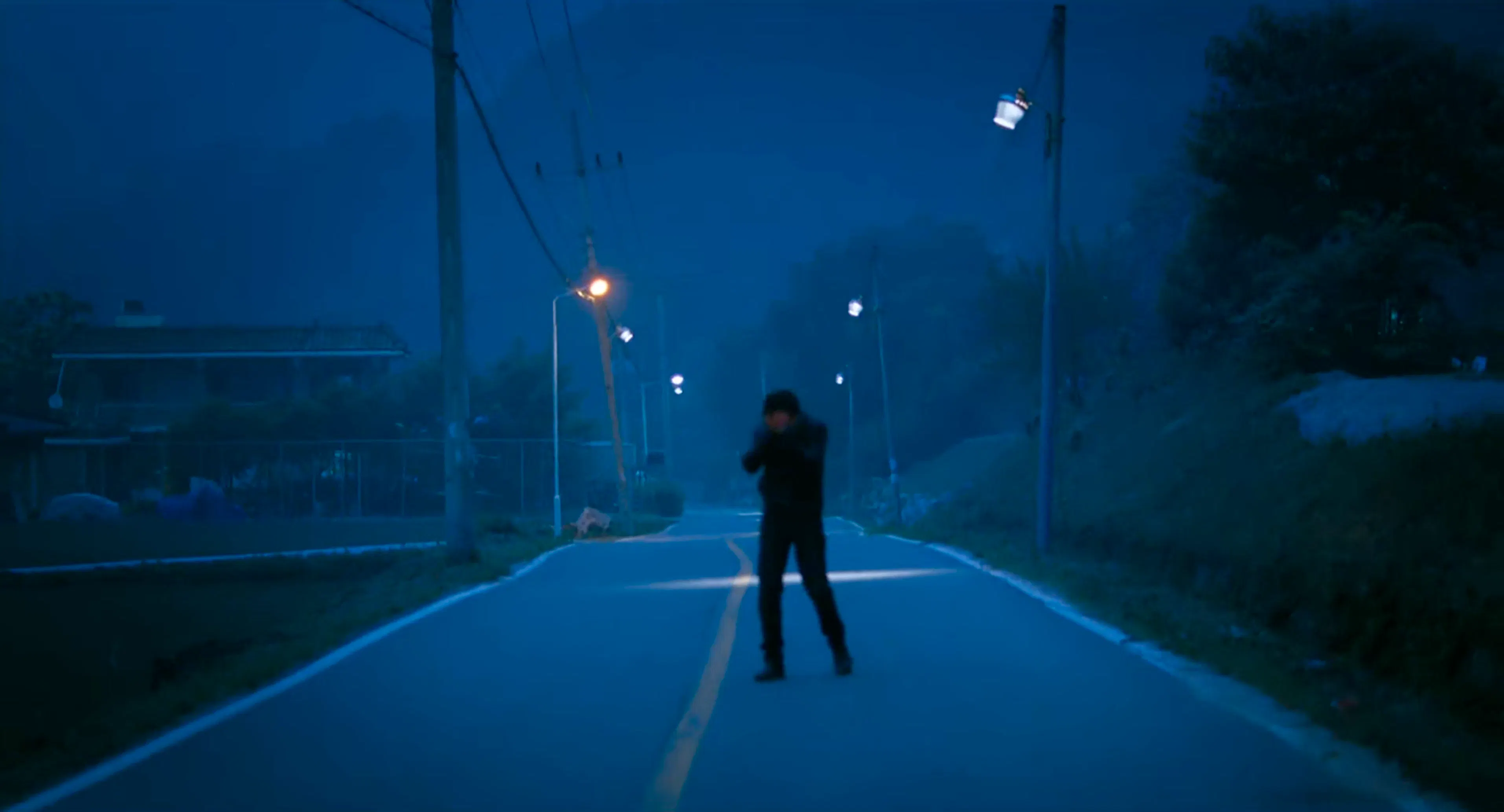
One of the most harrowing moments comes when Janusz drives directly toward an oncoming tram, swerving at the last second. Ewa wants the crash to happen. I wonder how many people carry that same feeling.
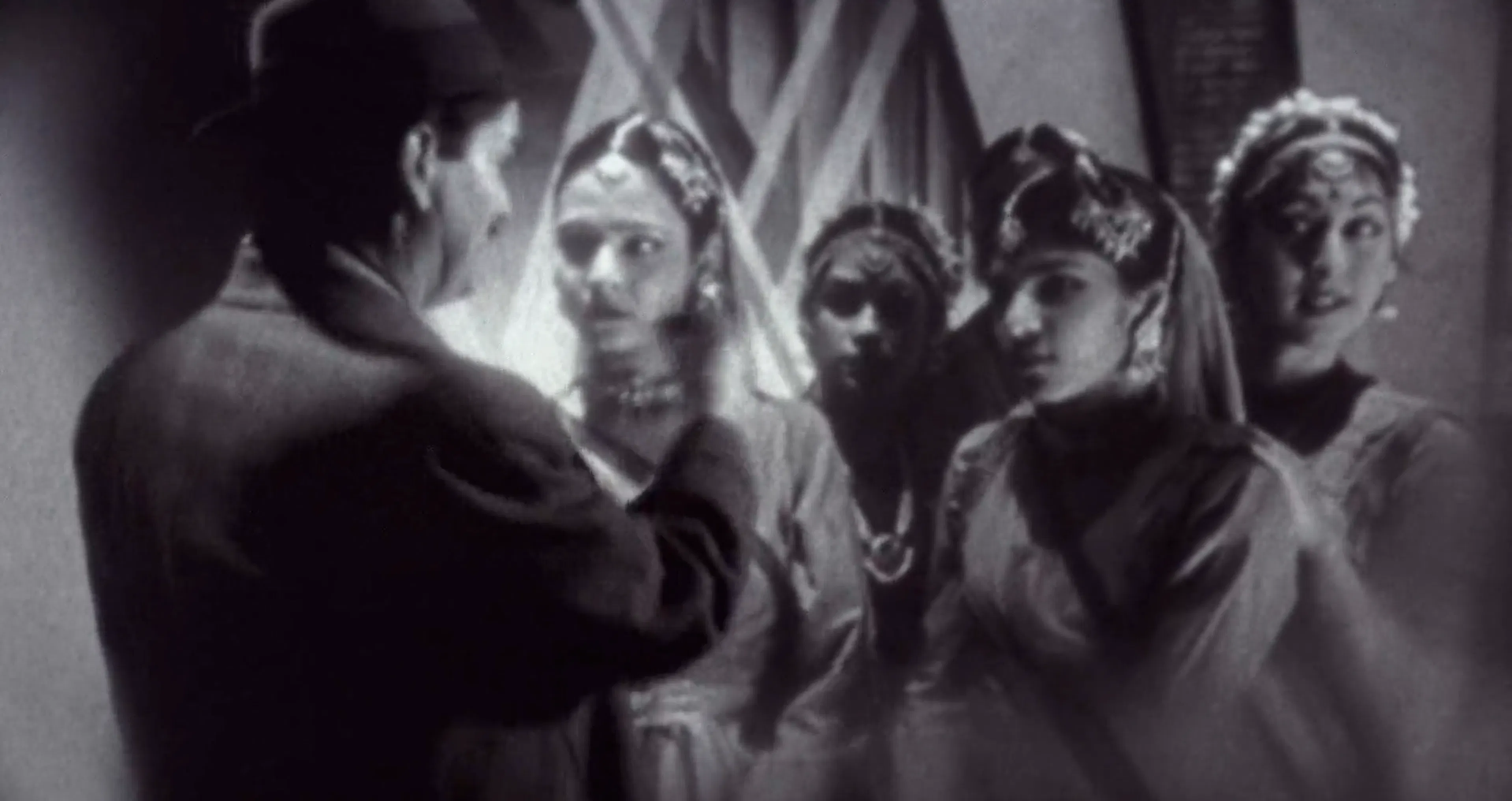
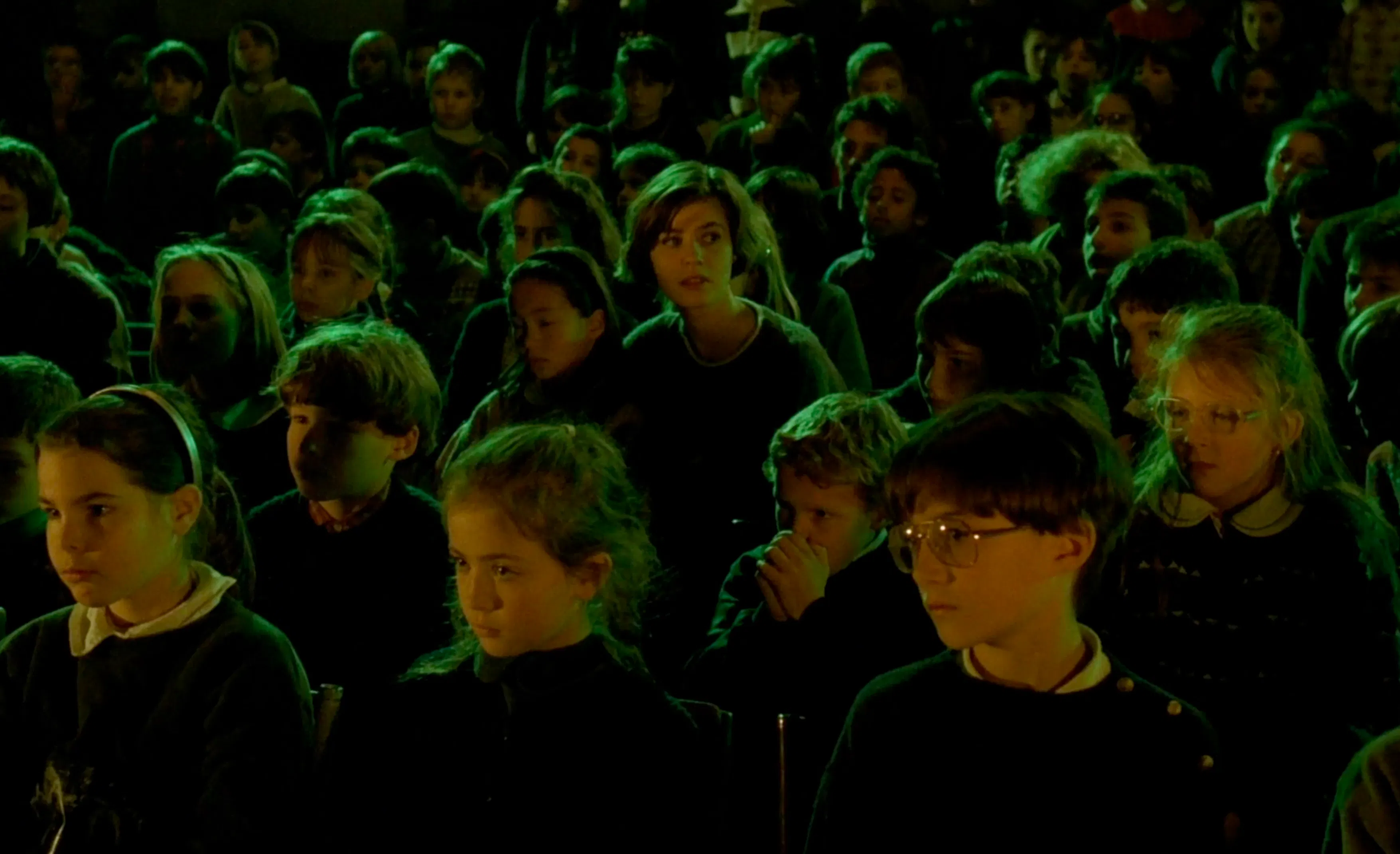
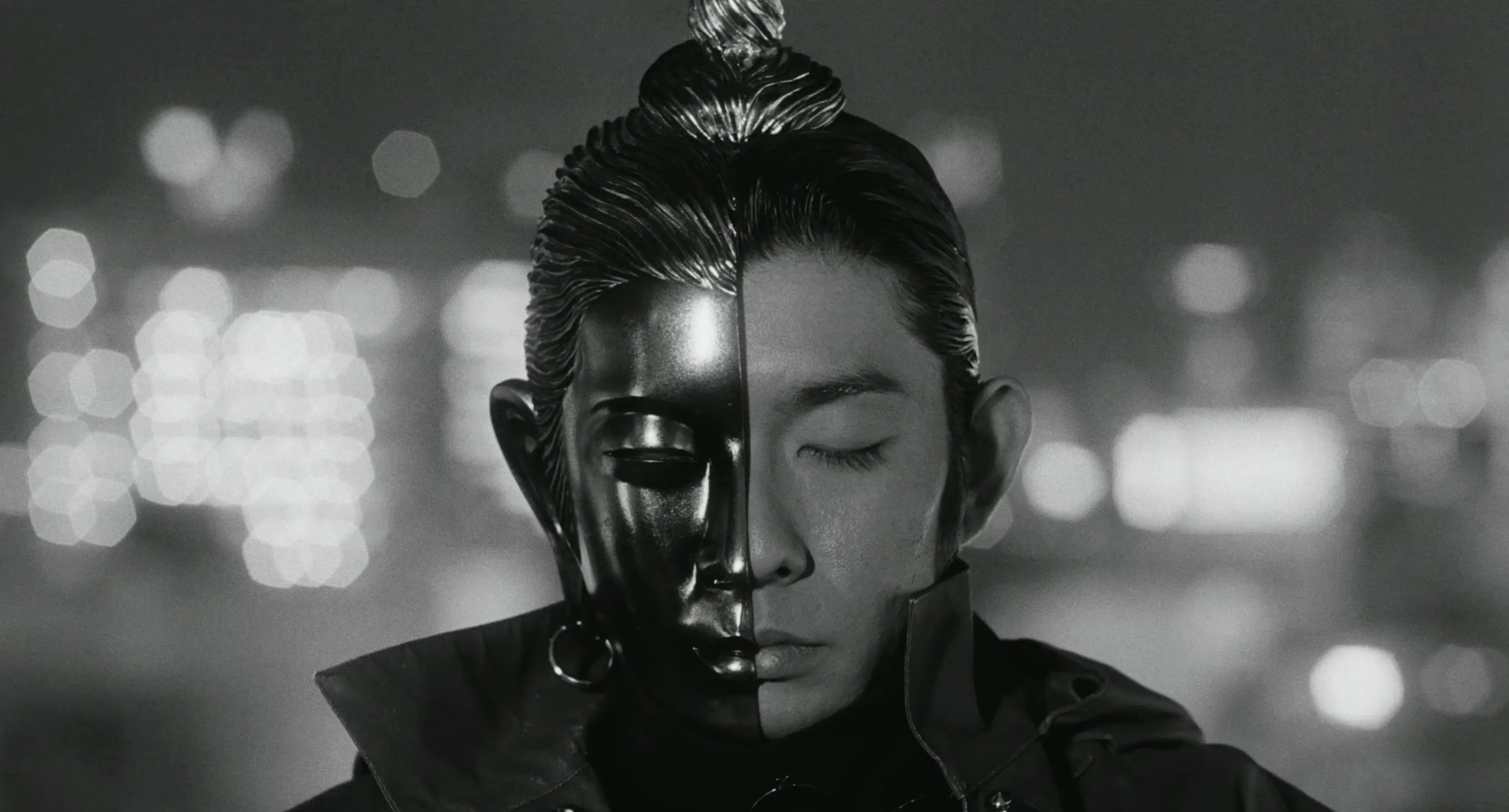
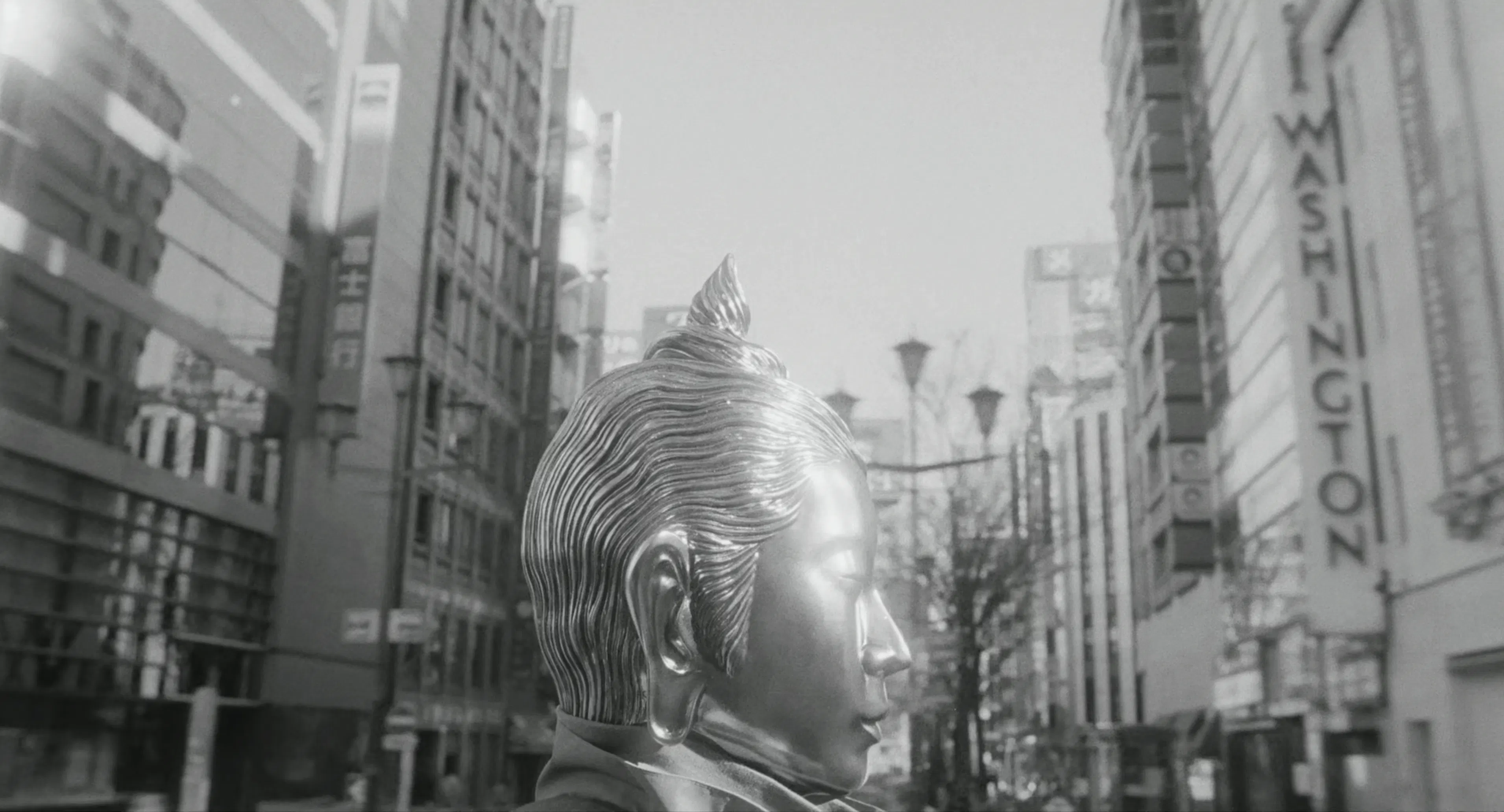
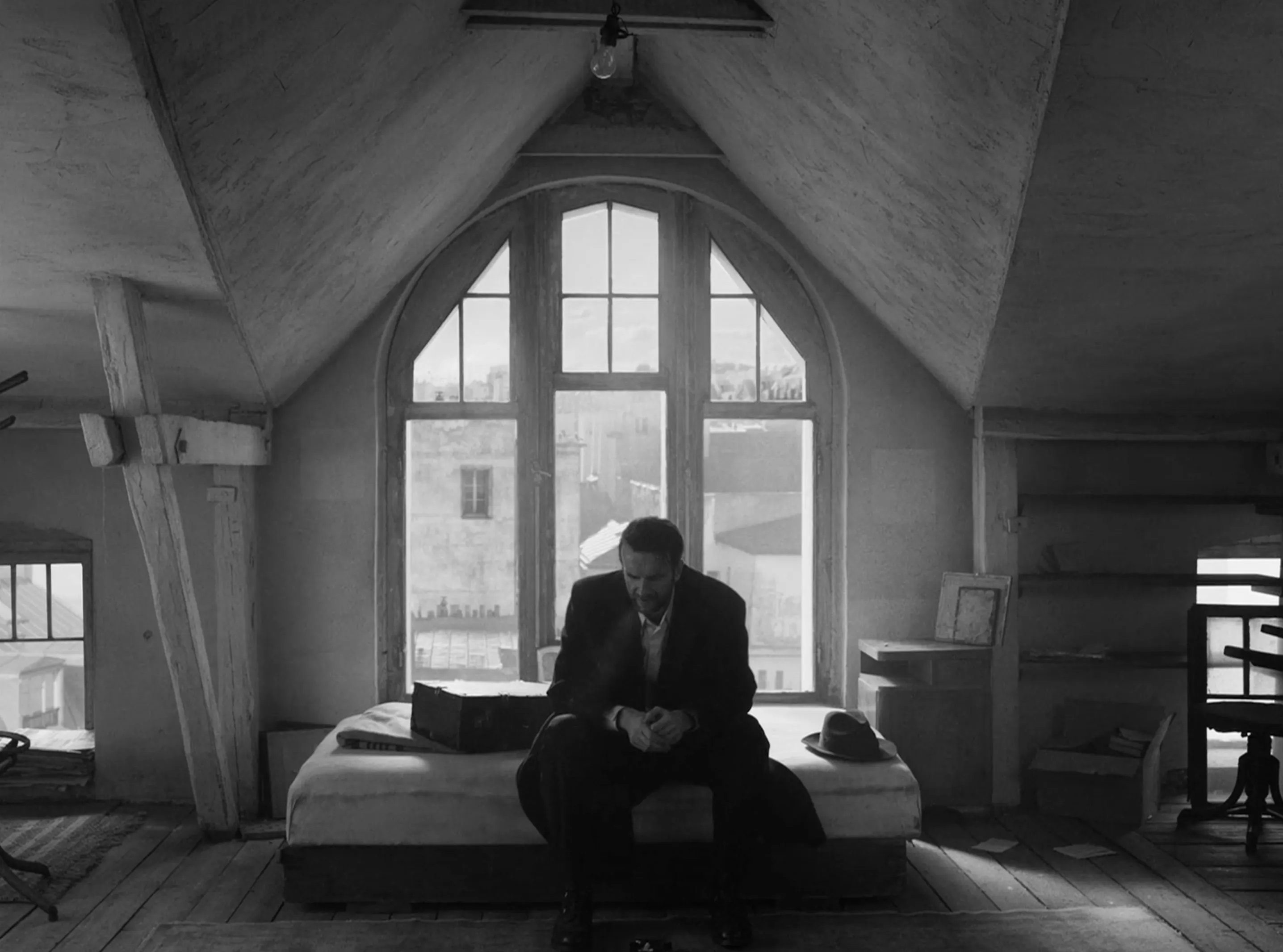
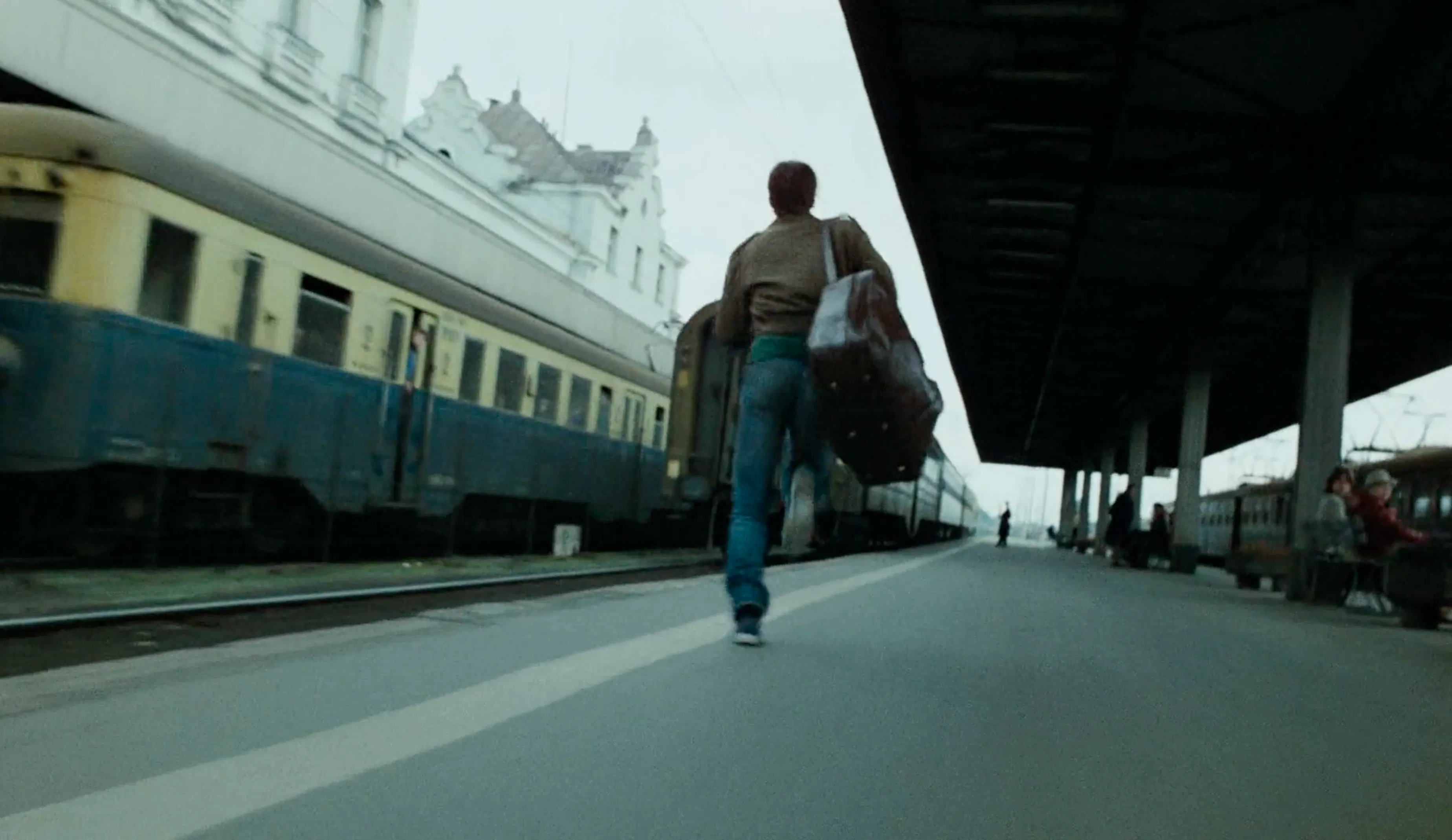
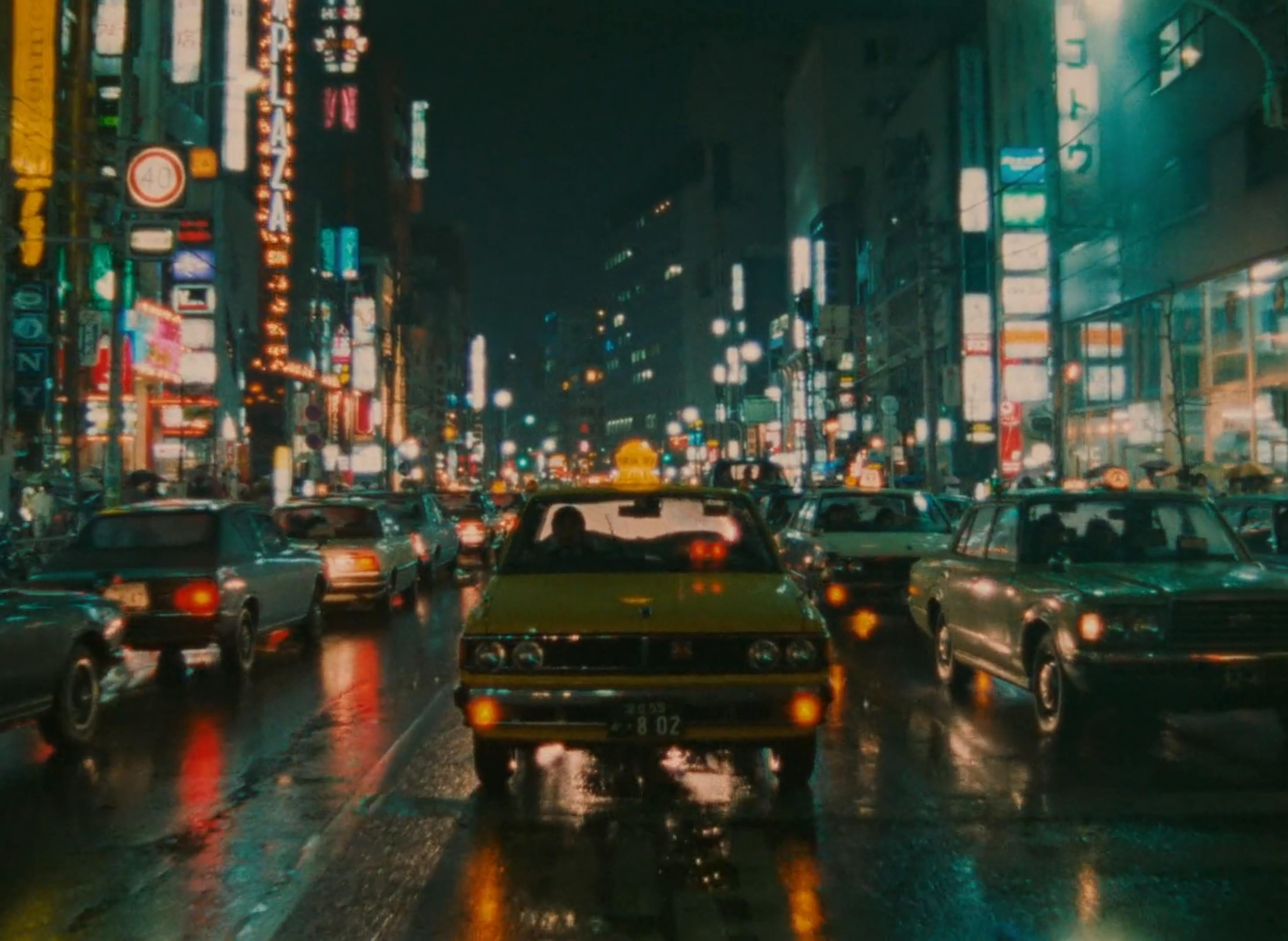
Wim Wenders loves Yasujirō Ozu. He loves Ozu’s films so much that he travelled to Japan in search of the Tokyo Ozu captured on screen. The city he found disappointed him. That search and that disappointment form the backbone of Tokyo-Ga.
Filmed in 1983, the documentary moves between Wenders’ reflections on Japan and interviews with people who worked with Ozu. I don’t agree with all of Wenders’ observations, but his curiosity is compelling and the footage is extraordinary. Tokyo in its prime; what a place to be.
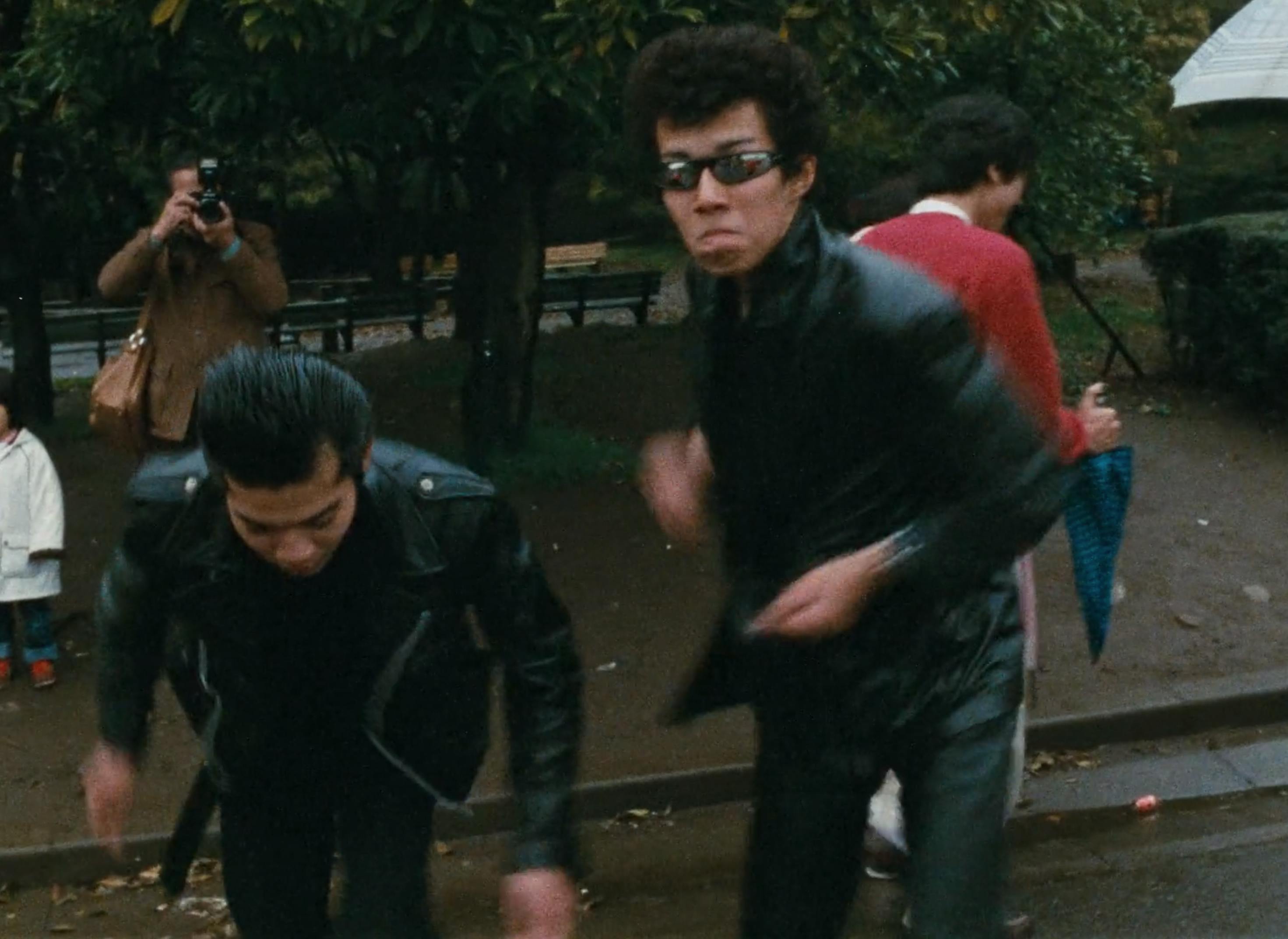
Wenders watches the making of shokuhin sampuru (食品サンプル), the hyper-real food replicas displayed outside restaurants. He spends long stretches inside pachinko parlours, watching players and observing technicians service the machines after closing time. There’s also a wonderful sequence at the Rockabilly Club. It’s striking to see people dancing near Yoyogi Park around the time I was born, and to remember that nearly thirty years later, when I lived there, others were doing exactly the same thing.
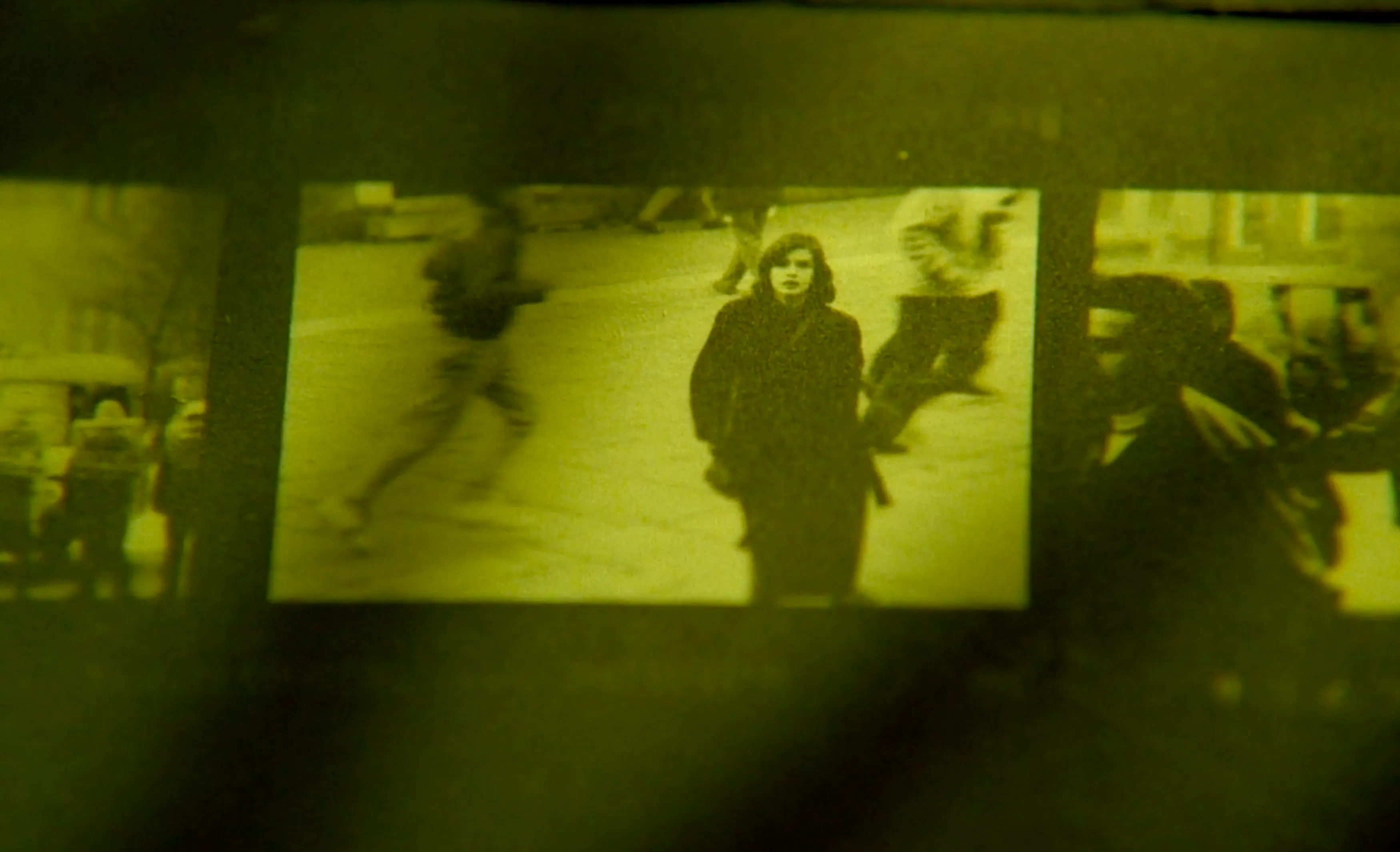
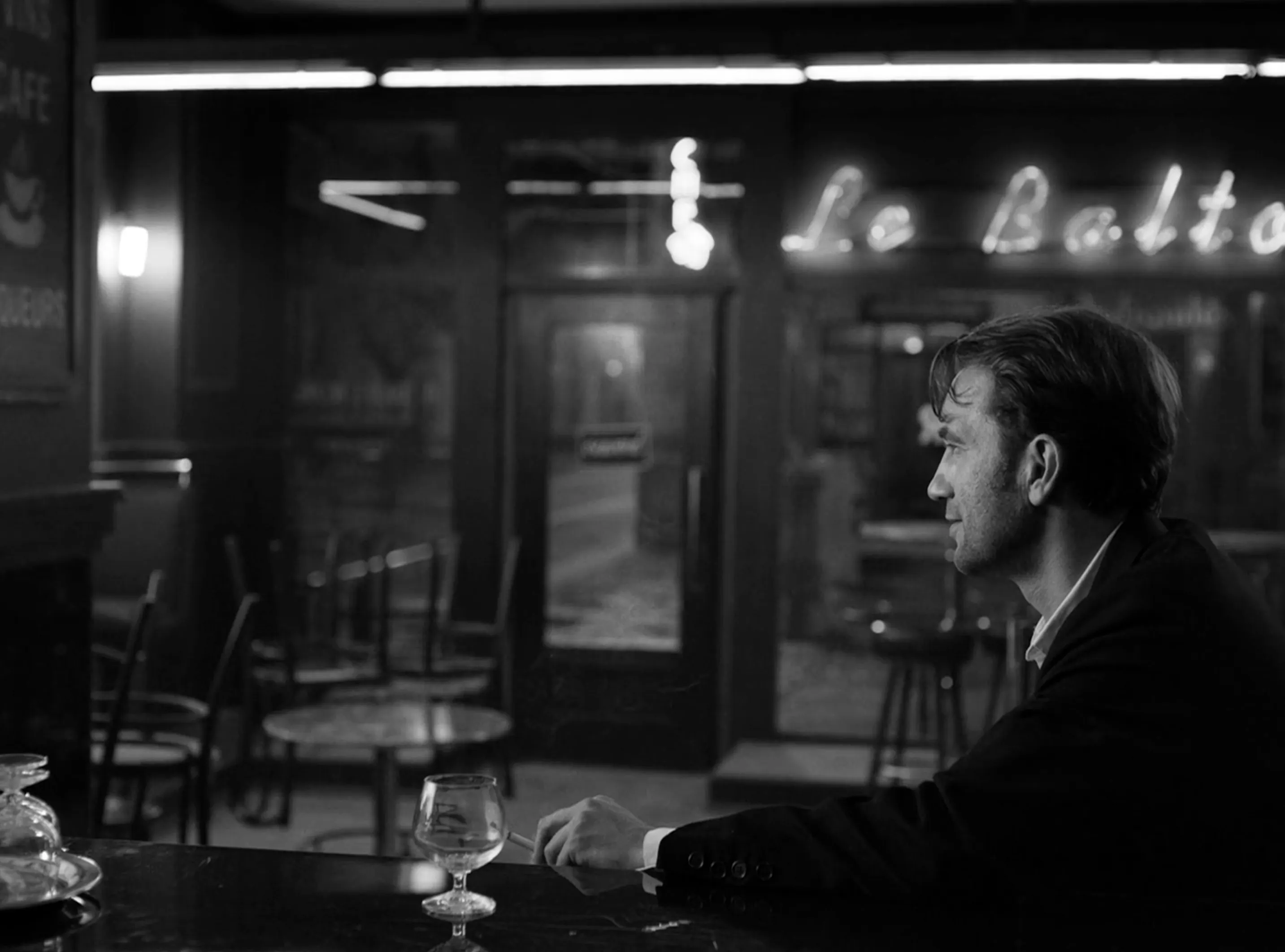
While in Tokyo, Wenders meets Werner Herzog. He also encounters Chris Marker in a bar called La Jetée, named after Marker’s photo roman. Marker released his own documentary called Sans Soleil that year, with passages shot in Tokyo.
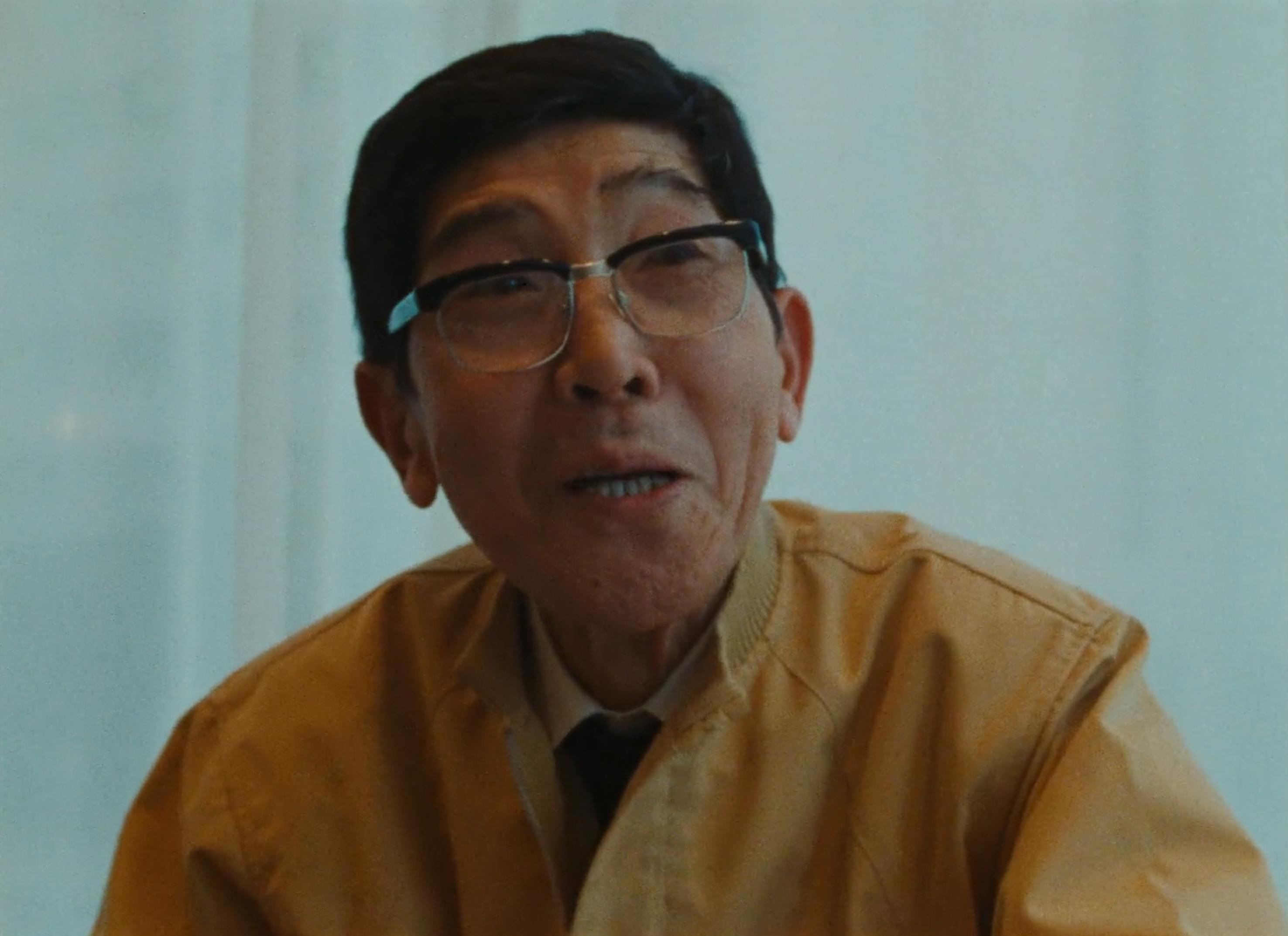
The least visually dynamic sections are the most affecting: conversations with an aging actor who appeared in Ozu’s films and, later, with one of Ozu’s cameramen. Time has rendered the actor anonymous; no one recognizes him anymore. It’s a blunt reminder that we all fade. The cameraman eventually breaks down in tears as he describes how deeply Ozu shaped his life. If only we could leave that kind of mark on the people around us.
Tokyo-Ga works because of Tokyo itself. Set in any other city, it would lose much of its power.
Where some broach their life problems in private with a therapist, Woody Allen navigates his in public. The movie set replaces the analyst’s couch. Through his characters, he stages his own self-examination, amusing us while trying to understand himself.
As my wife pointed out, Allen’s films often revolve around atypical romantic relationships. They feel like long, single-episode sitcoms elevated by wit and larger budgets. Yet beneath the humor lies something more confessional.
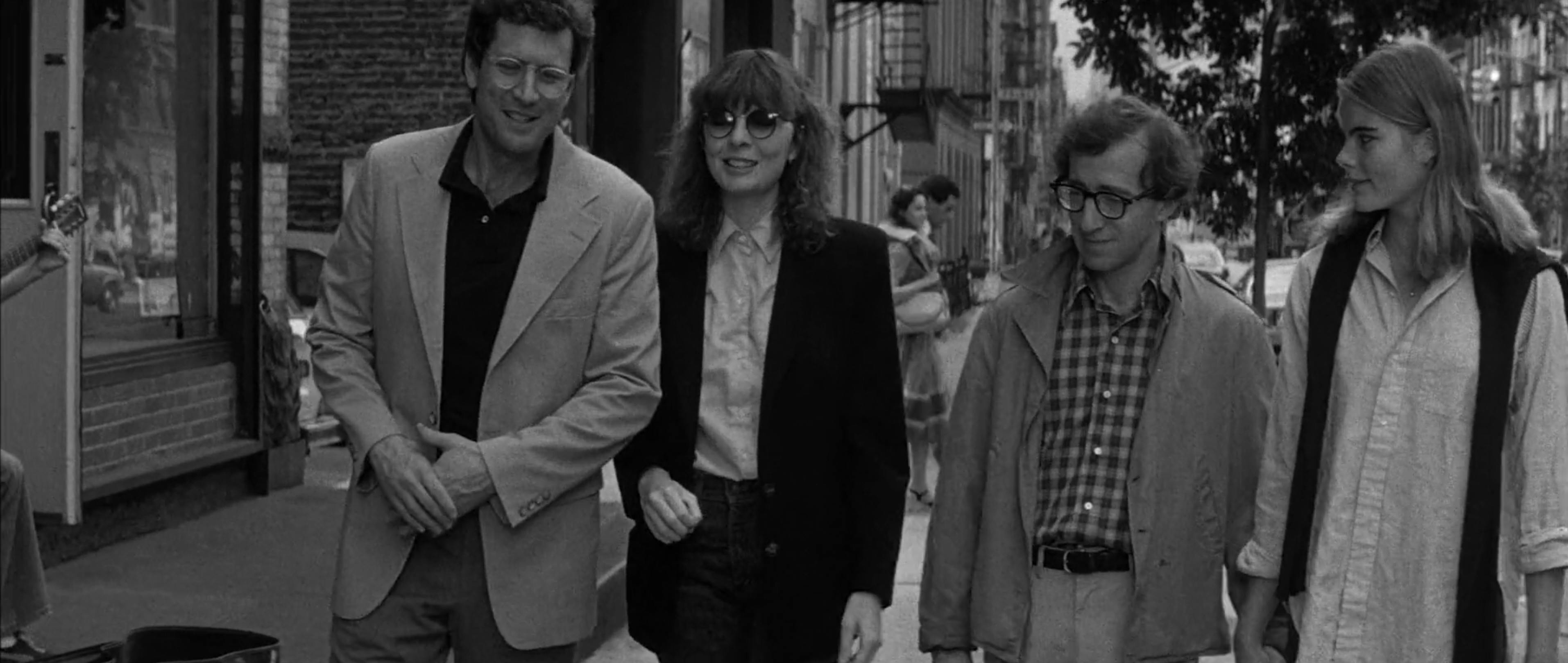
In Manhattan, Allen’s 42-year-old character drifts between a 17-year-old girl and his friend’s former mistress. In Hannah and Her Sisters, one narrative current follows Hannah’s husband as he falls in love with and pursues one of her sisters. In both films, the relationships prove fleeting. Yet Allen allows his characters to pursue them anyway, as if testing whether forbidden fruit really is sweeter. Watching now, it is hard not to wonder whether these public explorations doubled as private rehearsal for his personal life.
For a filmmaker so dependent on dialogue, it is striking how much weight his rare silences carry. Someone is always talking in Allen’s films. Yet in brief moments of stillness, the self-reflection lands harder than any monologue. In those pauses, we glimpse insecurity.
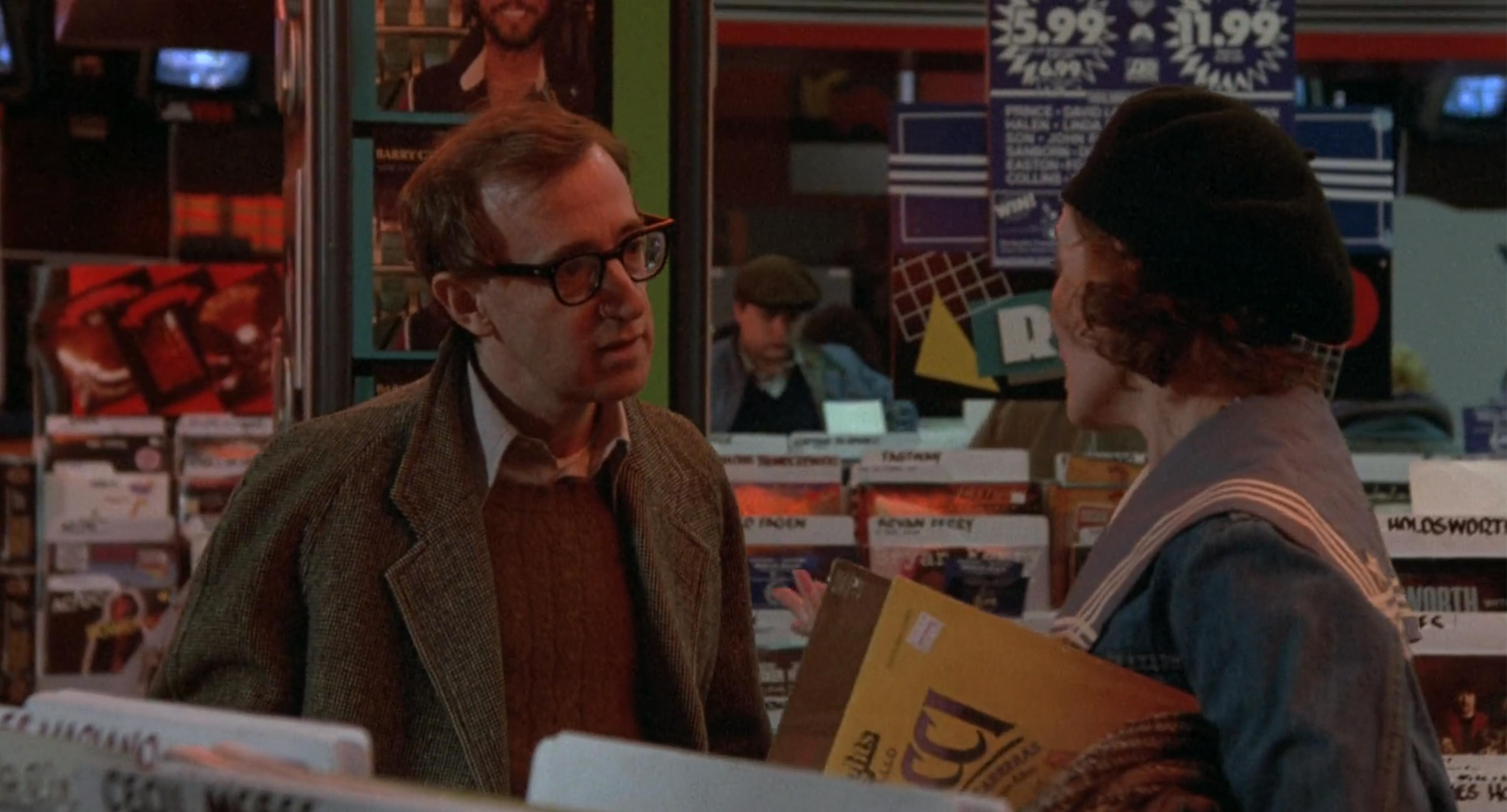
Near the end of the film, two characters run into each other in a record store. Earlier in the year, they endured a terrible date. Now they sift through albums, joke about the evening and tentatively reconnect. Nothing dramatic happens. They simply talk. For Allen, conversation is both the problem and the solution.
Perhaps that is the through line of Allen’s approach to life. It’s easy to imagine coming to Allen with your own problem. Sit down, he’d say. Let’s talk about it. The question is whether you would get a word in edgewise.
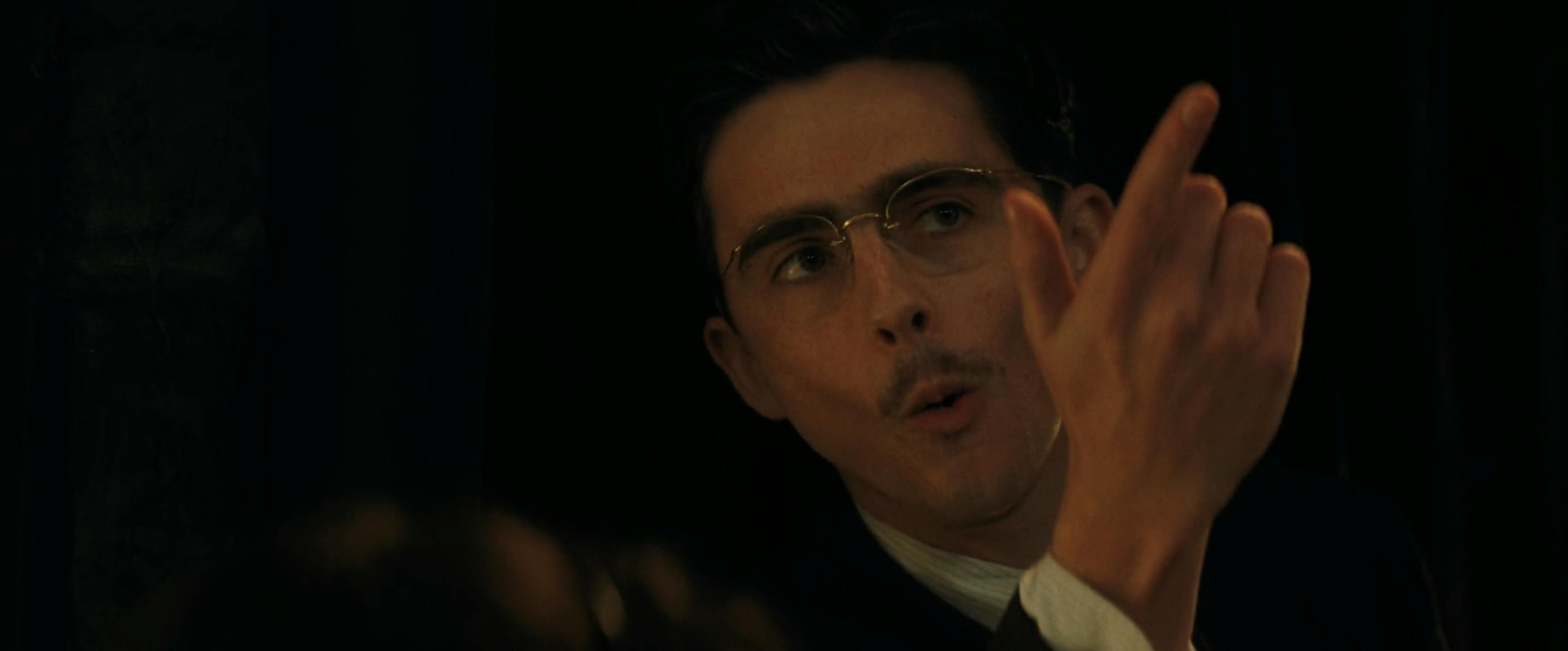
Marty Mauser will lie to you. Marty Mauser will steal from you. Marty Mauser will insult you. Marty Mauser will deny you. Marty Mauser will do whatever it takes to get what he wants because there’s only one thing that he cares about: Marty Mauser.
Set in the 1950s, Marty Supreme explores Western individualism and American exceptionalism through Marty Mauser’s relentless quest to become a table tennis world champion. In the process, he takes advantage of anyone within reach. When times get tough, he abases himself as long as it brings him closer to his goal.
It’s hard to like Marty. And yet beneath the bravado there’s something magnetic about Marty. He’s sure of himself in a way most of never are. His self-conviction borders on narcissism, but it also propels him towards success. The film leaves you wondering whether that kind of belief is admirable, corrosive or simply necessary.
Josh Safdie directs Marty Supreme with his hallmark pacing. And Timothée Chalamet cements his position as one of the most talented actors working today. The result is deeply watchable.
The second commandment states: Thou shalt not take the name of the Lord thy God in vain. A literal reading forbids using God’s name in a way that is wicked, empty or self-serving. The clearest interpretation I’ve encountered is that it warns against misleading others.
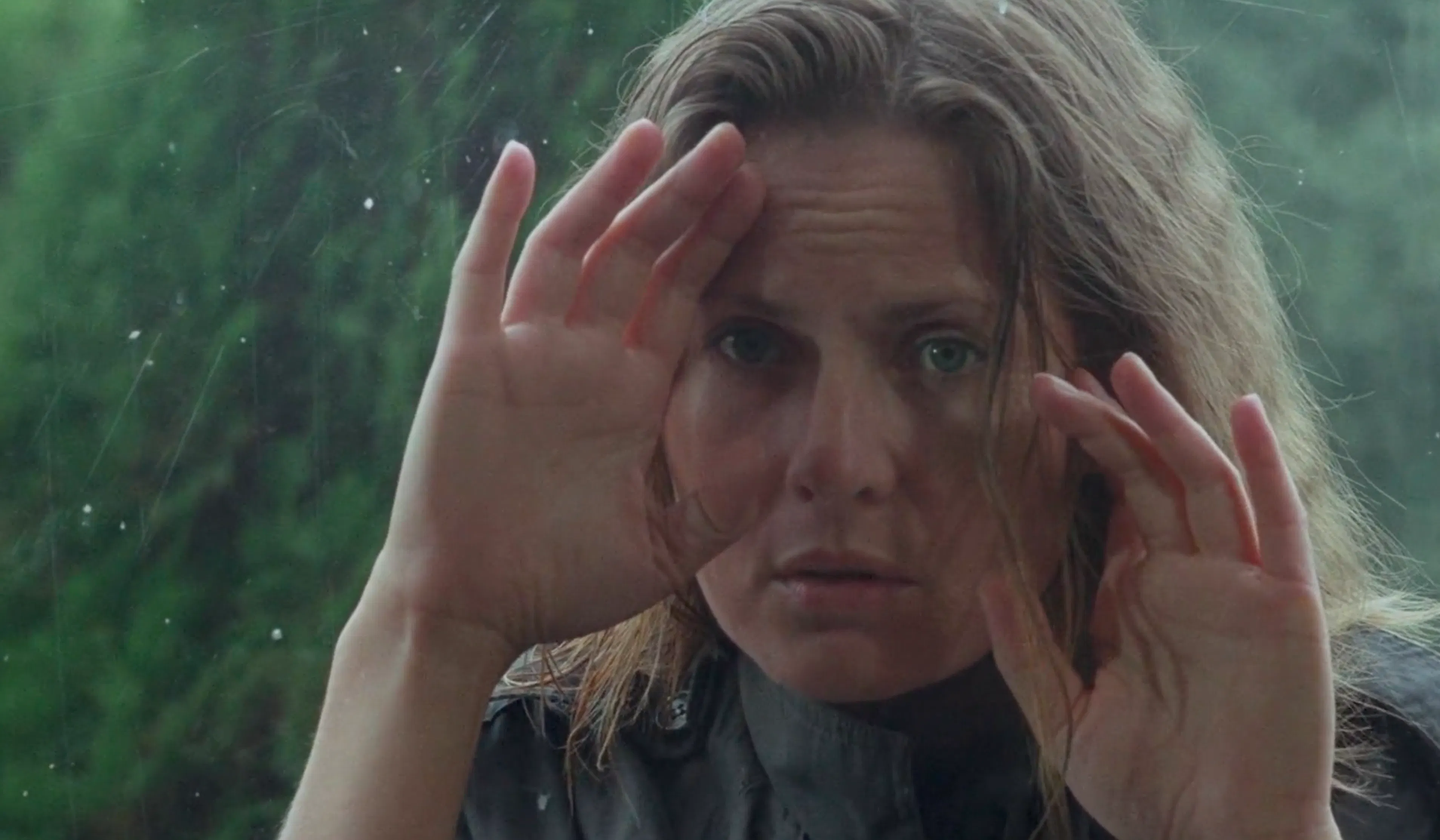
Dekalog II explores this commandment through an elderly hospital doctor and a woman in her thirties. Her husband is gravely ill. She wants a definitive prognosis. The doctor refuses to give one.
She confronts the doctor at his apartment. She is pregnant. Her husband’s friend is the father. She plans to keep the baby if her husband dies and to abort it if he survives. She presses the doctor for certainty, placing the weight of her decision on his shoulders.
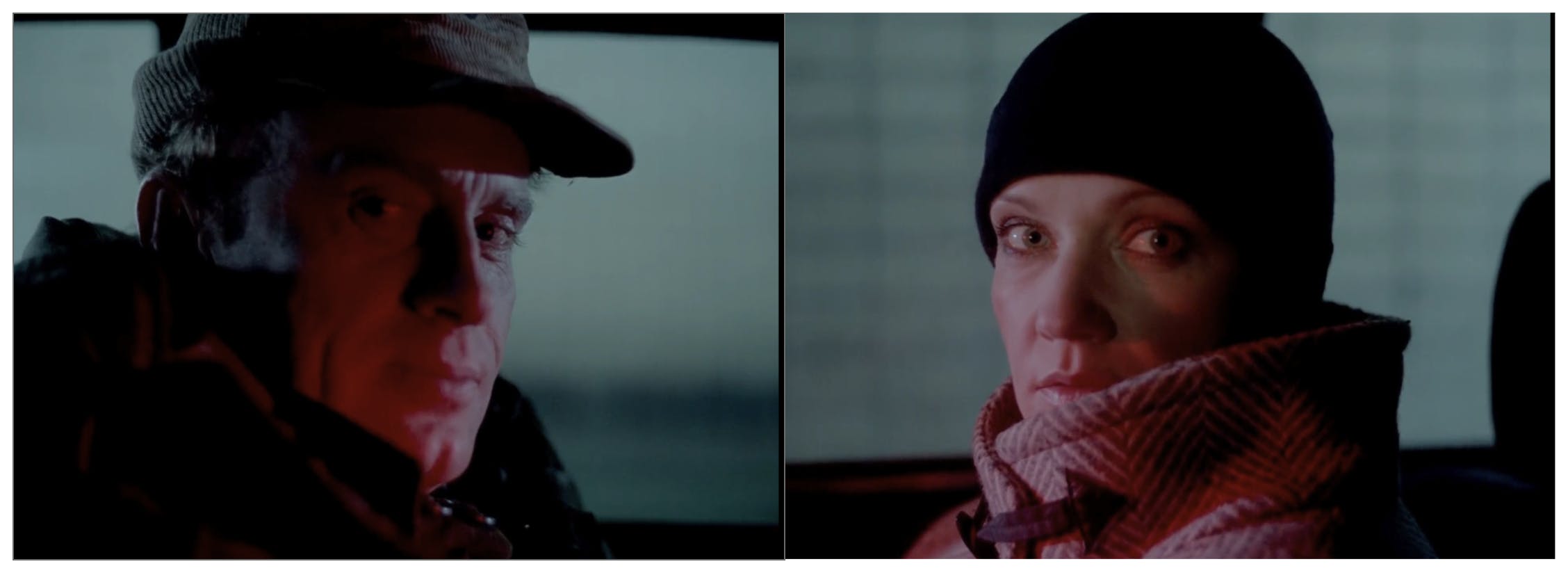
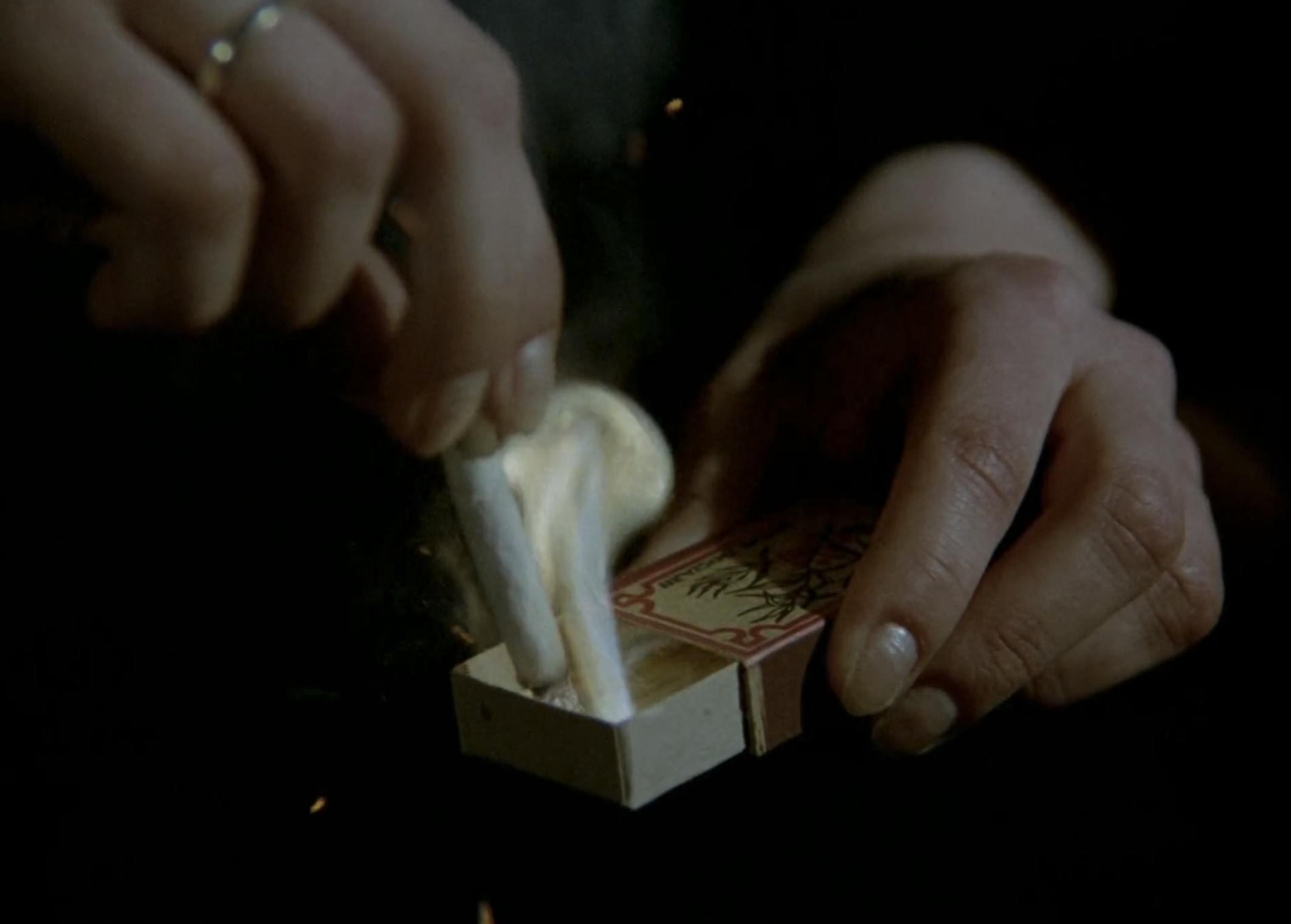
At the end of their conversation, she crushes her cigarette into a box of matches. The matches flare. The flame mirrors both her urgent need for an answer and the burden now transferred to the doctor. A life may depend on what he says.
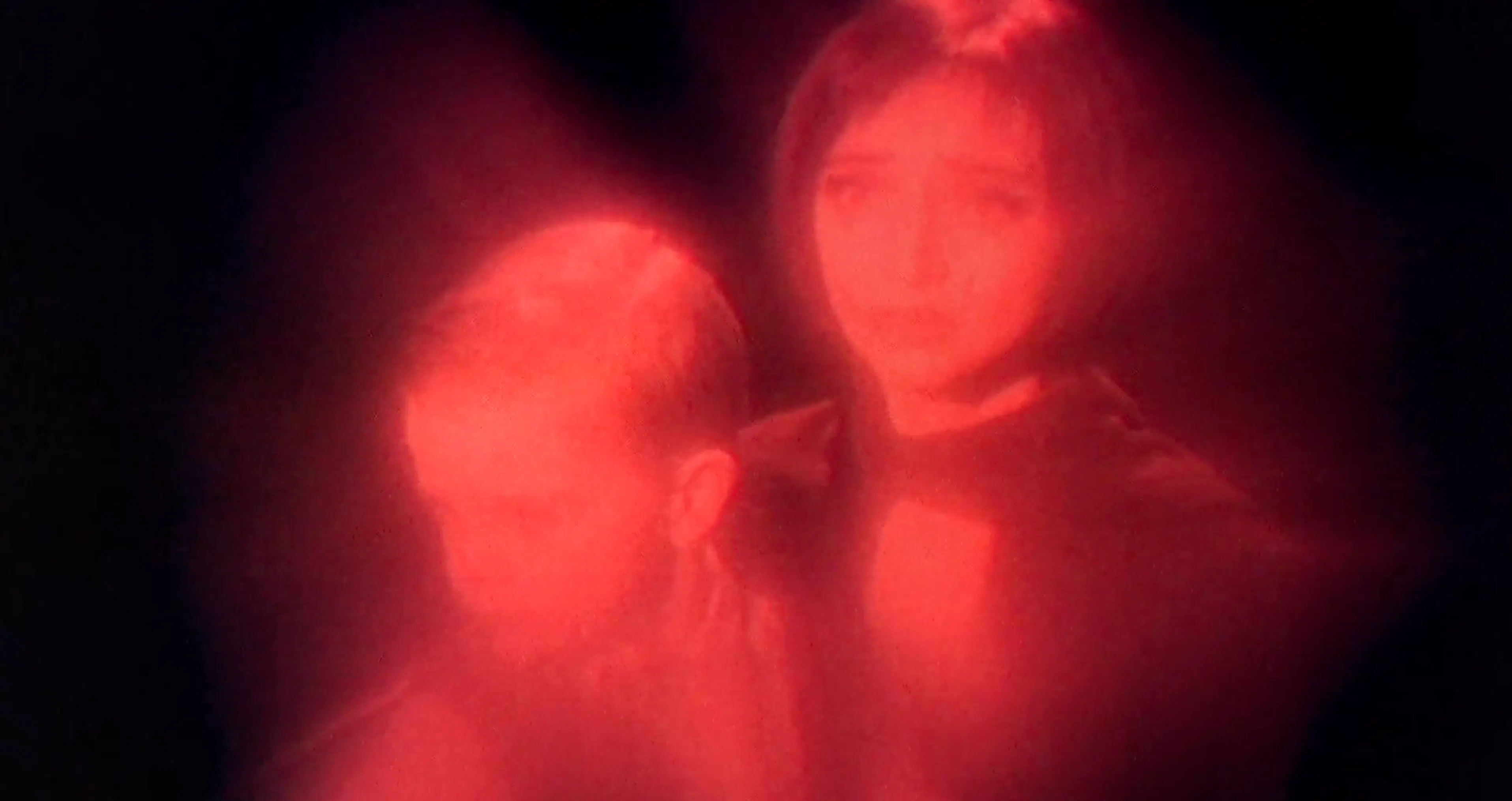
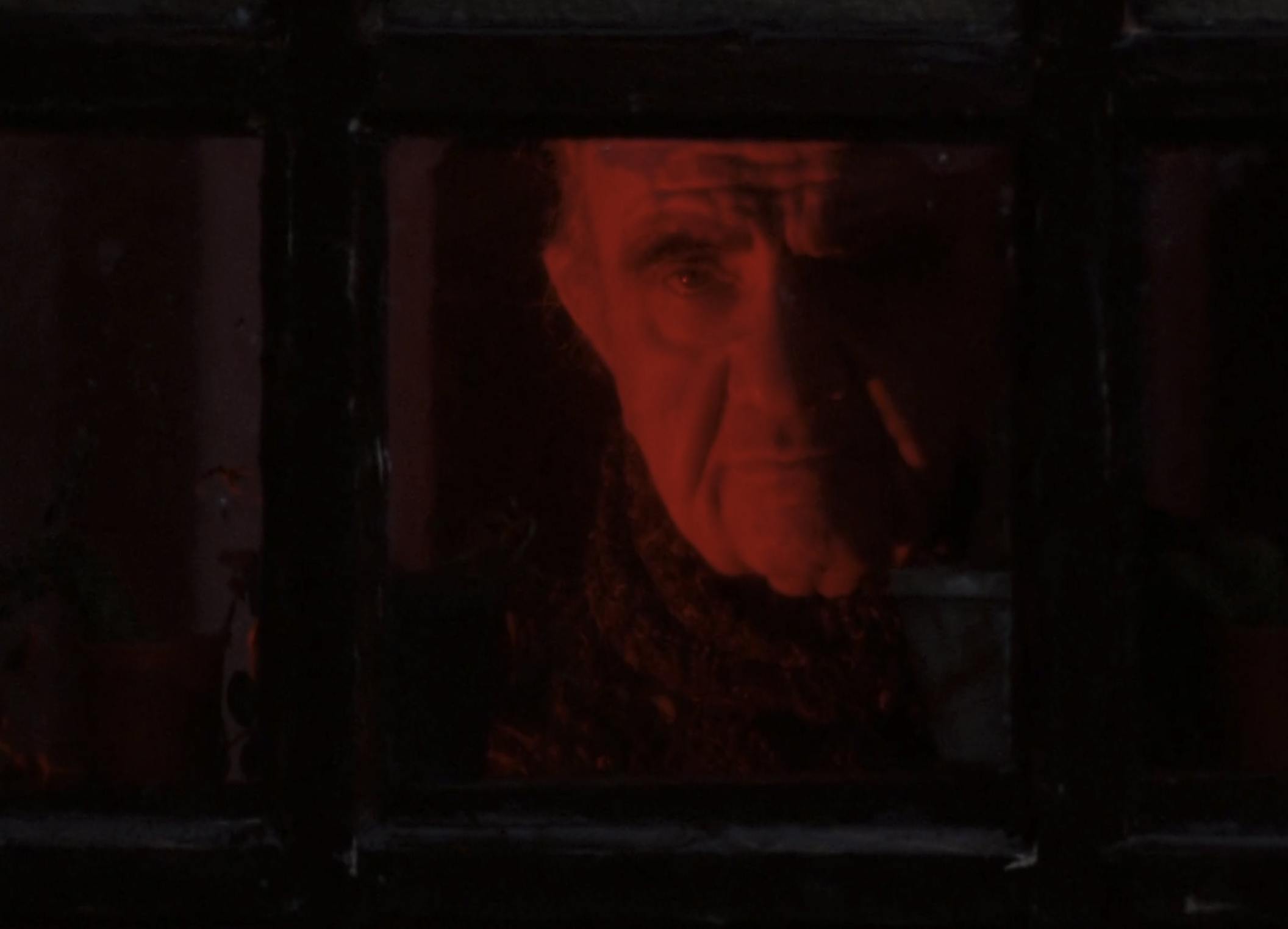
The next day, the doctor reviews tissue samples in the hospital lab. The results suggest her husband will not recover. He tells her as much. She decides to keep the child. That evening, we see the doctor framed in his apartment window, bathed in a red glow reminiscent of the earlier flame.
Unexpectedly, the husband awakens the next day. He watches a bee climb up a spoon resting in a glass of preserved strawberries. He thanks the doctor for his care and shares joyful news: he is going to be a father.
In trying to guide the woman, the doctor has misled her. Now she must mislead her husband, raising a child that is not his as if it were.
Subtle visual motifs carry the moral tension forward. It is another strong installment, though I still prefer Dekalog I.
Pope John XXIII established the Vatican Film Library in 1959. He sought to preserve films and recorded television programs on the life of the Catholic Church. You know, Christmas mass and home videos of the archbishops dancing in sprinklers during the summer holidays.
Fast forward to 1995. By this time the archive has over 8,000 films. The collection moved from home videos to cinematic masterpieces. Popes enjoy film, too. In fact they enjoy it so much that, under the guidance of Pope John Paul II and cardinal John Patrick Foley, the Vatican Pontifical Council for Social Communications released a list of 45 films titled Some Important Films (alcuni film importanti) in honor of the 100th anniversary of the first moving picture. The holy cinephiles grouped the films into three categories based on what the Vatican perceived to be their merits: Art, Religion and Values.
Dekalog made the list for its values.
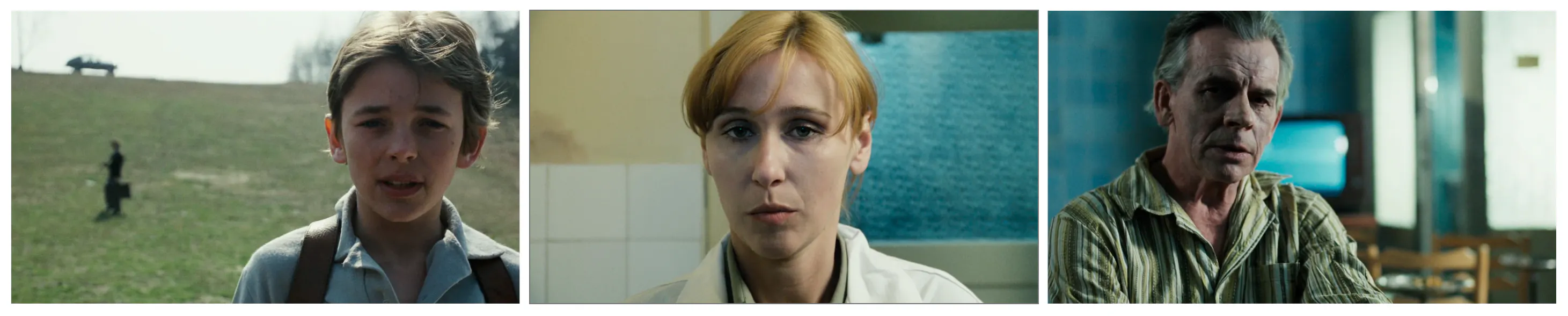
Hailed as Krzysztof Kieślowski’s masterpiece, Dekalog explores the ten commandments across a series of one-hour films. All ten films take place in the same austere Polish housing project, yet each consists of different characters and can be watched independently of the rest.
Dekalog I reflects the first commandment: I am the Lord thy God. Thou shalt not have other gods before me. Thou shalt not make unto thee any graven image. Thou shalt not bow down thyself to them, nor serve them.
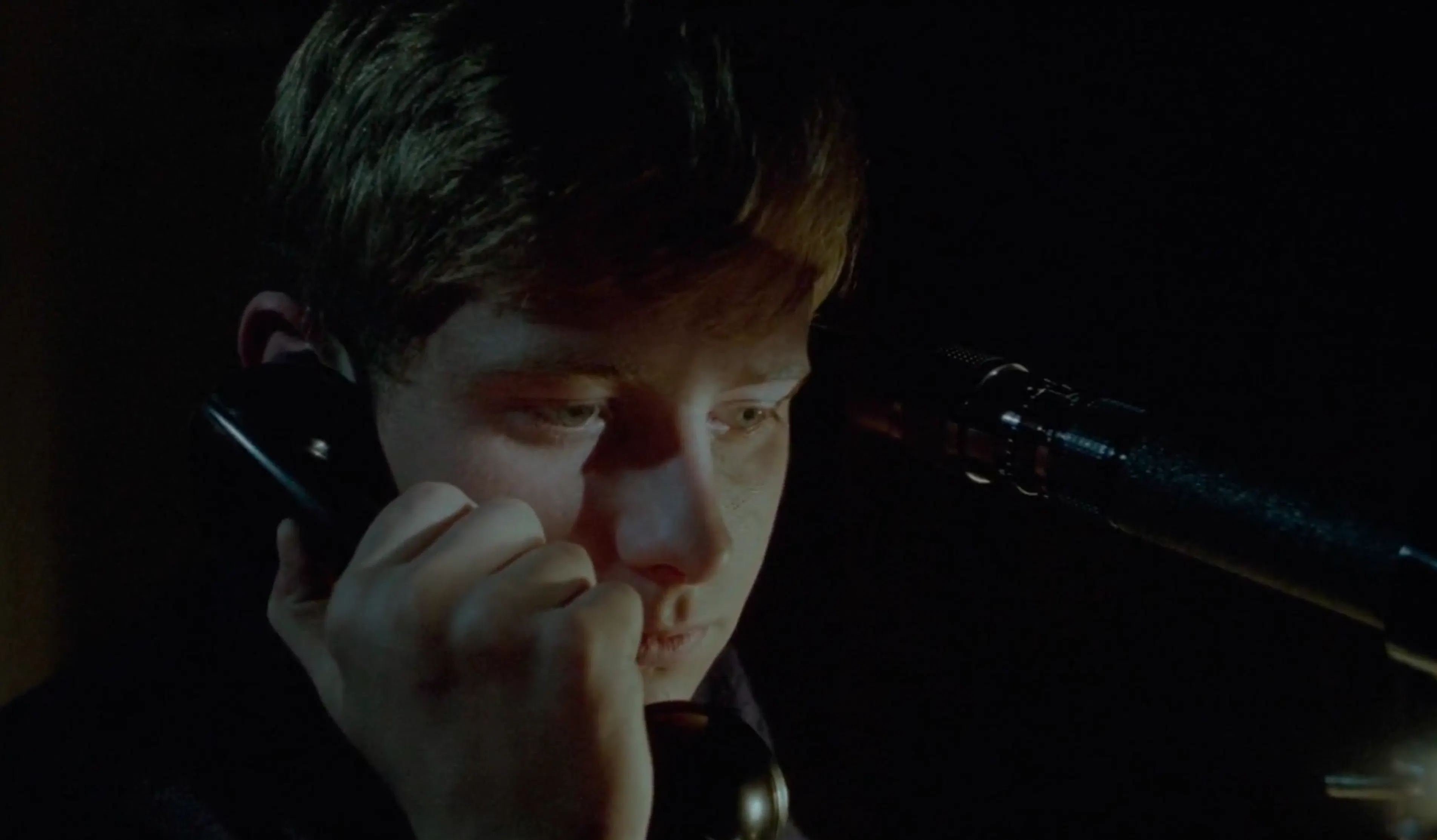
We watch a precocious boy, Pawel, navigate questions of fate through conversations with his father and his aunt. Pawel’s father, an academic who teaches at the university, leans towards a scientific explanation of the world. At home, he bonds with Pawel over computers, solving equations. The computer always knows. Pawel’s father puts his faith in machines.
When Pawel relays his father’s views to his aunt, she speaks of religion and the soul. Yet the nature of her faith shines more clearly in front of the computer. Pawel has created a program that allows him to know what his mother is doing. While never stated, it seems she’s living abroad as the program calculates time zone differences. Each time Pawel asks what his mother is doing, the computer fails to answer. The computer doesn’t always know. Yet Pawel’s aunt answers without hesitation: She’s dreaming of you. She puts her faith in what can only be known in the heart. That includes God.
Further along in the story, Pawel receives ice skates from his father. Ecstatic, Pawel asks if he can skate on the lake the next day. His father calculates how much weight the ice can support; three times the boy’s weight. Still, Pawel’s father walks out to the lake himself to test the ice—perhaps a sign he has not put all of his faith in the machine. The next day, Pawel skates on the lake with friends. The ice cracks, and Pawel drowns in the frigid waters.
Here we’re invited to reflect on the first commandment. I am the Lord thy God. Thou shalt not have other gods before me. Even if the machine god provided correct calculations, the Biblical God had other plans.
If this is a story about false gods, then we are left with a harder question: where is the real one? Kieślowski may offer an answer in the form of a mysterious character who makes three brief appearances.
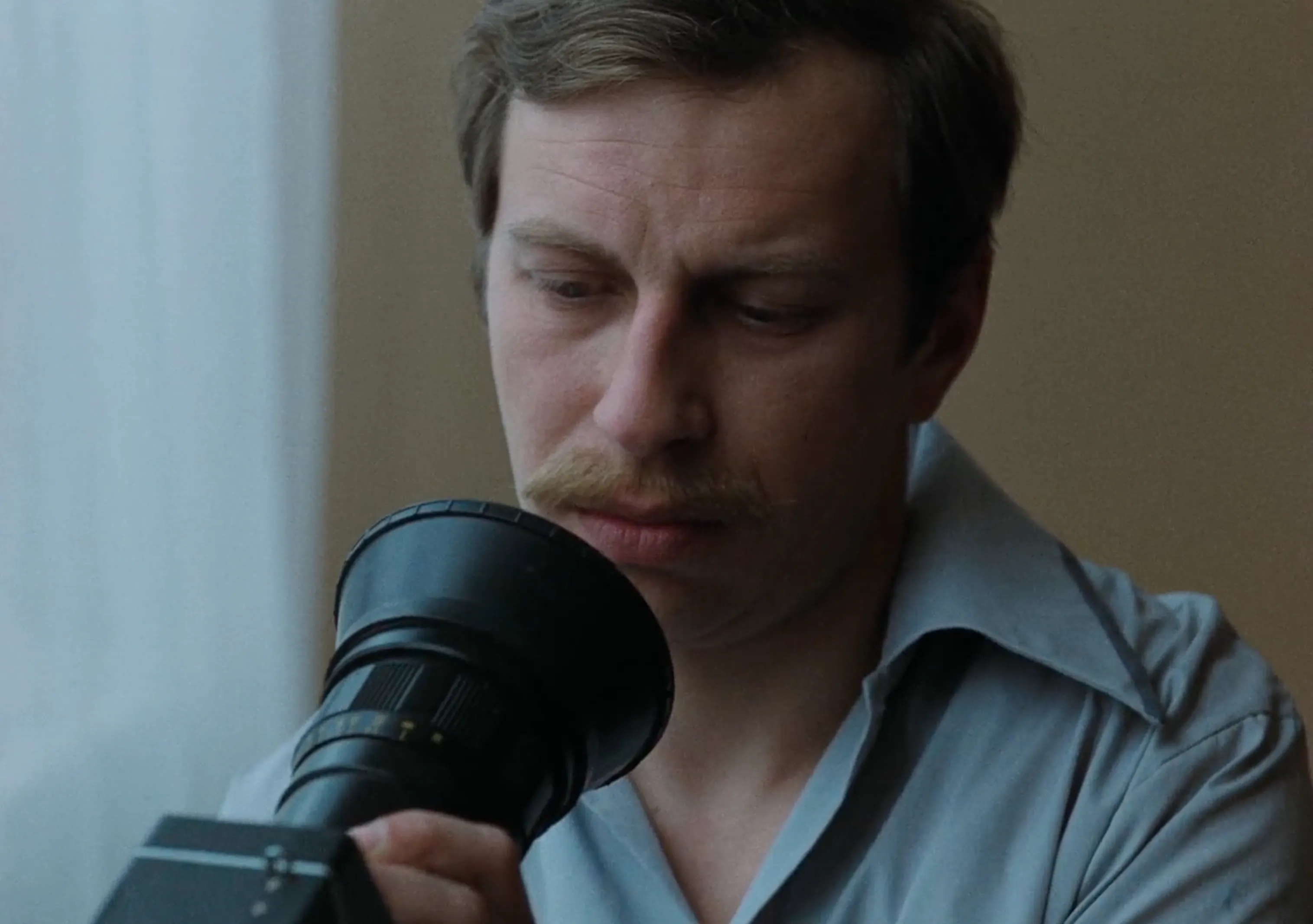
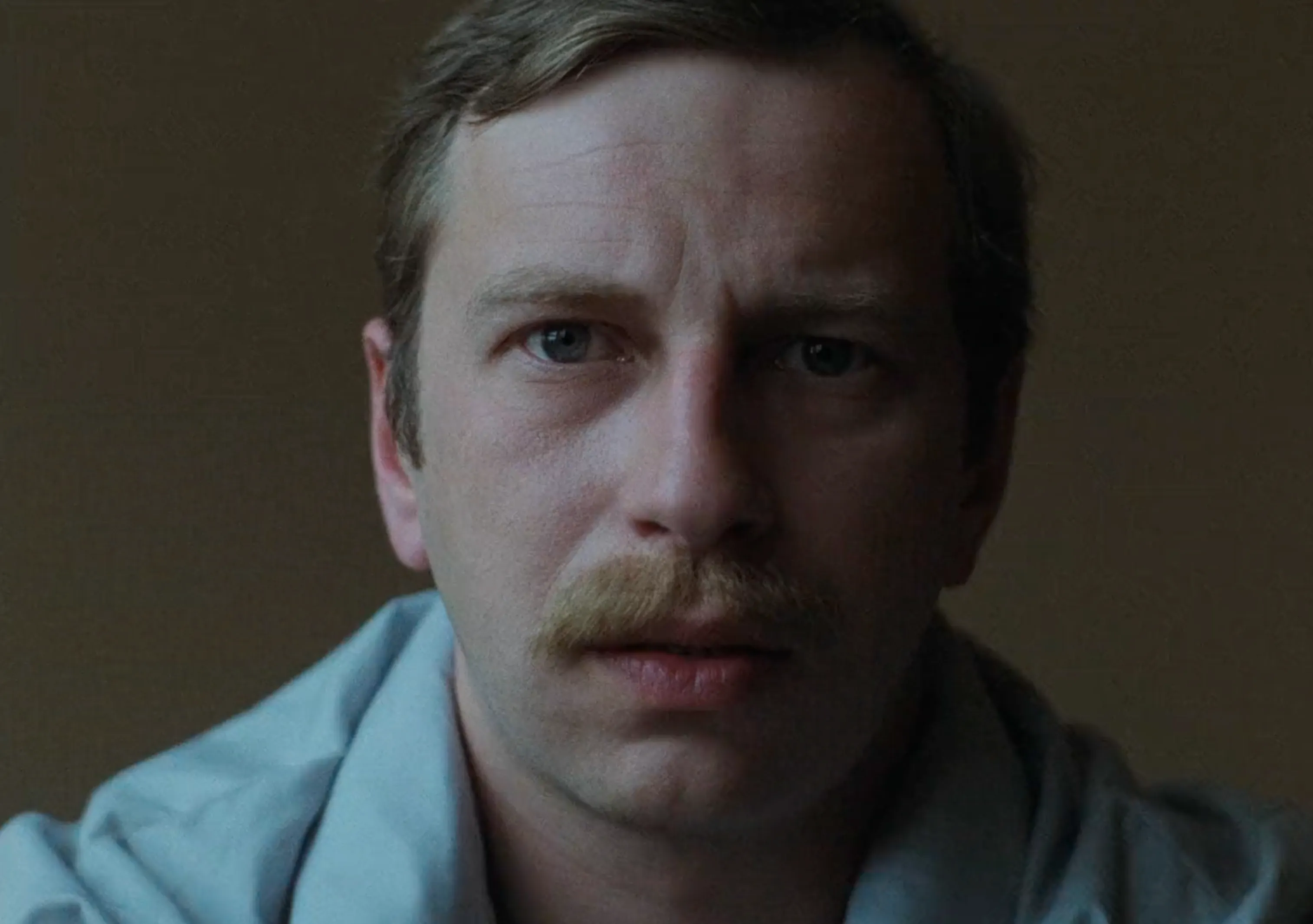
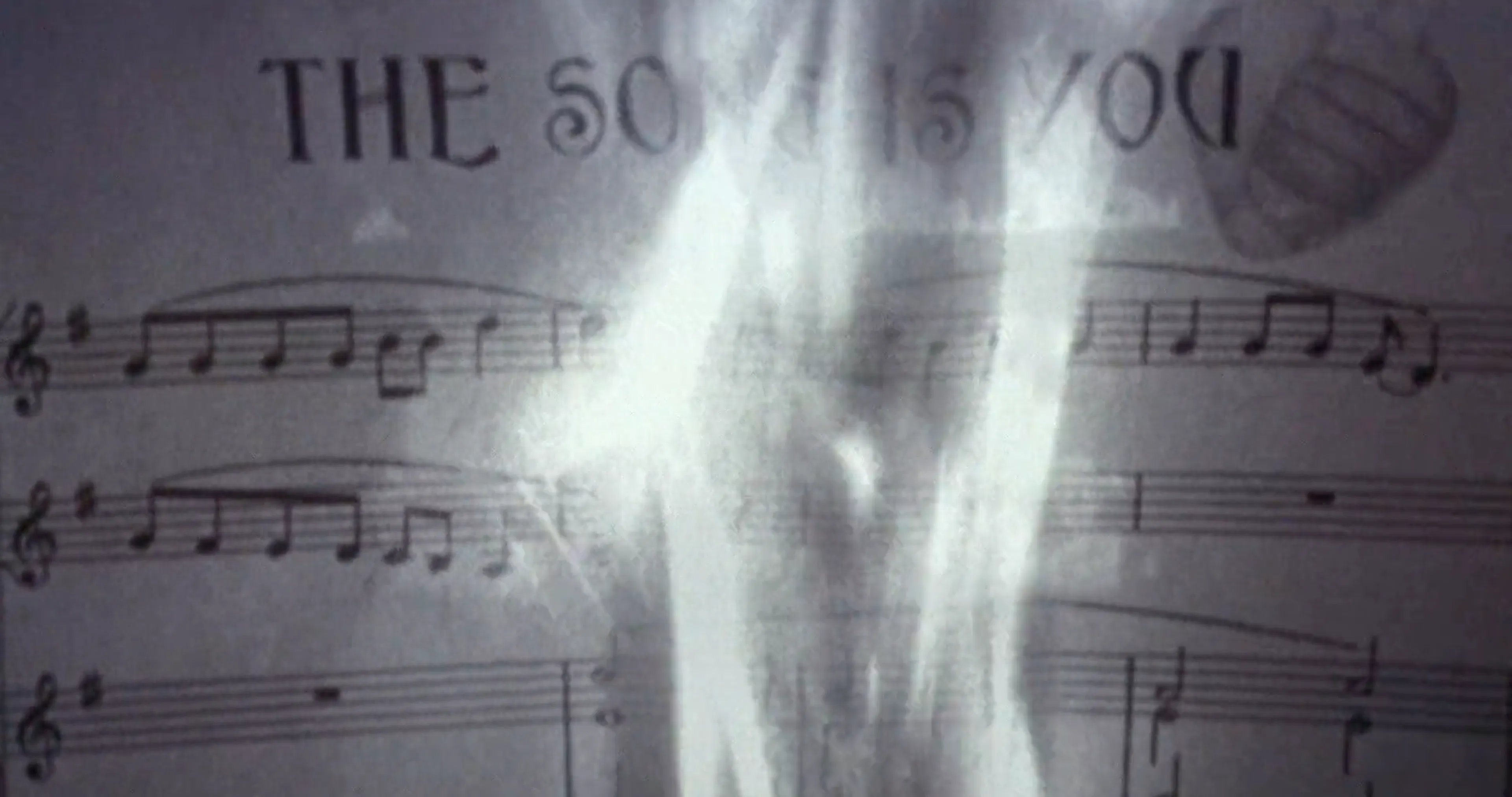
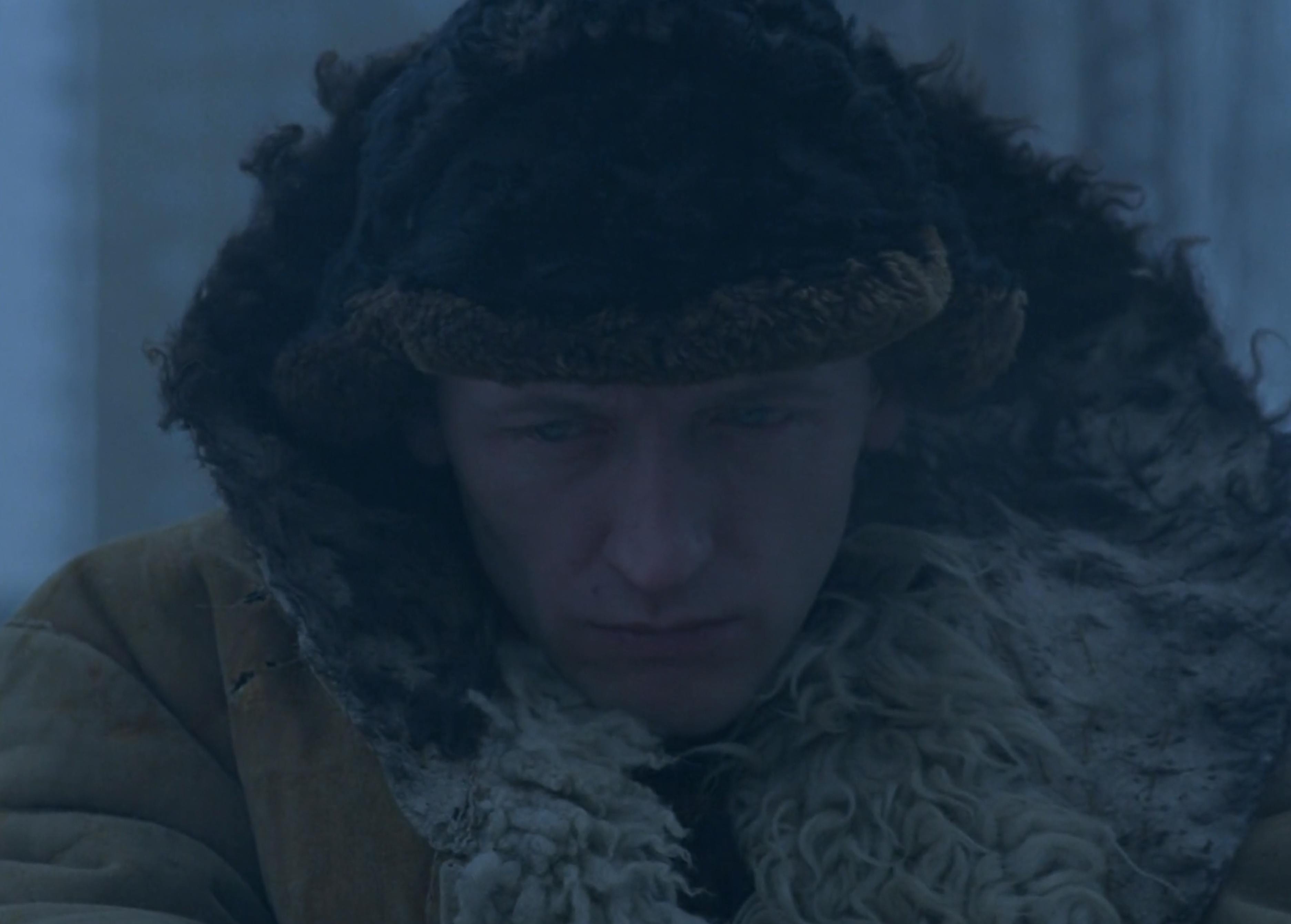
At the beginning of the film, a blue-eyed man sits beside the frozen lake, observing the ice in silence while warming himself against the winter before a small fire. We see this man a second time when Pawel’s father tests the strength of the ice. When Pawel dies, we see the man a third time though not physically; while rescuers retrieve bodies from the lake, we notice a black pile of smoldering ash where the man sat before.
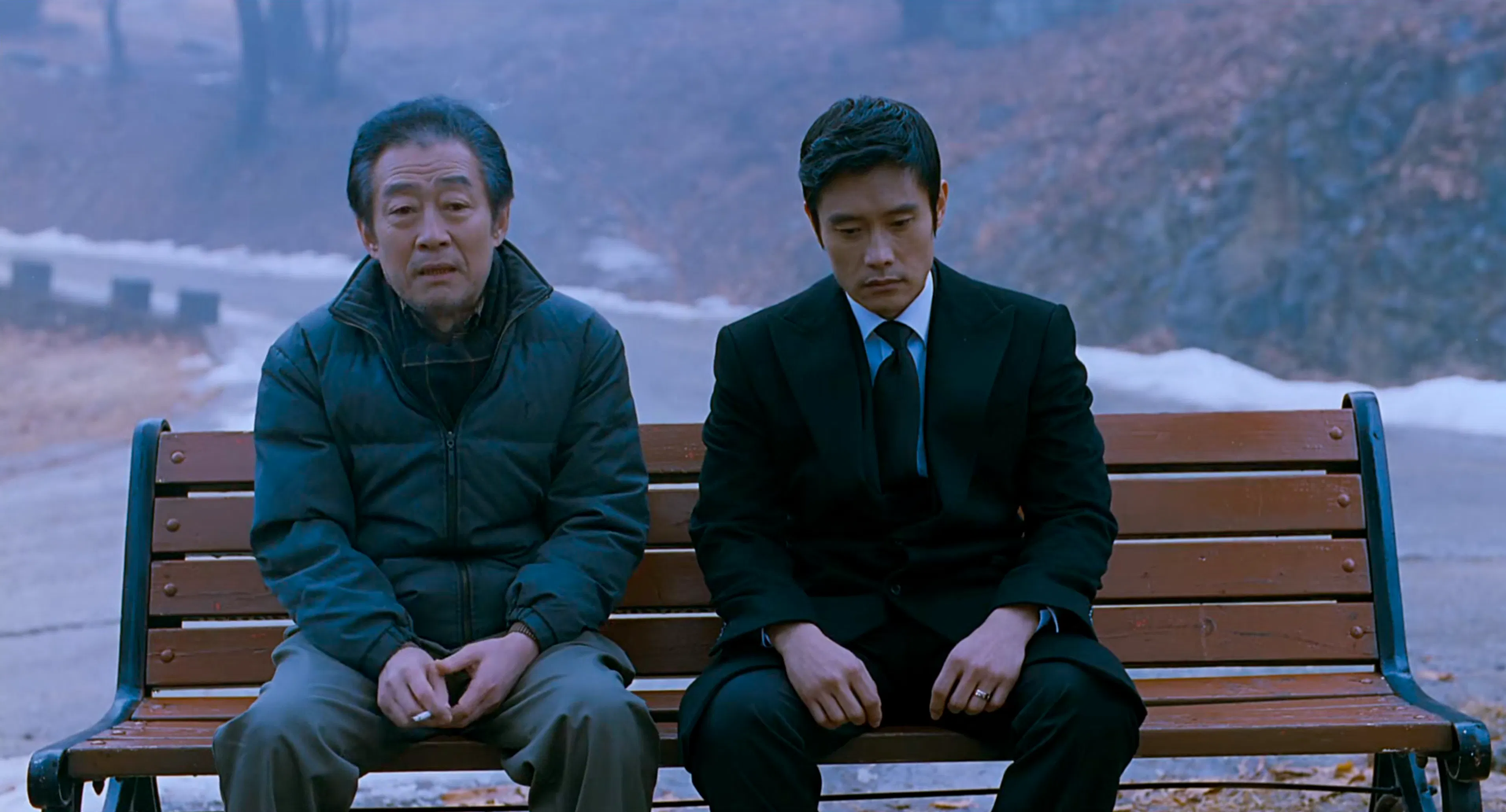
I interpret this man to be God. His screaming absence in the face of tragedy raises the timeless question that every religious skeptic asks: How can God let something so horrible happen? Surely this man could have helped if he were there when the ice cracked. What God wouldn’t help given the chance. Yet, if he wasn’t there, why not? Was he even there to begin with?
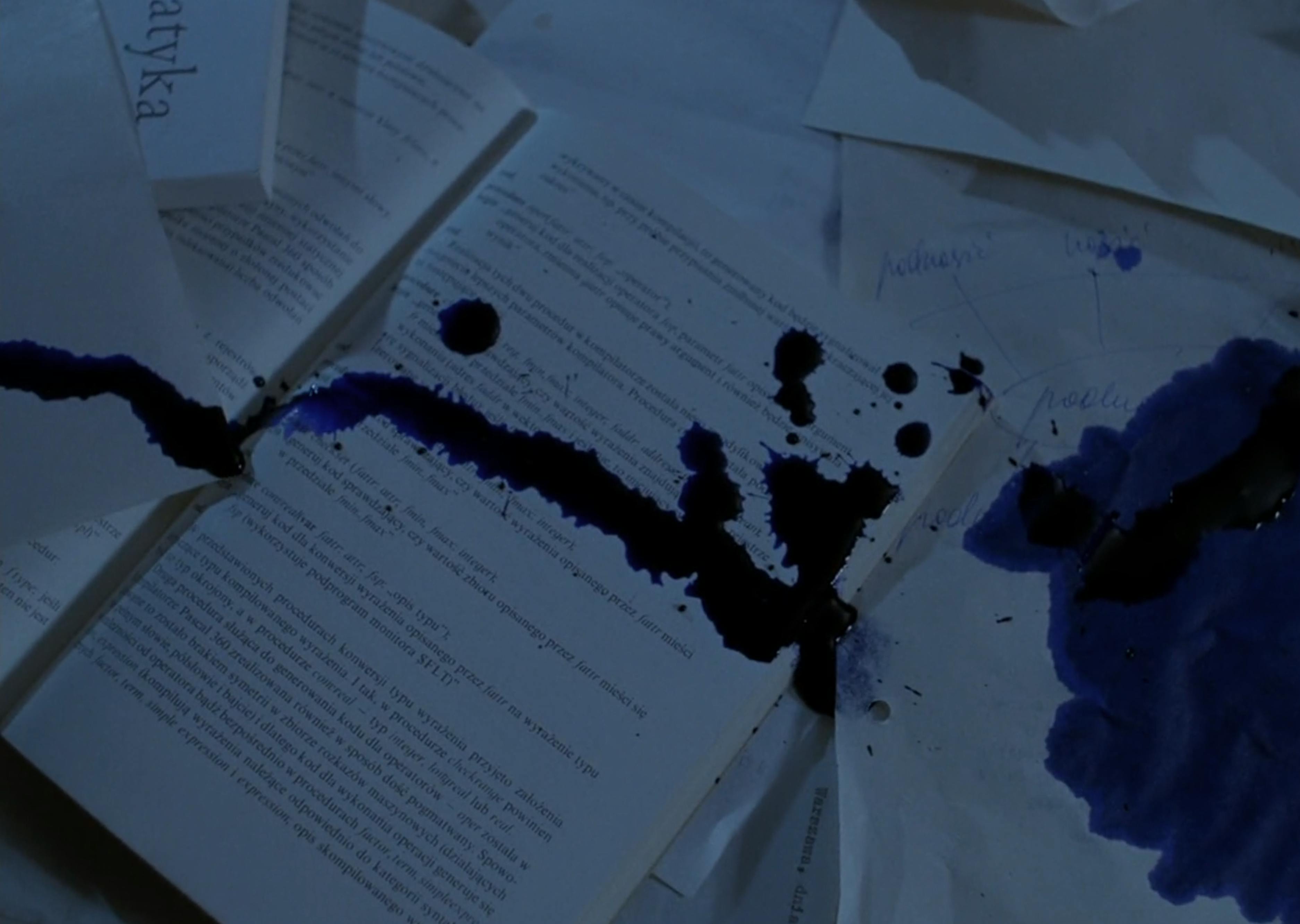
The mysterious man is but one of several symbolic visuals that Kieślowski employs. Another fantastic example comes while Pawel’s father is grading assignments. A pot of blue ink begins to leak, spilling deep blue puddles across white pages spread across the desk. This happens around the same time Pawel is out skating on the lake and, presumably, at the same time that the ice cracks.
Kieślowski quickly deepens the visual metaphor. We all know what it means to say someone has blood on their hands. Scholars tie the idiom to the Old Testament. In Deuteronomy 21:6-9, elders wash their hands to declare they are not responsible for a death. Isaiah 59:3 also mentions hands stained with blood as a sign of guilt. In Dekalog I, Pawel’s father runs to the sink to wash blue ink from his hands. Here we might say he has blue on his hands, yet the meaning is the same.
Dekalog I hits hard. Kieślowski turns serious religious material into a harrowing story about faith and the nature of God. It calls to mind the final passage in Thornton Wilder’s The Eighth Day: There is much talk of a design in the arras. Some are certain they see it. Some see what they have been told to see. Some remember that they saw it once but have lost it. Some are strengthened by seeing a pattern wherein the oppressed and exploited of the earth are gradually emerging from their bondage. Some find strength in the conviction that there is nothing to see. Some
Wilder ends with a single word without a full stop. Kieślowski ends with a full stop and leaves you to imagine Pawel’s father searching the arras to understand why his God failed him.
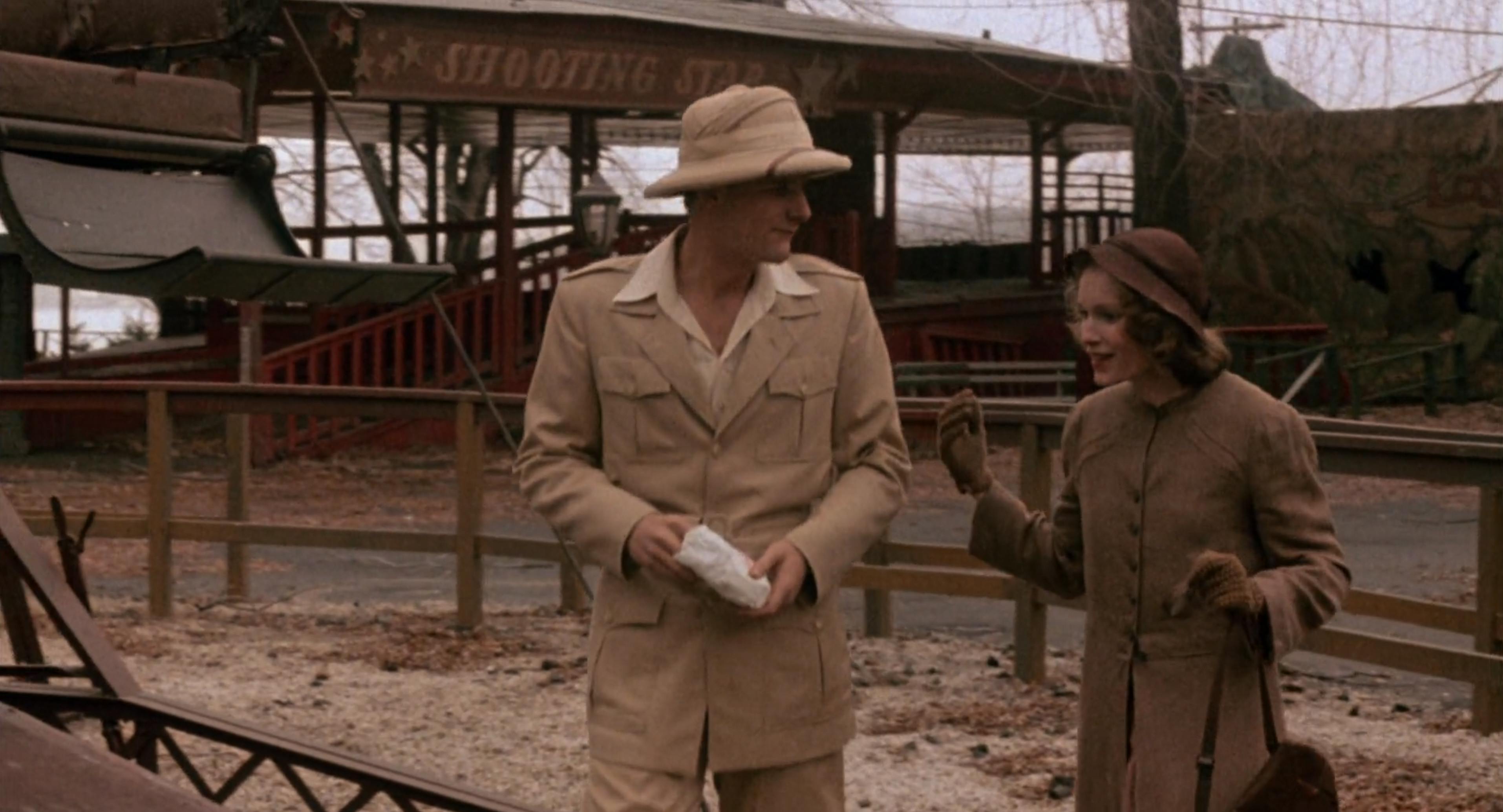
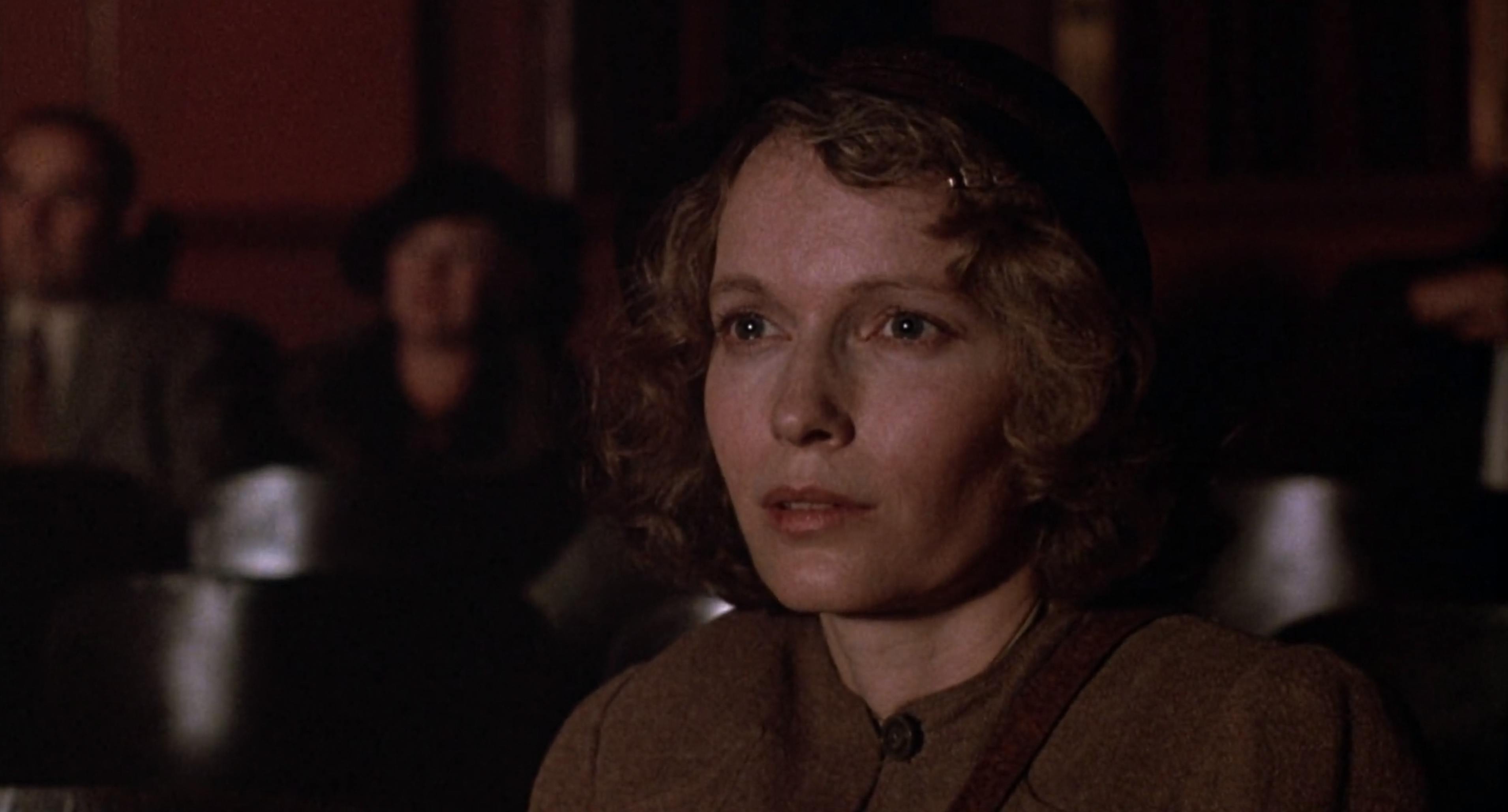
Cecilia has it rough. She is a terrible waitress. Her husband is abusive and unfaithful. All she wants is escape. So she goes to the cinema to watch The Purple Rose of Cairo again and again. She falls in love with Tom Baxter, the character on screen. By some magic, Tom falls in love with her, too, and steps out of the film into real life.
What begins as fantasy quickly gets complicated. Without Tom, the movie starts losing money, putting the actor who plays him, Gil Shepherd, at risk. Gil tracks Cecilia down and he also falls for her. Now, Cecilia must choose between the fantasy who cannot survive in the real world and the actor who can.
The film works on an acute psychological level. Cecilia projects her longing onto the screen. Tom embodies the romance she imagines, but he's confined by the script that created him. He cannot adapt. Gil is real. He can improvise, promise, betray. He is the closest thing to Tom that reality can offer, and that's the problem, because real people disappoint.
In the end, Cecilia returns to the cinema. The desire for escape remains. It always does.
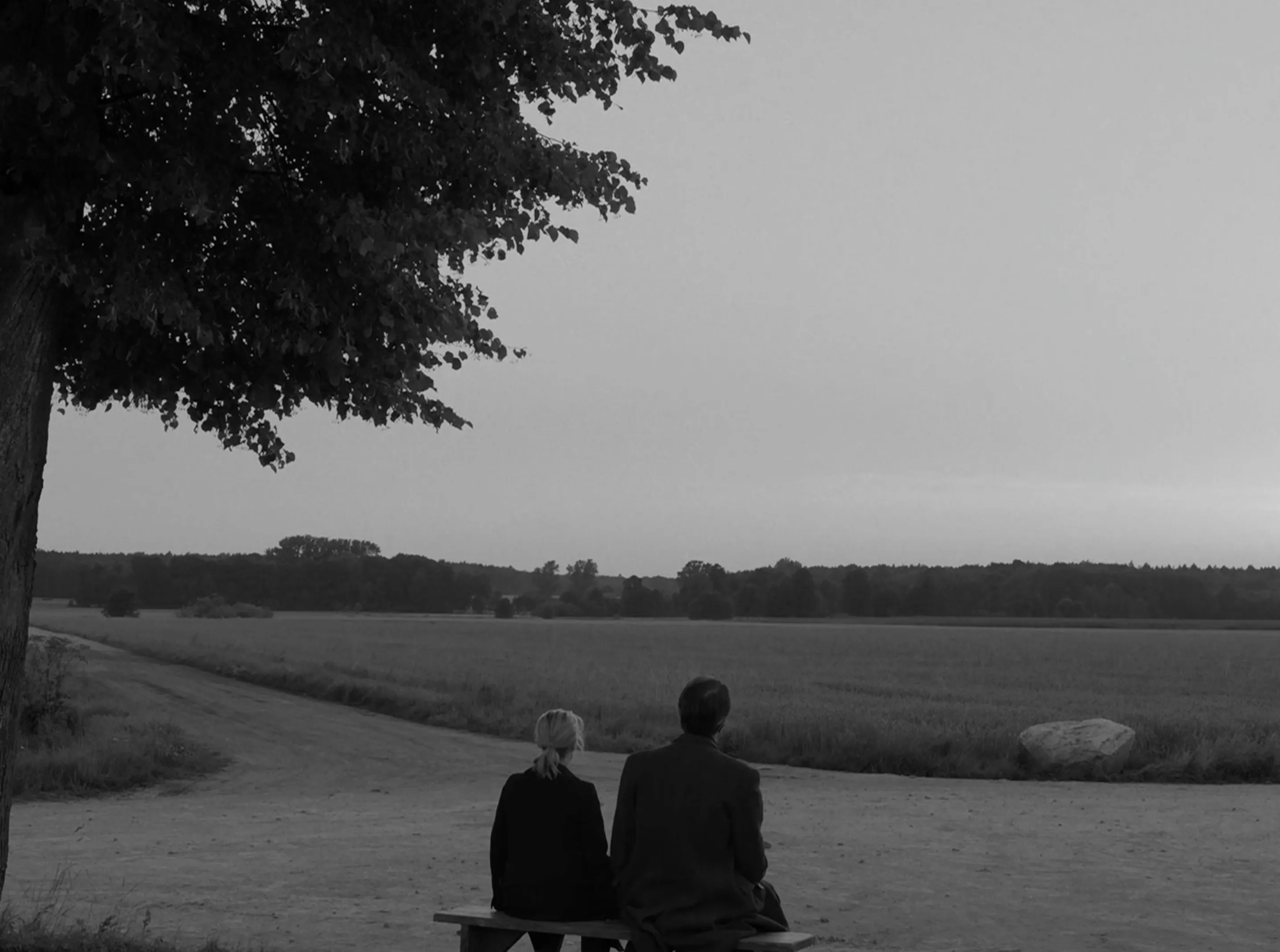
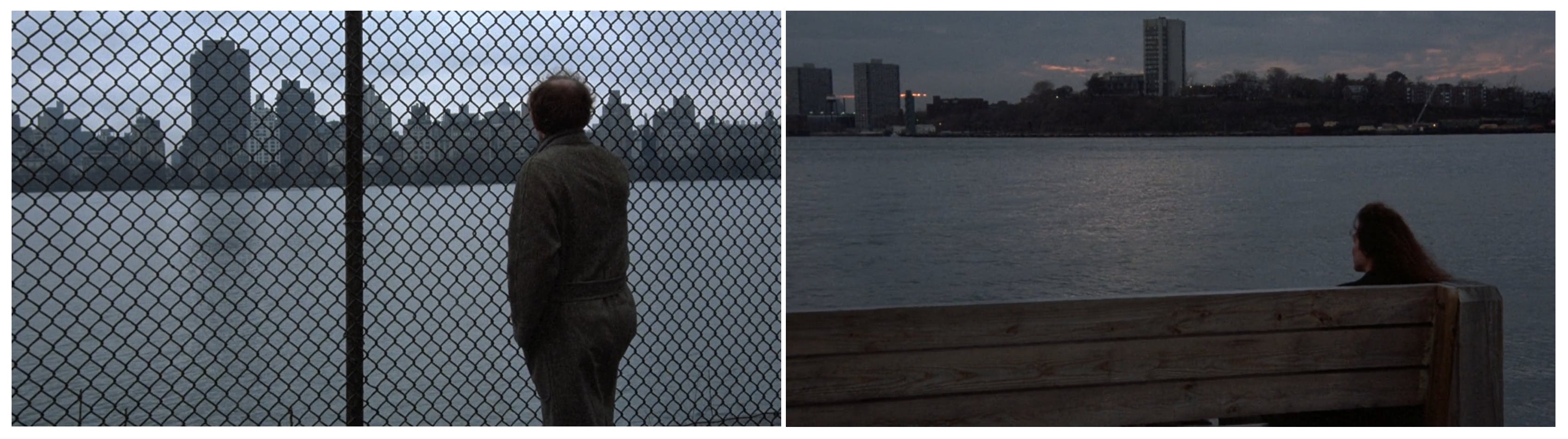
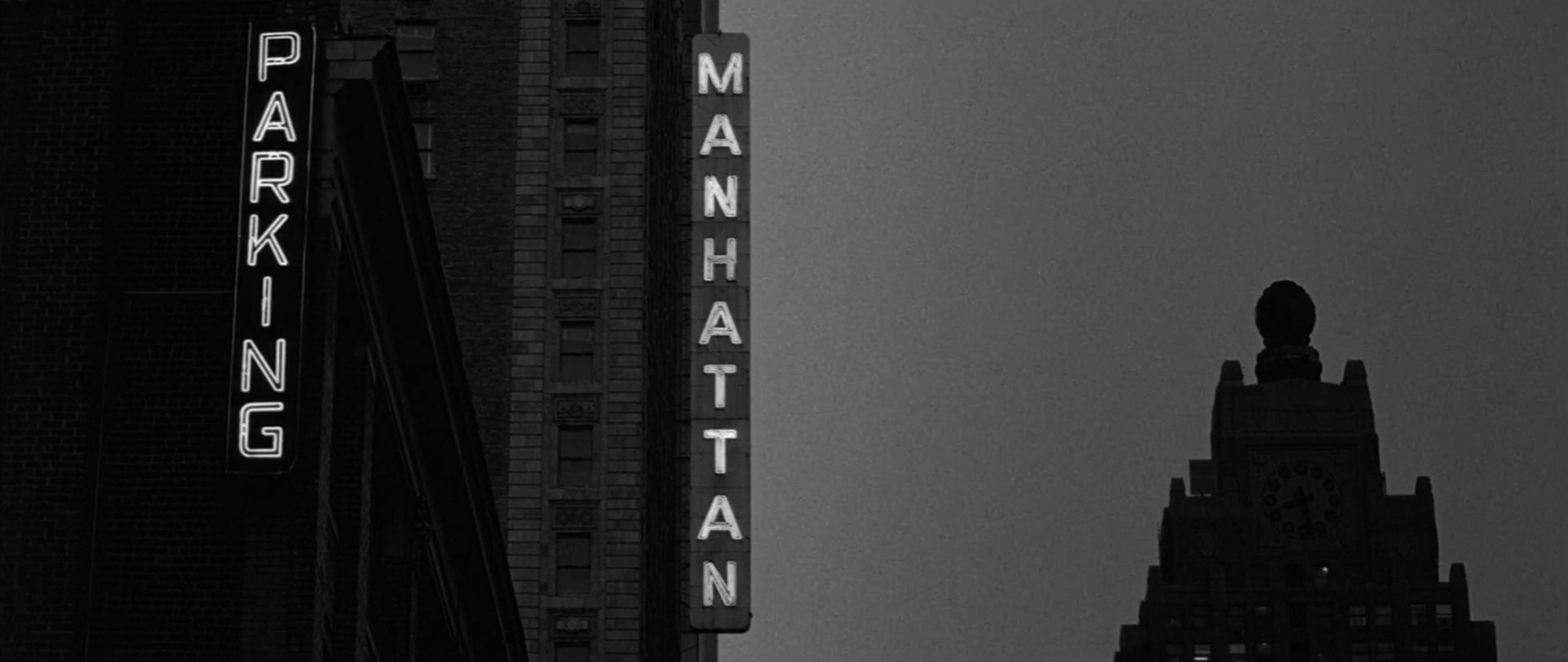
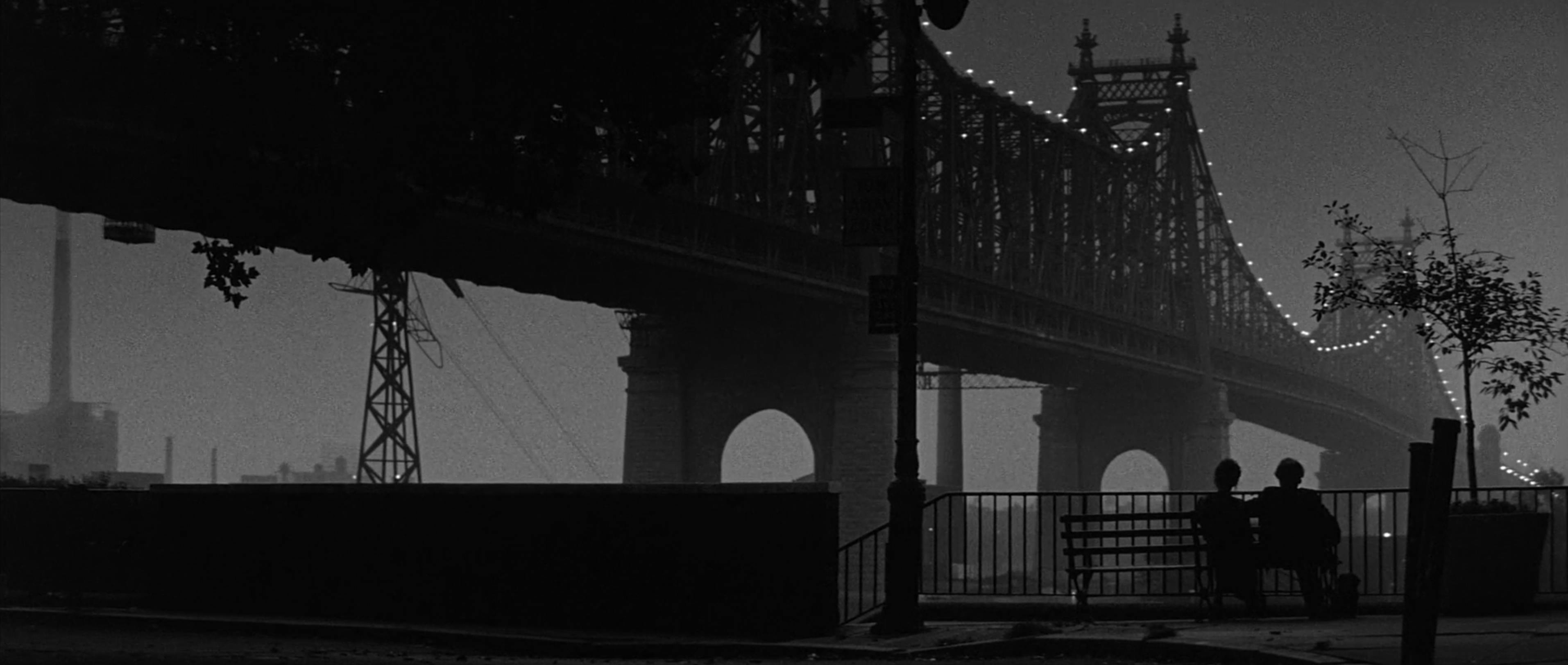
New York looks best in black and white. In few films is that more evident than Manhattan. Woody Allen and cinematographer Gordon Willis capture a version of the city that feels familiar, even to those who have never visited.
In this film, New York is a central character. It shapes the characters. Their romances, betrayals and anxieties all feel possible only here. Watching, we imagine ourselves there too, living out our own little dramas.
The film opens and closes with sweeping shots of the city. In between, Allen and Willis linger on bridges, sidewalks, restaurants and streets that feel iconic even if you could not name them.
The most unforgettable image may be the sunrise shot of the Queensboro Bridge. Captured at five in the morning, the production team had to bring its own bench because none existed at the location. The scene feels accidental and perfectly composed at the same time, just like New York.