The Eighth Day
Thornton Wilder
When do artists produce their best work? Early in their careers, powered by youthful energy, or late, after mastering their craft? I find the best work often comes early, before expectation narrows imagination.
Such was the case for Thornton Wilder. In 1927 he published The Bridge of San Luis Rey, earning the Pulitzer Prize at just thirty years old. It remains his best-known work and was adapted for film three times. While such acclaim might have disincentivised lesser writers, he committed himself to mastering the craft.
Wilder’s early fiction asks whether there is a grand design in life, an exploration fueled by hope and the desire for certainty. Wisdom and experience drive his late fiction, which asks a harder question: How do we find meaning in the face of uncertainty?
The Eighth Day takes up that later question. Published when he was seventy, the novel won the National Book Award, a testament to its ambition even if it never surpassed his earlier fame.
Set in Coaltown, Illinois, The Eighth Day follows John Ashley, who is convicted of murdering his neighbor and rescued from execution by masked men days before his death. He escapes to Chile under a new identity, while his family remains behind to endure the consequences of his absence. The novel moves between doubt and belief, its ambition set early in Dr. Gillies’ speech on the eve of a new millennium:
Nature never sleeps. The process of life never stands still. The creation has not come to an end. The Bible says that God created man on the sixth day and rested, but each of those days was many millions of years long. That day of rest must have been a short one. Man is not an end but a beginning. We are at the beginning of the second week. We are children of the eighth day.
Faith in Various Forms
Each character in The Eighth Day grapples with their own interpretation of faith. The question of faith looms largest for John Ashley, the character least likely to confront it. Convicted of a murder that he did not commit, Ashley accepts the outcome without protest or despair, signaling his faith in a grand design.
Like most men of faith John Ashley was—so to speak—invisible. You brushed shoulders with a man of faith in the crowd yesterday; a woman of faith sold you a pair of gloves. Their principal characteristics do not tend to render them conspicuous. Only from time to time one or other of them is propelled by circumstance into becoming visible—blindingly visible. They tend their flocks in Domremy; they pursue an obscure law practice in New Salem, Illinois. They are not afraid; they are not self-regarding; they are constantly nourished by astonishment and wonder at life itself. They are not interesting. They lack those traits—out bosom companions—that so strongly engage our interest: aggression, the dominating will, envy, destructiveness and self-destructiveness. No pathos hovers about them. Try as hard as you like, you cannot see them as the subjects of tragedy.
Wilder does not romanticize men and women of faith. They are not tragic figures; they simply act as though guided by an invisible order. Even as prison guards taxi Ashley to the execution chamber, he does not view himself as a victim.
Across the novel, faith operates beneath consciousness: Men of faith and men of genius have this in common: they know (observe and remember) many things they are not conscious of knowing. They are attentive to relationships, recurrences, patterns, and “laws.” There is no impurity in this operation of their minds—neither self-advancement nor pride nor self-justification. The nets they fling are wider and deeper than they are fully aware of.
The faithful recognize that there is a pattern but do not claim to know what the pattern is. They are moved by and move with mystery. Yet Wilder does not confine faith in God. He allows for an atheist view whereby people value the ideals associated with a higher power that was created by man:
I don’t believe in God. I believe that those celebrated men and women—Mary of Nazareth and her family—are now each a pinch of dust, like all the billions of men and women who have died. By the representation of such beings are man’s greatest achievements.
Wilder positions this as an achievement precisely because belief becomes a balm for those in need: Who can count the prayers that have ascended to gods who do not exist? Mankind has himself created sources of help where there is no help and sources of consolation where there is no consolation.
The novel ultimately separates faith from theology. One may believe in a personal God, a universal abstraction, or nothing at all. Yet faith persists as the human need to orient oneself toward meaning: It’s a bad thing to force God on a man who doesn’t want one. It’s worse to stand in the way of a man who wants one badly.
Suffering Not In Vain
No one in The Eighth Day is spared suffering. Ashley loses his family. Beata bears the weight of survival. Their children grow into hardship. Even the Lansing family suffers in the aftermath of accusation and loss. Suffering becomes the condition through which each character grows.
When God loves a creature He wants the creature to know the highest happiness and the deepest misery—then he can die.
Wilder frames suffering as a form of fulfillment. Those who have not suffered have not lived.
Suffering seldom remains private: Suffering is like money. It circulates from hand to hand. We pass on what we take in.
Breckenridge Lansing, for instance, verbally abuses his wife, Eustacia, when physical discomfort pushes his limits. Their son George suffers the insult on her behalf. Pain begets pain. Yet this emerges as the true source of wisdom: Only those who have suffered ever come to have a heart that is wise.
Wisdom, in Wilder’s late vision, is not acquired through triumph but through endurance. Where his early fiction strains toward metaphysical assurance, this novel rests in the authority of experience.
The Wisdom of Age
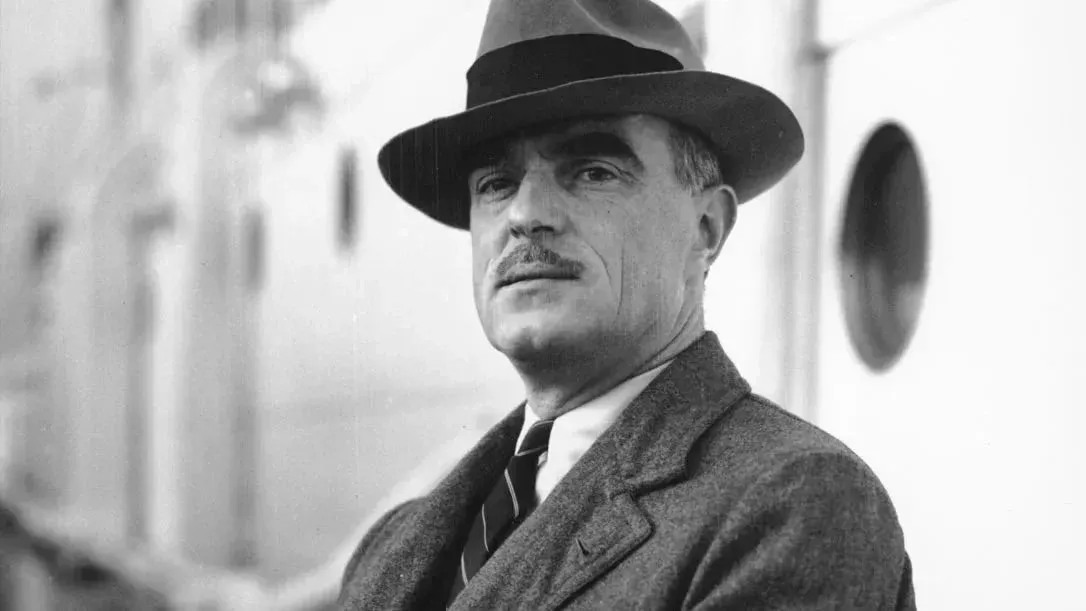
At 70 years old, Wilder brought a wealth of life experience to The Eighth Day; that includes the recognition that youth requires hope before it can endure truth:
It is the duty of men to lie to the young. Let these encounter their own disillusions. We strengthen our souls, when young, on hope; the strength we acquire enables us later to endure despair as a Roman should.
Age tempers that hope with clarity: Hope, like faith, is nothing if it is not courageous; it is nothing if it is not ridiculous. The defeat of hope leads not to despair, but to resignation. The resignation of those who have had a grasp of hope retains hope’s power.
Even so, the older voice still speaks promise into youth: You are young. You are not happy now because you have not yet discovered the work to which you will give your life. Somewhere in the world there is a work for you to do, to which you will bring courage and honor and loyalty. For every man there is one great task that God has given him to do. I think that yours will demand a brave heart and some suffering; but you will triumph.
The promise of vocation animates youth, even as suffering awaits. And yet the wise understand how fragile such hope is: When we are talking soberly to the young we are moving in evanescent landscapes, in corridors of dreams, abysses on either side.
The Search for Meaning
Meaning in The Eighth Day is neither affirmed nor denied. The novel refuses to guarantee design, yet it refuses despair as well: We cannot understand now what has happened to us. Let us live as though we believed there were some meaning in it.
Doubt is not abstract; it’s personal. Towards the middle of the book, one character questions the meaning of his own actions to no avail: Why does each of us do what we do—the petty, the favored, the aggressive, the meek? Always there lurked the fear that one’s own view of truth was merely a small window in a small house. In the face of so important a concern any contempt poured on oneself was incidental.
The novel portrays another response to uncertainty: His parents were both forty when he was ten—that is to say they were beginning to be resigned to the knowledge that life was disappointing and basically meaningless; they were busily clutching at its secondary compensations: the esteem and (hopefully) the envy of the community in so far as they can be purchased by money and acquired by circumspect behavior, by an unremitting air of perfect contentment, and by that tone of moral superiority that bores themselves and others but which is as important as wearing clothes.
In the absence of visible design, some retreat into reputation and moral superiority. Wilder offers no final revelation, only a spectrum of responses. The arras may contain a pattern; it may not. What matters is not certainty, but the posture one adopts in its absence.
It is precisely on that note that Wilder ends the book. There is no answer to the big questions about life and meaning, just a variety of experiences and faiths in different forms:
There is much talk of a design in the arras. Some are certain they see it. Some see what they have been told to see. Some remember that they saw it once but have lost it. Some are strengthened by seeing a pattern wherein the oppressed and exploited of the earth are gradually emerging from their bondage. Some find strength in the conviction that there is nothing to see. Some
The sentence trails off because the question remains open. Creation has not ended. We are still in the eighth day.