Mating
Norman Rush
What is Mating about? I’ll look at it on the thematic, narrative and structural levels before sharing quotes and other observations. Note that I approached this reflection in a different manner than others. Instead of writing everything, I recorded an audio note, transcribed it and then made a few adjustments.
The Thematic Level
On a thematic level, the primary theme of this book is love. What brings two people together? What draws them closer to one another from that initial attraction to something deeper? What is it that you find attractive in another person? What do you learn about yourself through love? When do cracks start to form? How do you spackle over and repair those cracks? What are the things that push people apart? How do you pick and choose your battles? When does love end? Who decides when it’s over?
The book is very much an exploration of love on a deep thematic level. In this case, that means the attraction between the protagonist—we never learn her name—and her love, Nelson Denoon, referred to as Denoon throughout the book. The focus is on their relationship.
There is a second love story here, and that is the love story between Rush and his intellect.
The protagonist is a PhD student working on her thesis. She is hyper-intellectual. Denoon is anti-academic while being deeply intellectual. He seems smarter than a lot of people who operate within academia. To write characters like that, you yourself have to be incredibly intelligent. You cannot fake that convincingly. Norman Rush writes these characters in a very convincing way. When they talk about things that are high-minded, things that sound academic, they are convincing and persuasive. I think that is the second love story here. It's Norman Rush’s love for knowledge, and also his love of his own intellect. And, really, I think Rush cut Denoon in his own image.
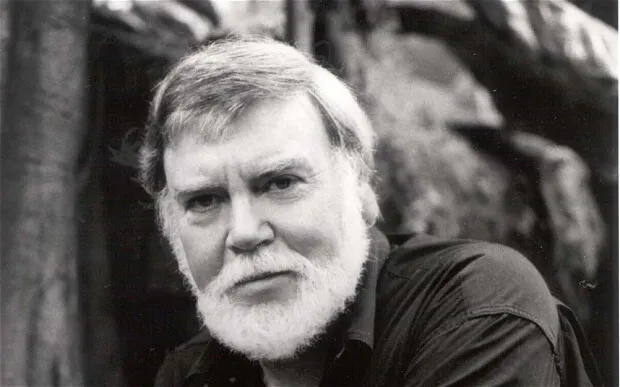
The second theme is Africa. Norman Rush and his wife, Elsa, worked as co-directors of the Peace Corps in Botswana from 1978 to 1983. Rush has a deep and intimate knowledge of Batswana and of Africa. He really brings the reader to Africa. He brings you down on the ground and the characters in the book experience some of the things he experienced. In particular, there is the solo trip across the Kalahari Desert and what goes through your mind during that journey. In an interview, Rush spoke of taking a trip like that himself.
In a memorable passage from that section, he writes of how the trip pushes the protagonist’s mind to the limit: I was doing a thing I had been warned not to do in the desert: I was reviewing my life. Actually I was thinking about an aspect of my life, to wit, who would miss me the most if I was reported lost. Also I was thinking in general about how easy it would be to vanish physically in the Kalahari, how quickly you would turn into dust and be distributed, the usual. I had been advised by people like the lion man to keep my consciousness in my surfaces, my skin and eyes and ears, my legs, to be a scanning mechanism and nothing else while I was in the desert.
Another example is Rush’s observations on Africa. This is where we get into that love of his own intellect as seen through his characters. Early in the book, when the protagonist meets Denoon for the first time, he is giving a lecture to a group of people. He is talking about socialism in Africa. Is it something that will benefit people? His argument is that it's not. He makes five points.
There is another important theme as well, and it leans into what the novel is about on another level. That is Tsau, the matriarchal society Denoon has built. It's a society run by women. There are men in this society, but they are outnumbered. There is a collective approach to governance that is unique and shared. The men do not have a say.
During a debate, Denoon underscores the problem with patriarchal societies and the impact it has had on women: Nelson was masterly. He drove home two theses. One was that despite apparent differences every society can be analyzed to show that women are in essence being shaped to function as vehicles for male imperatives and the physical reproduction of male power. He didn’t carry this thesis into its most perfected form, in which he shows that in strictly biological terms man is a parasite on woman. This would have been too much for Harold; The second thesis was that because of the history of crushing and molding of women, men have no idea what women are or what they might be if they were left alone.
Tsau explores what would happen if they were left alone, mostly. That doesn’t mean Tsau wouldn’t balance out. But it would lay the foundations for something different.
It was Denoons’ position that gender imbalance was structural and it would self-correct down the line, but only at a point when female primacy had been established as normal.
Late in the novel we learn that elephant herds are matriarchies, which creates a nice parallel with the experiment in Tsau.
Elephant herds are matriarchies from which all adolescent males are expelled and only a handful over time allowed to return and function as adult companions. The females are careful to keep the males they let back in outnumbered and cowed, and they rather cavalierly exploit the satellite expelee males who mope along after the herd, using them as guards and sentries.
The Narrative Level
If we look at the narrative level, it's simply a love story between the protagonist and Denoon. The protagonist has moved to Africa to do her thesis, her PhD. She has been there for quite some time. She is deeply rooted in Africa, has connections to the land and to the people, and is very interested in what is happening there. Her thesis is about whether agricultural cycles and seasonality have an impact on birth rates. When food is abundant, are they more likely to conceive? That is what she is studying.
It turns out that because food is imported and people do not have to rely on the land so much in Botswana, it's not something she can really test anymore. It's not an issue in the same way. That puts her in a difficult situation. She is about to leave Africa. She feels dejected. There is no hope for her thesis. Around this point she hears of this Denoon guy. Early in the book, she talks about her three relationships in Africa before Denoon, and it's through the last relationship, with a guy who is actually a spy, that she hears about Denoon and the project he is building. Nobody knows where it's. Nobody knows where he is. He kind of pops up every now and again.
By some magic, she winds up at a party and meets Denoon there. That is when he is giving the lecture and talking about socialism in the African context. His soon-to-be ex-wife actually introduces the protagonist to Denoon with the aim of bringing them together because she recognises that the protagonist is exactly the type that would interest Denoon. We do not understand exactly how or why she knows this, but she does. It’s a childish act on the ex-wife’s part, but she’s out. She sees it almost as a selfless act, this kind of uniting.
When the party ends, everybody goes their separate ways. The protagonist doesn’t know if or when she will see Denoon again. She doesn’t know where he stays. She asks around. It’s not until she bumps into Denoon’s ex-wife a second time that she finds out where she might find him. She makes her way to him. They meet briefly. It's surprising for him, but not unwelcome.
The protagonist asks Denoon if she can come and participate in or observe his project. She knows about the secret project he has. Denoon says, thank you, we would love for you to come, but you cannot. They split and The protagonist goes back to Gaborone. Somehow, she finds out where the project is located. It’s in a place called Tsau. She has to take a solo trip one hundred miles across the Kalahari to get there. When she arrives, she has to make up stories about how she got there, why she is there, how she found the project. She tells people she is an ornithologist, and they work it out. She gets to stay. There is a vote among the women and they vote that she can stay.

The protagonist and Denoon form a relationship over time and it's accepted by the society. That is how they come together, and the story explores the relationship from there against the backdrop of this project, Tsau, this society. Again, this is the matriarchy he has coordinated with some help from the government, ruled by women, organised by women. He obviously plays a big role himself, but the women are able to outvote him. He is not a governor or anything. He is just trying to build a utopia of sorts. He himself is a feminist. That plays a role. Against that backdrop, he and the protagonist work through their relationship.
The Structural Level
Structurally, what is interesting about the novel is that the protagonist and Denoon do not meet until about a third of the way through it. Up until then, though, you know two things. You know that she is going to meet Denoon, and you know that their relationship ends, because she speaks about Denoon quite a bit before then. She talks about moments they had, things she learned from him, the way he made her feel, how she felt about some of the things he did and said, and she wonders where he is now and what he is up to because it's a thing of the past.
Before they even meet, you know that it ends and you know a lot about him. You are also anticipating the meeting because she is going through her previous relationships and you know that those are the relationships she has to get through before she gets to him.
It's not very complicated, but it's structurally interesting because within that first third, she might be talking about the present moment and then reflecting on something that happens later in the relationship compared with that moment. That is quite interesting as well. Definitely enjoyable.
A Novel of Ideas
Mating feels like a platform for Rush to share and explore a wide range of his personal ideas through his characters. There’s not a lot of runway to explore every idea, which makes you wonder if they’re fully formed or just surface-level ideas that sound interesting. Yet he’s clearly smart. And the ideas are interesting. Here are a bunch that stand out.
When the protagonist first meets Denoon, he’s giving an impromptu lecture on socialism in the African context. Here are four of the five points he makes against socialism:
Cost number one is that since you have lost the use of the market, which allocates everything gratis, you must set up a mechanism to allocate things by command. And you must pay people to do that, a lot of people.
Number two is that under socialism you are going to have to lay aside money to buy technology, ever newer and better technology, from the market states. And forever. Because under socialism unfortunately there is no invention, that is to say innovation.
Three is a cost you will never see in a Boso pamphlet and is the cost of suppressing possessive individualism. One could say socialism is an annual, but possessive individualism is an iron perennial. This is a cost superadded to the costs of dealing with general crime, which has not gone away yet in any socialist country. I am referring to the cost of suppressing a novel class of activities designated as economic crimes, such as giving people the death penalty for speculation or hoarding.
Four. Whatever idea you might have, one might have, about giving Botswana a socialist industrial economy, remember that it, and all of Africa, is an agricultural economy. Show me a socialist country and I will show you a net food importer. Even now you see, we are living on gift food from the West.
Academics from an anti-academic.
One of the more entertaining examples relates to the impact of importing Kung Fu movies:
Possibly the dumbest thing the Boers ever did was allow kung fu movies into the townships. They thought they were letting in cultural trash to distract the masses. Mark my words, someday somebody will trace the influence of kung fu movies on the liberation struggle and it will be substantial. Because kung fu movies, which are in fact trash, nevertheless teach over and over again an important lesson: you’ve got to get revenge. Christianity says you don’t, the reverse, and for years the educated black leadership went with that. But here comes something else, a set of brilliant how-to illustrations that says to young men Join into groups, use your bare hands against the enemy, the corrupt kung fu clubs that support the gangsters or the evil dynasty, accept discipline and adversity, team up, never give up, avenge your brothers. And by the way, here and there include women as fighters.
The protagonist relays most of Denoon’s thoughts and ideas. Here’s one about why Denoon believes leisure travel is useless:
For someone who had traveled everywhere, Denoon was peculiarly scathing on people who liked to travel. Of all the enthusiasms, the one for sheer travel was the one he claimed to find the most boring. You could rarely if ever get a travel buff to tell you one thing of interest, he would say. They can tell you the names of the places they’ve been and the number of places they’ve been. If you’re lucky they can tell if some place was fabulously cheap or criminally expensive. The quintessence of it was something Robert Louis Stevenson wrote, to wit, I travel not to go anywhere but to go, which was imprinted, fittingly enough, on the paper the Banana Republic wrapped your purchases in. Nelson was against recreational travel. It was his puritanism. If your work compelled you to travel, that was fine. Then you could enjoy it, presumably. But he hated tourism and thought people should stay home and make their own backyards interesting enough to hold their attention.
And, of course, Denoon touches on religion.
And his most recent recensions on religion, to the effect that the taproot of religion is perennial irrational individual self-hatred, had been especially trenchant to me. Religion might originate through thunder and lightning and wondering what the stars are, Nelson had been saying, but once it gets rolling it’s about self-hatred, which is why religions crossculturally always exalt and beatify people who continually hurt themselves or allow others to hurt them.
A View On Relationships
The relationship between Denoon and the protagonist is the throughline in Mating. It’s rare that a male author writes a strong, convincing female protagonist. Rush does it. Here the protagonist delivers a more eloquent version of a common complaint:
I had to realize that the male idea of successful love is to get a woman into a state of secure dependency which the male can renew by a touch or pat or gesture now and then while he reserves his major attention for his work in the world or the contemplation of the various forms of surrogate combat men find so transfixing. I had to realize that female-style love is servile and petitionary and moves in the direction of greater and greater displays of servility whose object is to elicit from the male partner a surplus, the word was emphasized in some way, of face-to-face attention. So on the distaff side the object is to reduce the quantity of servile display needed to keep the pacified state between the mates in being. Equilibrium or perfect mating will come when the male is convinced he is giving less than he feels is really required to maintain dependency and the woman feels she is getting more from him than her servile displays should merit.
The protagonist speaks of the importance of humour in a relationship.
Causing active ongoing pleasure in your mate is something people tend to restrict to the sexual realm or getting attractive food on the table on time, but keeping permanent intimate comedy going is more important than any other one thing.
Perhaps the most human element cuts through in two examples of little games the protagonist and Denoon play with one another in small moments.
A byproduct of one of our personal games, called Filling in the White Spaces in the Dictionary. We satisfied ourselves that there was nothing in English for the sound except shrill blast, which was two words. Everything should have a name, according to Denoon. Decadence is when the names of things are being lost.
And another:
Somehow this led to a Ping-Pong competition re completions of the phrase The band can’t play ‘cause dot dot dot. We had gone through the simple completions like ‘cause a strumpet stole the trumpet, or a bum stole the drum, and were at about the level of Jean Arp stole the harp, or a wily crone stole the xylophone. I wanted to spring on Nelson that the band couldn’t play because Vera Bruba Ralston stole the tuba for Halson. Since he knew nothing about movies he was sure to assert Vera Hruba Rlaston was a nameI made up.
Final Word
Mating made for a wonderful read. I highly recommend it and plan to read his other novels.