You, the Living
Roy Andersson
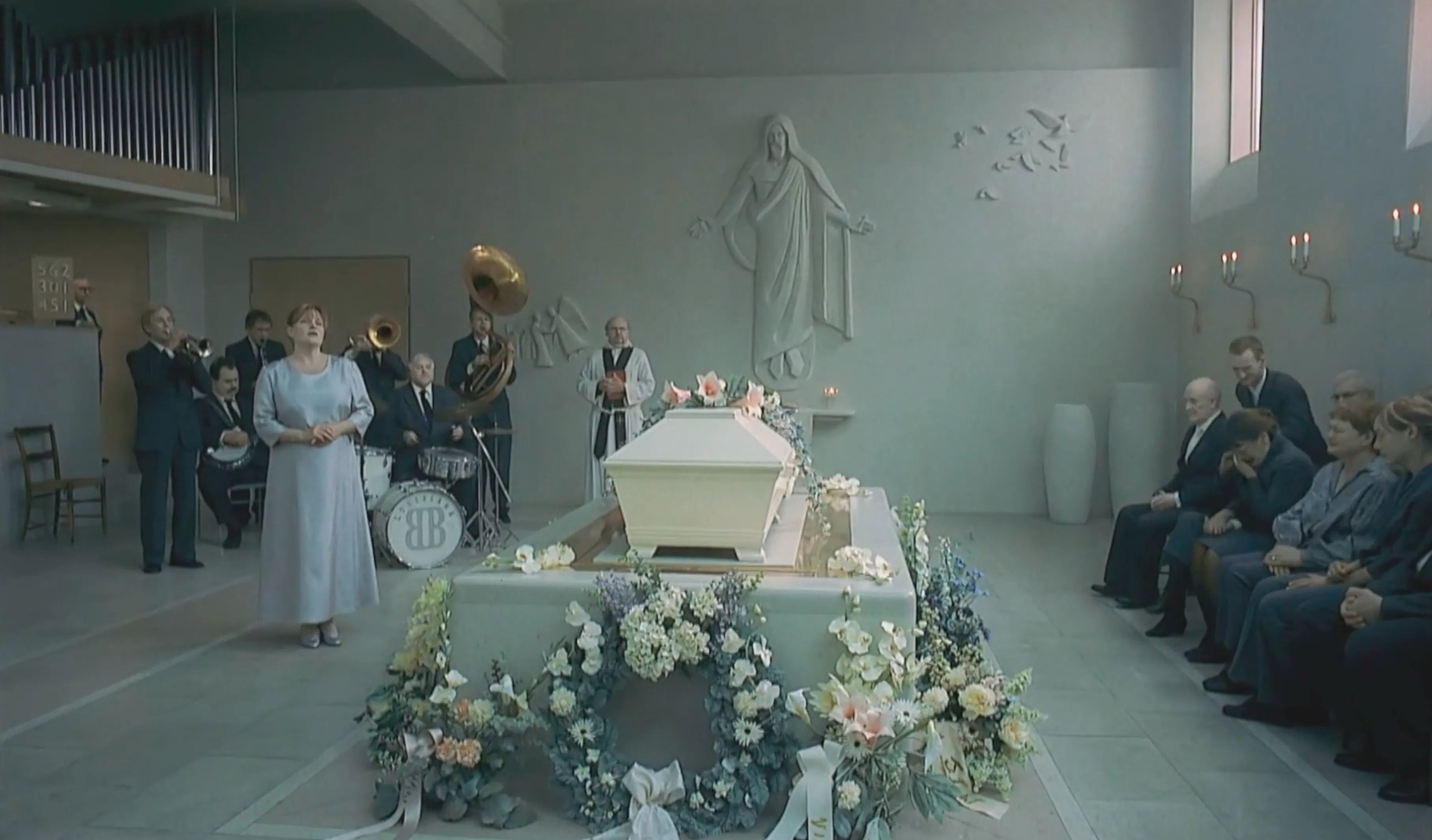
Once you’ve seen one Roy Andersson film, you have some idea what the rest will be like: pale, pathetic, lifeless characters trapped in awkward scenes that look like paintings. Each one carries the loneliness of Edward Hopper and the bizarreness of George Grosz and Otto Dix. The dominant palette is grey, beige, yellow-grey, pale green, muted blue and institutional white.
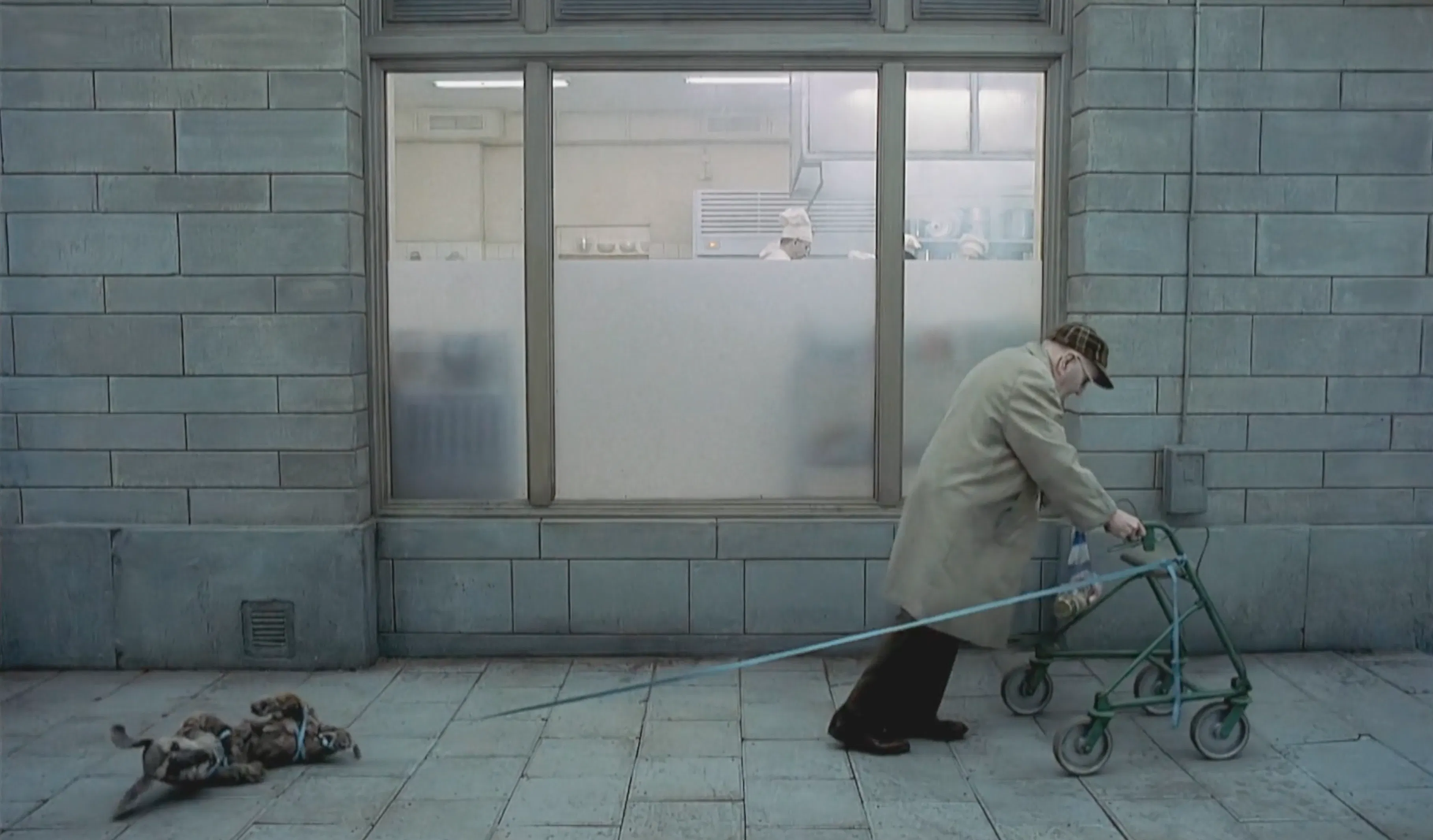
I have a lot of time for Andersson’s work. While the mood and treatment are predictable, I’m still never quite sure what to expect. There is nothing else like it.
It took Andersson several years to make You, the Living. The film consists of 58 scenes, each of which took roughly a month to shoot. Andersson compares his method to sculpture or painting, with each scene treated individually in terms of costume, light and set design. There were many test recordings before the “real filming,” and actual shooting could run to 50 takes per scene. One scene required 98 takes. Maybe that’s why his characters look dead.
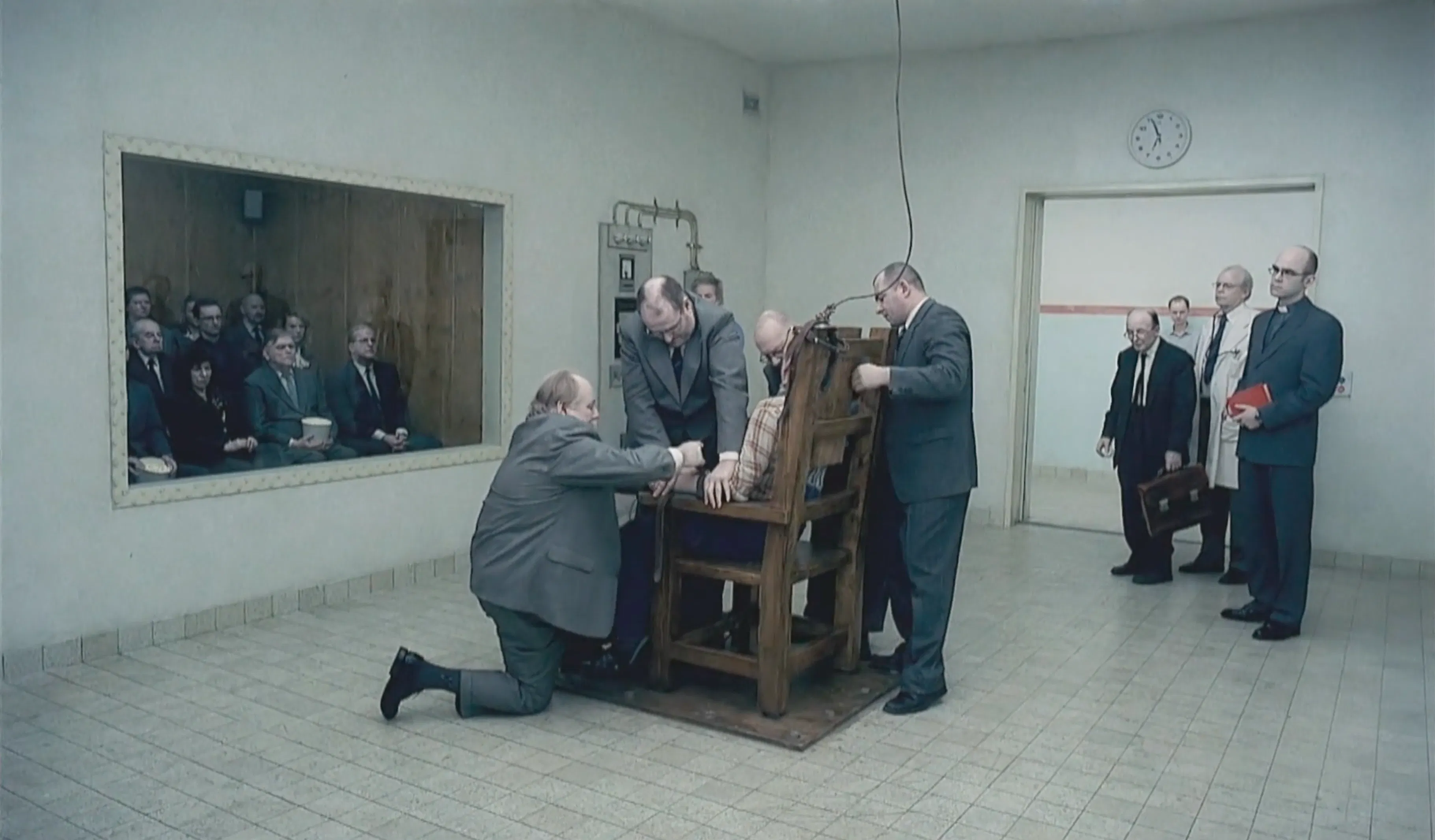
Andersson takes direct inspiration from painting. Each scene or vignette is staged as a complete image, usually without close-ups. Everything has to work within the frame. Only three scenes in You, the Living involve camera movement, and only one cuts together two different perspectives. In effect, these are moving paintings, much like the films of Peter Greenaway.
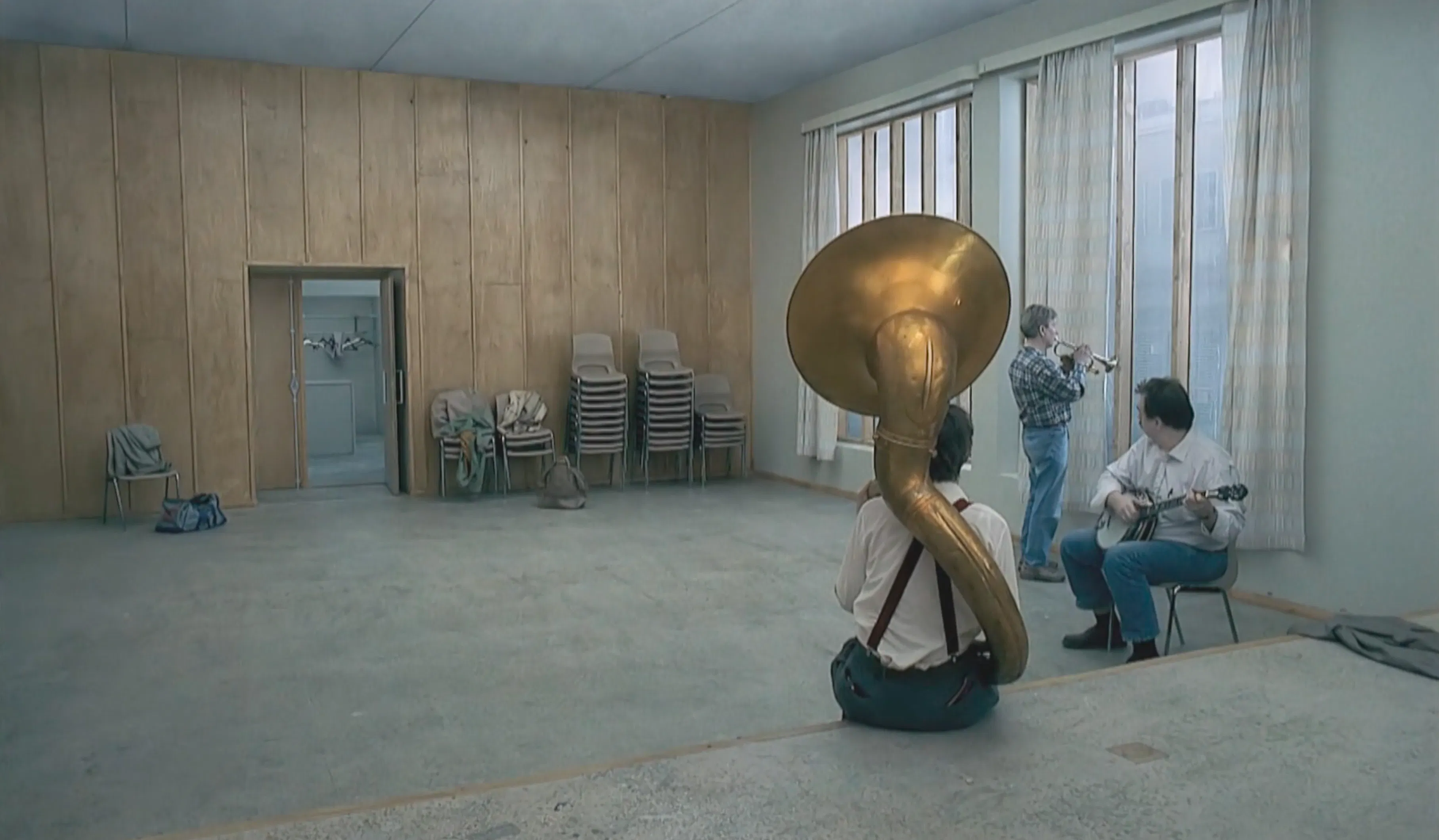
It’s all set work. Andersson builds his sets at Studio 24. In an interview with Göteborgs-Posten, cinematographer Gustav Danielsson said the environments were built in the studio because the scenes “simply can’t be filmed in reality.” Andersson’s desired light scale and abstract, painterly feeling demand more. The aim was for the world to appear “clearer than in reality.”
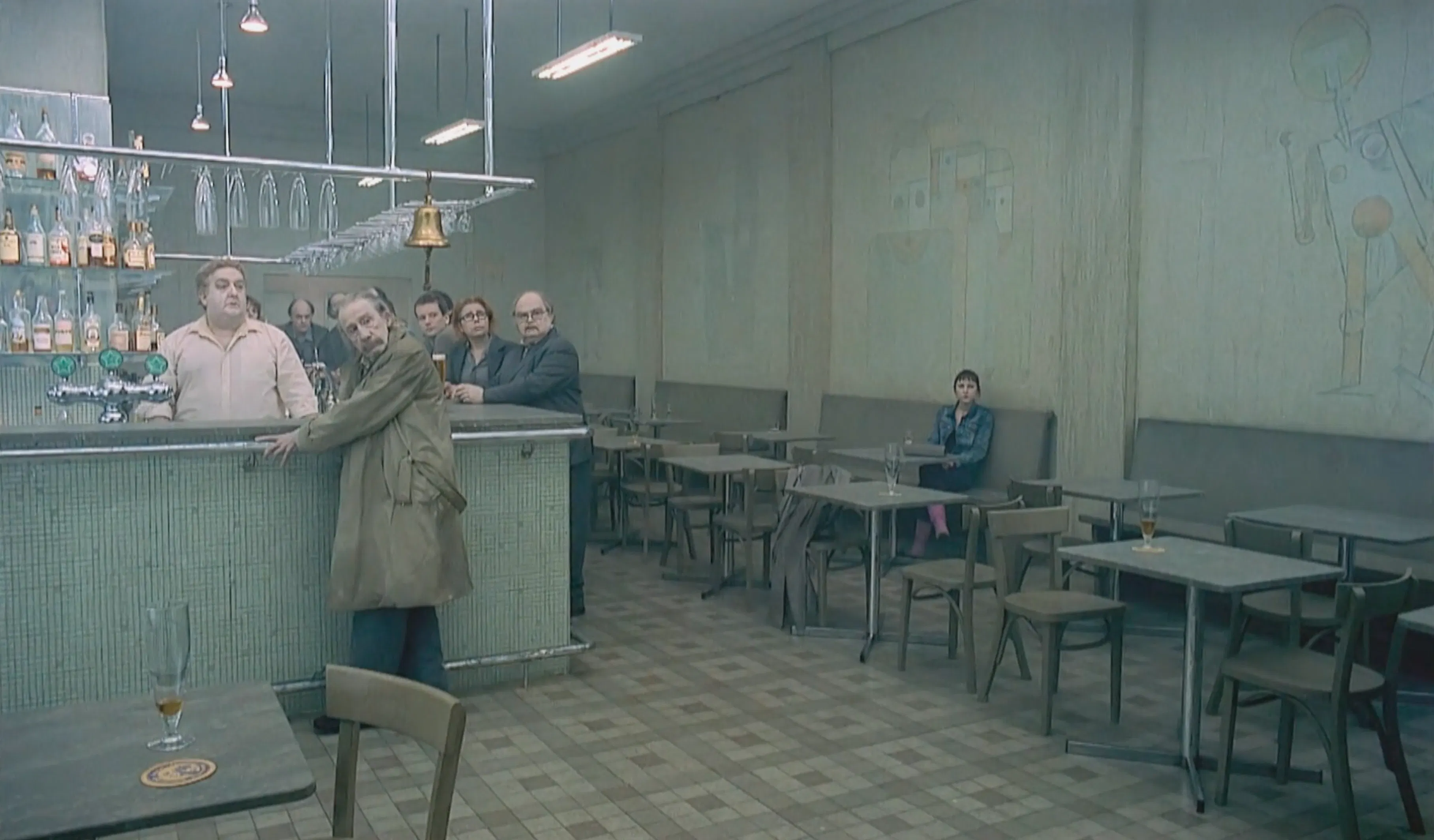
The scenes themselves are minimal but bizarre. Thematically, Andersson wants them to show what he calls “the small human being.” The official description of You, the Living calls it a film about human existence, behaviour, worries, dreams, sorrow, joy and the longing for confirmation and love.
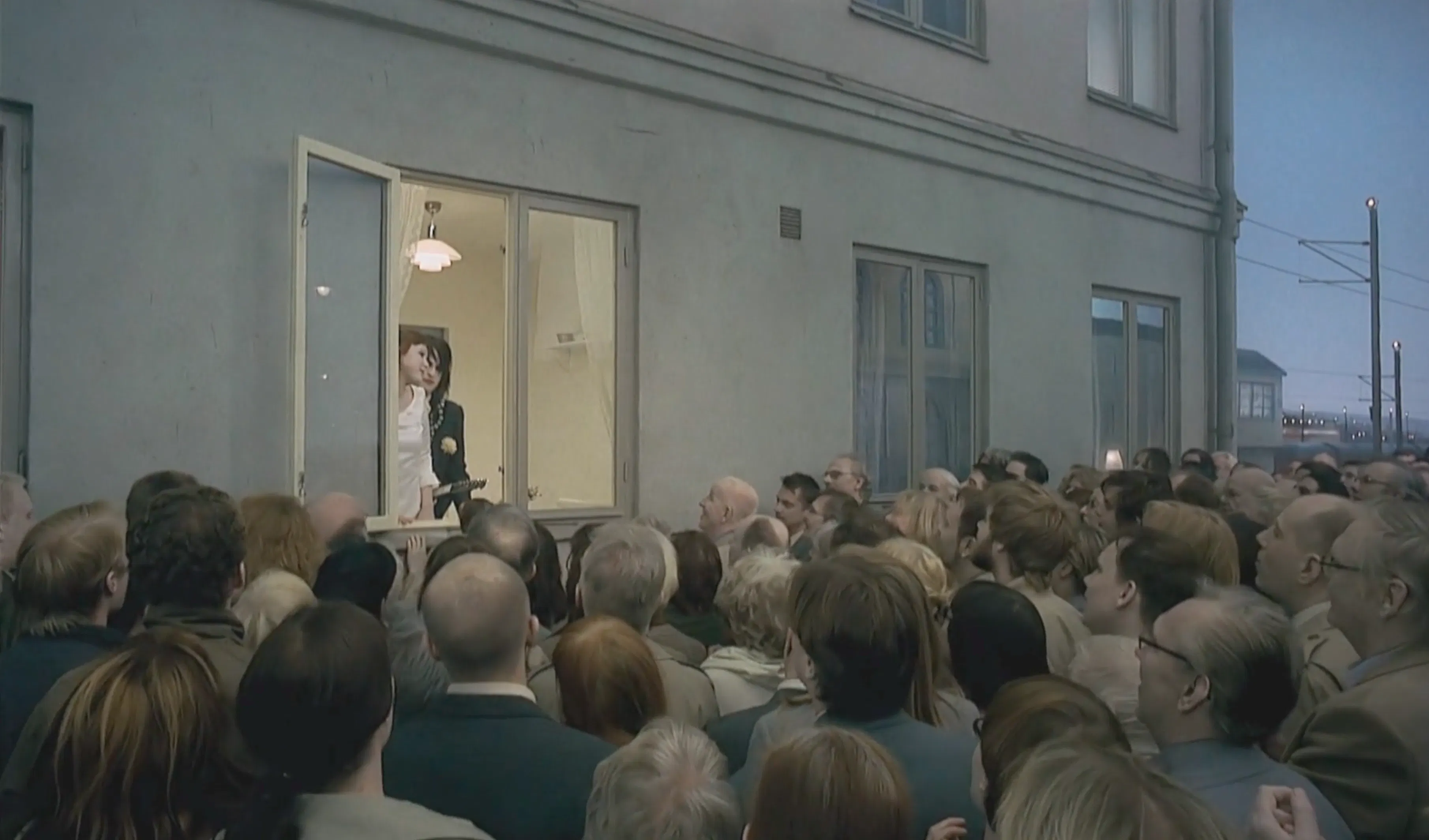
Love defines my favourite scene, which comes toward the end of the film. We find a newlywed couple in their apartment. The groom sits at the kitchen table playing an electric guitar. The bride watches lovingly from the bedroom just behind. Through the kitchen window, the view is moving. It turns out the apartment building is travelling on train tracks. The train eventually arrives in the centre of town, where townsfolk gather at the window to congratulate the newlyweds.
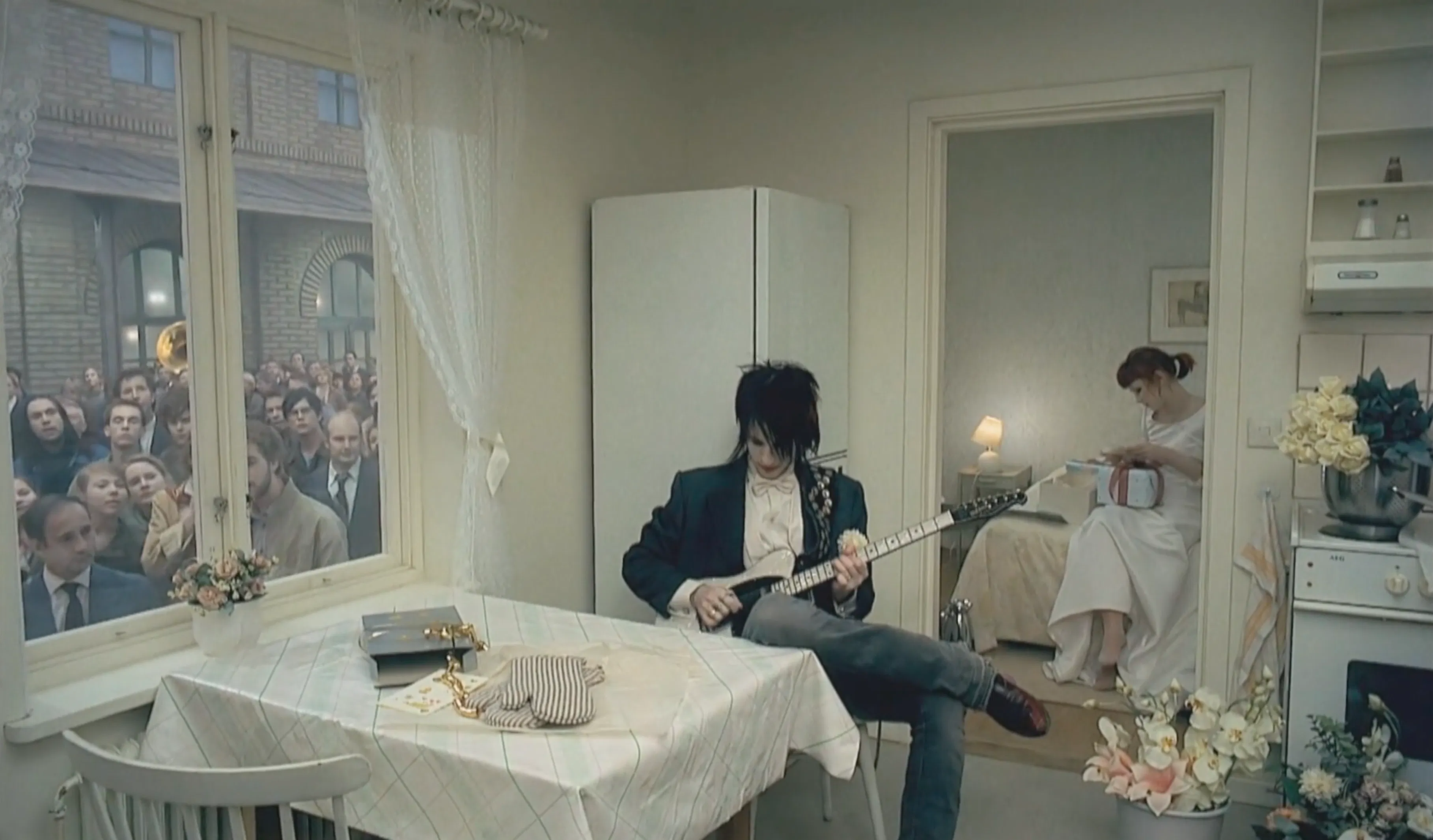
It’s ridiculous. It’s corny. It’s surreal. Yet it’s also touching and beautiful. The scene stands out for several reasons. It’s one of the few that introduces movement. It brings together two angles, switching from inside the apartment to outside once the apartment arrives in town. Above all, it is perhaps the only scene that conveys hope, joy, love and optimism.
How does Andersson come up with these scenes? A combination of dreams and observations from ordinary life. The scene where three judges drink beer in court came from a dream. So did the electric chair scene. But reality inspires him too. In an interview with Film Quarterly, Andersson said he once saw a little girl with a colourful umbrella standing in the rain while her father bent down to tie her shoe. For him, that was already enough to be a movie scene. It didn’t make You, the Living. Maybe it’s in one of his other films. I’ll find out soon enough.