Dekalog IV
Krzysztof Kieślowski
WTF Kieślowski? This one was weird.
A drama student called Anka lives with her father Michał.
While Michał is away on business, Anka finds an envelope meant to be opened after his death. She had known about this envelope for years. Michał usually brings it with him on business trips. This time he left it behind.
After a couple of days, she finally opens the envelope. Inside, there is another envelope with a short message from her mother, who died when she was a child. The envelope says, “To my daughter, Anka.” She wonders whether to open it.
When Anka picks her father up from the airport later on, she tells him that she read the letter and that it reveals Michał is not her father. Oh shit! This shakes their relationship and brings out complicated feelings between them, which is precisely where this installment gets weird.
Michał says he suspected it all along but never knew for sure. It didn’t matter to him. Anka was always his daughter. Anka makes it weird, though, dialing up the sexual tension between them. She tells Michał that her first sexual experience felt like a betrayal of him. The tension peaks when Anka disrobes and tries to seduce Michał, who covers her up. Good lad.
Later, Anka admits she never opened the real letter. She made up her own version instead. Because she’s crazy, of course. When they burn the real letter, they glimpse a few words that suggest her fake letter may have been close to the truth.
Thematically, this aligns with the fourth commandment, honor thy father and thy mother. Anka didn’t seem to honor Michał, real or not, by opening the letter and later trying to seduce him. Nor did she honor her mother by burning the letter, which she clearly felt was important for her daughter.
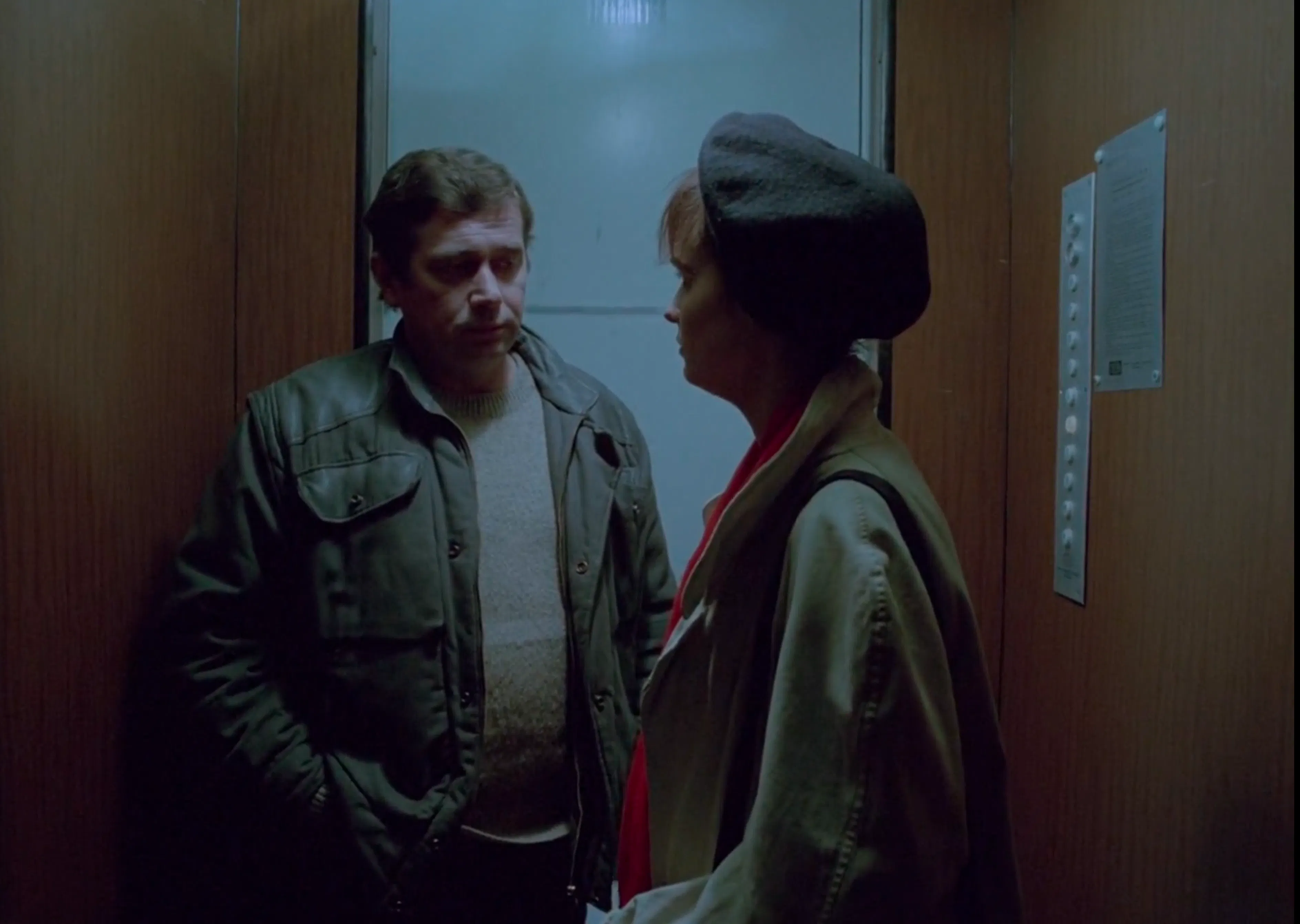
Two things stood out in this installment. The first is a conversation that takes place in an elevator. In a moment of tension, Anka and Michał have a conversation in the elevator as it goes up and down, letting people on and off. It’s a short scene, but still long enough to be interesting. It’s exactly the sort of thing you would see in a French New Wave film.
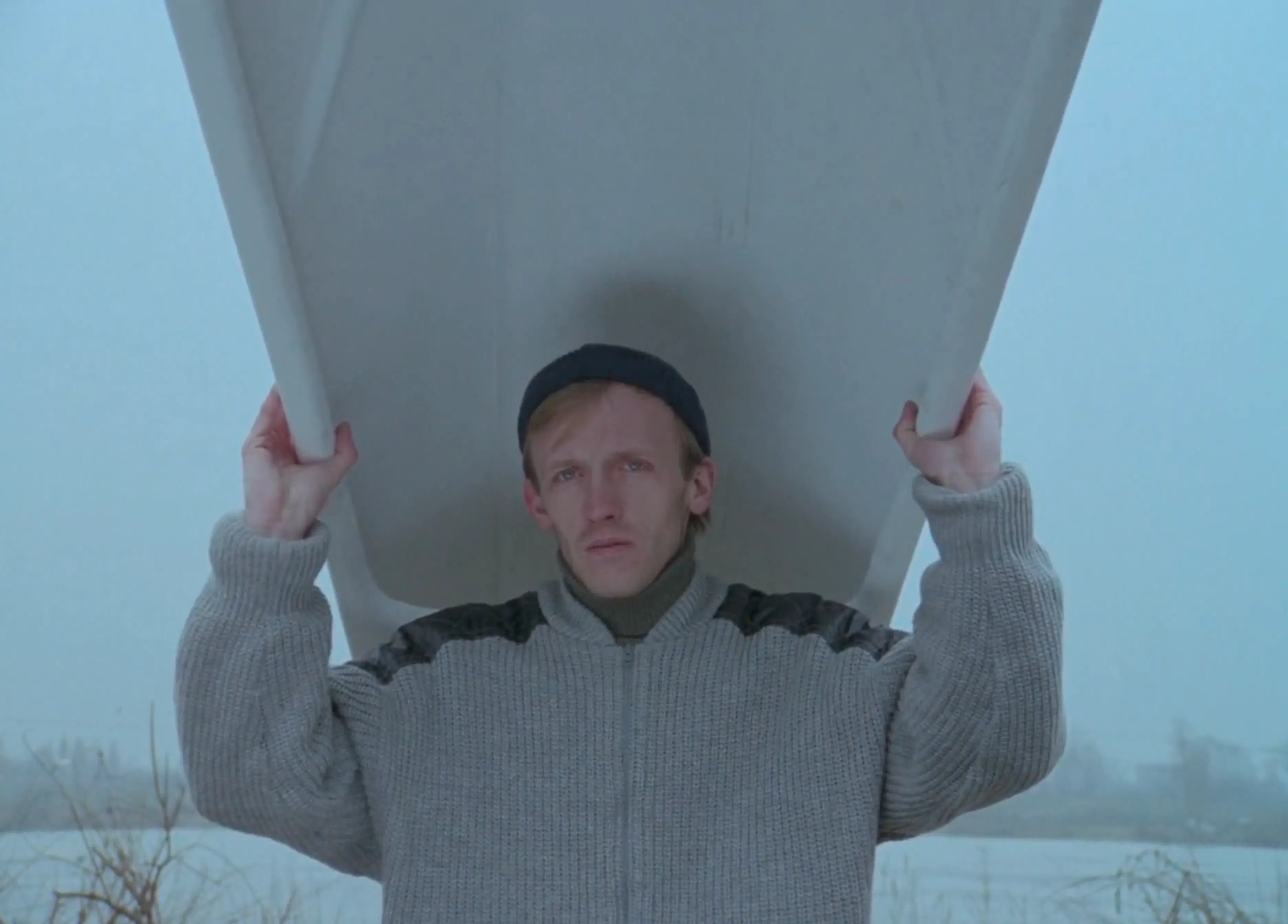
The second thing that stood out is the angel or silent judge. In every installment, there’s one random guy who observes or makes eye contact with the protagonist at a moment when they are making an important decision. In the first installment, it’s the man beside the lake when the father decides the ice is strong enough for his son to skate. In the second, it’s the man who watches as the wife decides her husband will not wake from his condition and that she should keep the baby conceived with his friend. In the third, it’s the tram driver when the couple drive straight towards it on the tracks.
The same actor plays this character in each episode. When I watched the first installment, I wondered whether this character was God. After a bit of research, I believe he’s meant to be an angel. In Dekalog IV, he appears carrying a canoe.
The sexual tension makes Dekalog IV weird. It’s my least favorite of the collection thus far.